Most people never think about what happens to a car after it leaves the dealership lot — until it's sitting dead in their driveway. Here's the truth: every vehicle you've ever owned was always heading to a scrap yard. The only question is how much money you get when it finally arrives.
Understanding the full lifecycle of a car isn't just interesting. It's practical. It helps you make smarter decisions at every stage — especially at the end, when thousands of dollars in recoverable value are sitting under that rusted hood. If you're dealing with a clunker in Cleveland right now, this guide is for you.
Stage One: The Factory Floor to Your Driveway
A new car rolls off the assembly line as roughly 3,000 pounds of steel, aluminum, copper wiring, rubber, glass, and plastic. Every pound of that material has a market value — and the auto industry knows it. Manufacturers design modern vehicles with recyclability in mind, partly because scrap metal is baked into the supply chain from the start.
The average new car contains about 65% steel and iron by weight. There's also aluminum in the engine block and body panels, copper in the wiring harness, and precious metals inside the catalytic converter. From day one, the clock is ticking on how long those materials stay assembled versus returned to raw commodity form.
- Steel and iron: The backbone of every vehicle, and the easiest to recycle
- Aluminum: Found in wheels, engine components, and increasingly in body panels
- Copper: Wiring, connectors, and alternators — worth more per pound than most people realize
- Precious metals: Platinum, palladium, and rhodium inside catalytic converters
- Rubber and plastics: Tires, hoses, and trim — some recyclable, some not
That shiny new vehicle in your driveway? It's already a future scrap load. The only variable is time.
The Working Years: Depreciation, Repairs, and the Slow Decline
A car loses roughly 20% of its value the moment you drive it off the lot. By year five, it's worth less than half of what you paid. By year ten, most vehicles are fighting for survival — every repair bill a judgment call between throwing money at a declining asset or cutting your losses.
This is where Ohio winters do their damage. Cleveland's freeze-thaw cycles, road salt, and pothole-riddled streets accelerate rust and suspension wear faster than dryer climates. A vehicle that might have another five good years in Arizona could be structurally compromised in Cleveland after a decade of hard winters.
The working lifecycle typically ends in one of three ways:
- A major mechanical failure — blown engine, blown transmission, seized brakes — where repair costs exceed the car's value
- A collision — where insurance totals the vehicle and pays out the market value
- Slow death — escalating repair bills, failed emissions tests, and an owner who finally says enough
At any of these endpoints, the car enters its final chapter. That's where scrap car removal Cleveland services come in — and where your decisions about who you call can mean the difference between $200 and $800 or more in your pocket.
The Scrap Yard: Where Cars Come to Be Reborn as Raw Material
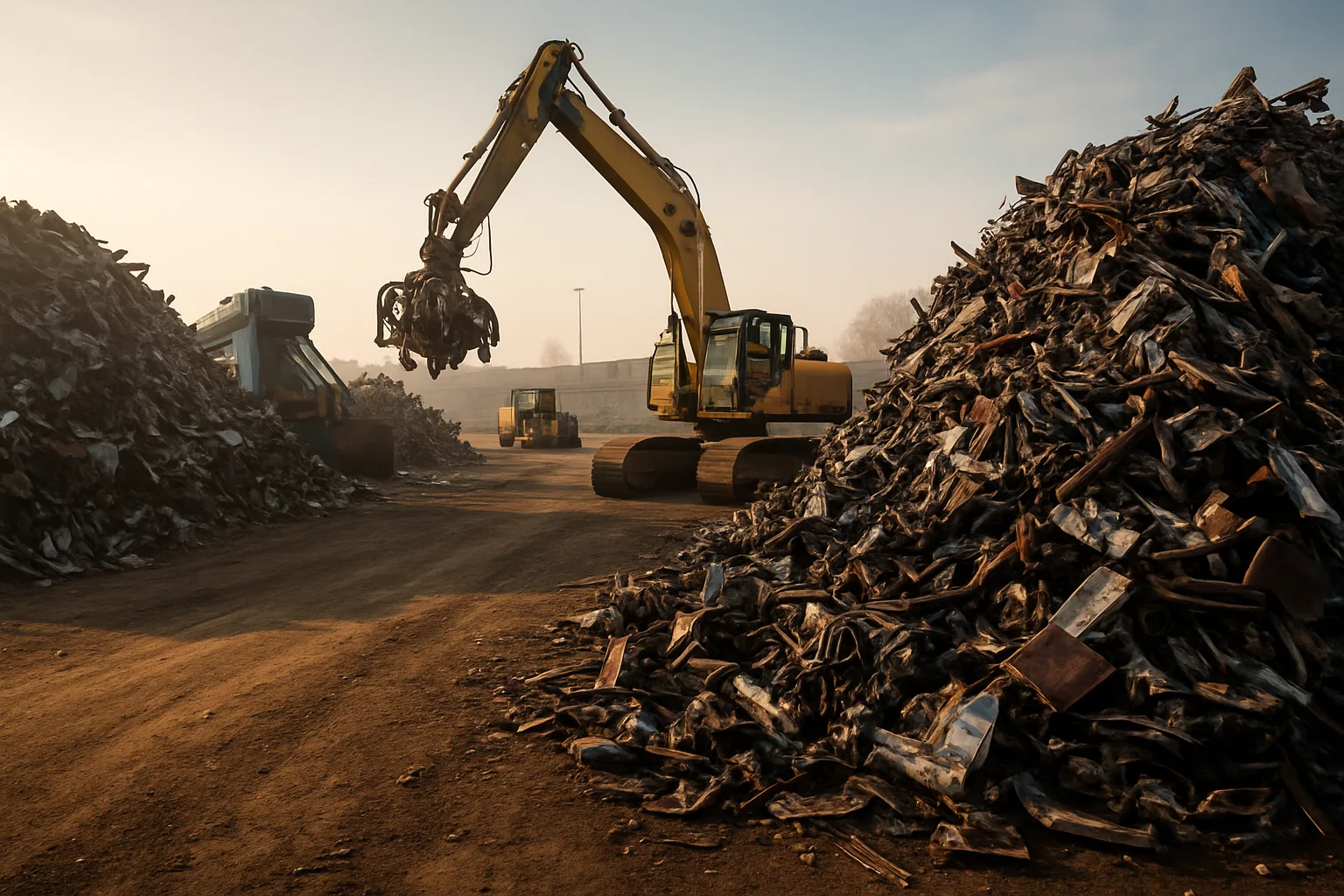
When a vehicle hits a salvage or scrap yard, it doesn't just disappear. It goes through a deliberate process designed to extract maximum value from every component before the carcass gets crushed and shredded.
First, the yard depollutes the vehicle — draining fluids like engine oil, coolant, brake fluid, and refrigerant. Batteries get pulled and recycled separately. Catalytic converters come off immediately; those precious metals make cats one of the most valuable parts on any junk car. Then usable parts — alternators, starters, doors, hoods, mirrors — get pulled for resale in the used parts market.
What's left — the bare shell — gets crushed into a bale or shredded into fist-sized chunks of mixed metals. That shredded material moves through separation equipment: magnets pull out the ferrous steel, eddy current separators pull out aluminum, and what's left gets further sorted and sold to steel mills and smelters.
This is where platforms like North America's B2B scrap metal auction platform SMASH play a real role. Yards that can put their processed material in front of multiple vetted buyers — instead of calling one guy and taking his number — get better price discovery. Competition does what it always does: drives the price toward actual market value instead of what one buyer wants to pay that day.
For car owners, understanding this chain matters. Yards that operate efficiently and sell competitively often pay more for incoming vehicles because they're recovering more on the back end. That margin flows upstream — at least when you choose the right buyer.
How Junk Car Buyers Near Me Cleveland Actually Price Your Vehicle
Here's what most people don't know: the offer you get for your junk car in Cleveland is largely driven by the current scrap steel price per ton, your vehicle's weight, and the value of any salvageable parts — especially that catalytic converter.
Scrap metal prices fluctuate with global commodity markets. A price you heard six months ago means nothing today. That's why any honest buyer will quote you based on current rates, not a number they've been telling people for a year. Always ask: "Is this based on today's market?"
Key factors that affect what junk car buyers near me Cleveland will offer:
- Vehicle weight: Heavier vehicles — trucks, SUVs, full-size sedans — yield more scrap metal and generally command better offers
- Make and model: Some vehicles have more valuable parts inventory or contain higher-yield catalytic converters
- Running condition: A car that drives (or at least rolls) is easier and cheaper to move, which can improve your offer
- Current steel prices: Scrap steel is a commodity. When demand is strong, your offer goes up. When the market softens, it comes down.
- Title status: More on this below
Getting multiple quotes is the single most important thing you can do. Call two or three junk car buyers near me Cleveland options. You'll often find significant variance — not because one is honest and one isn't, but because different buyers have different cost structures and different outlet markets for the material.
Sell Car for Scrap No Title: What You Need to Know in Ohio
One of the most common questions from Cleveland car owners is whether they can sell a car without a title. The short answer: sometimes, but it depends on the buyer and the situation.
Ohio has specific regulations around title transfer for junk and salvage vehicles. Most licensed scrap yards and junk car buyers require a title to process a vehicle legally. This protects them — and you — from liability if the vehicle turns out to be stolen or has liens against it.
That said, there are legitimate pathways for no-title situations:
- Lost title: Ohio's BMV allows you to apply for a duplicate title, often within a few business days online. This is almost always worth doing before you sell.
- Old vehicles: Ohio has provisions for very old vehicles (typically 10+ years) where a title may not be required — check current Ohio BMV rules for 2026
- Bill of sale only: Some buyers will accept a bill of sale plus proof of ownership for certain situations — but this is buyer-specific and you'll want to confirm before you haul the car anywhere
If you're unsure, the safest move is to get a replacement title first. It takes a few days and a modest fee — and it opens your vehicle up to every buyer instead of a narrow subset who'll work around the paperwork. You can also read car selling guides for step-by-step guidance on navigating title issues before you sell.
How to Get the Most From Your End-of-Life Vehicle in Cleveland
You've got a dead or dying car. You want cash. Here's how to do this right and not leave money on the table.
1. Don't let it sit too long. A car that sat for three years accumulates problems: flat spots on tires, seized brakes, drained batteries, and weather damage. The longer it sits, the harder it is to move and the less you'll get. Act when you decide — don't delay.
2. Know what's on it before you call. Does it have a catalytic converter? Is it stock or has it been replaced with a cheaper aftermarket unit? Are the wheels original alloys or steelies? These details affect your offer, and knowing them puts you in a better negotiating position.
3. Get at least three quotes. Prices vary — sometimes significantly. Local junk car buyers near me Cleveland, national cash-for-cars services, and dedicated scrap yards all operate differently. Compare before you commit.
4. Ask about free towing. Most reputable junk car buyers in Cleveland include free pickup — especially for vehicles that don't run. If a buyer wants to charge you for towing, that fee should come off their offer, not be added on top.
5. Use platforms built for competition. SMASH connects yards and buyers through a vetted auction model — because more buyers means better price discovery. If you're a yard handling large volumes, understanding how sell your car for cash in the USA services integrate with downstream B2B markets helps you price smarter and negotiate better.
Cleveland's scrap metal ecosystem is active. The city has a long industrial history, and the infrastructure for recycling end-of-life vehicles is well developed. That's good news for you as a seller — there's genuine competition for your vehicle if you know where to look. Cleveland scrap metal services are more competitive than most people realize, and getting multiple quotes takes less than 20 minutes.
If you're ready to stop looking at that dead car and start turning it into cash, get a free car valuation and see what your vehicle is worth today. The process is straightforward, the pickup is typically free, and the payment is same-day or next-day in most cases. That's the SMASH approach to the end of a car's life — no guessing, no runaround, just a fair number based on what the market actually says your vehicle is worth.
Frequently Asked Questions
Q: How does scrap car removal Cleveland work?
You contact a junk car buyer or scrap removal service, provide details about your vehicle (make, model, year, condition), and receive a quote. If you accept, they schedule a pickup — usually within 24-48 hours — tow the car for free, and pay you cash on the spot. The whole process typically takes less than a day once you accept an offer.
Q: Can I sell my car for scrap in Cleveland without a title?
Some buyers will work with no-title vehicles, but options are more limited and offers may be lower. The fastest path is to get a duplicate title from the Ohio BMV before selling — it usually takes just a few days and opens your vehicle to every buyer in the market. Check current Ohio BMV requirements for 2026 to confirm the process.
Q: How are junk car prices near me determined in Cleveland?
Offers are based primarily on your vehicle's weight, current scrap steel prices, the value of recoverable parts (especially the catalytic converter), and the car's condition. Prices fluctuate with commodity markets, so a quote from three months ago won't reflect today's rates — always ask for a current quote.
Q: Does my car need to run to get picked up for scrap in Cleveland?
No. Most junk car buyers in Cleveland will pick up non-running, wrecked, or completely stripped vehicles. Just make sure you're upfront about the condition when you get your quote — the offer should reflect reality, and surprises at pickup can lead to price adjustments on the spot.
Q: How do I know if I'm getting a fair offer for my junk car near me in Cleveland?
Get multiple quotes — minimum three. Check current scrap steel prices so you have a baseline for what your vehicle's weight should yield. Ask each buyer what's included (towing, same-day payment, title handling). If one offer is dramatically lower than the others with no clear reason, walk away.
Ready to turn that end-of-life vehicle into cash? Sell your car for cash in the USA and get a free quote at cashforcars-usa.com — same-day quotes, free towing, and no runaround.
For scrap metal market insights and industry updates, follow SMASH on LinkedIn — built for yards and buyers who want to stay ahead of the market.
Disclaimer: Scrap metal and junk car prices fluctuate with commodity markets. All prices referenced in this article are general in nature. Check current rates at the time of your sale for accurate quotes.