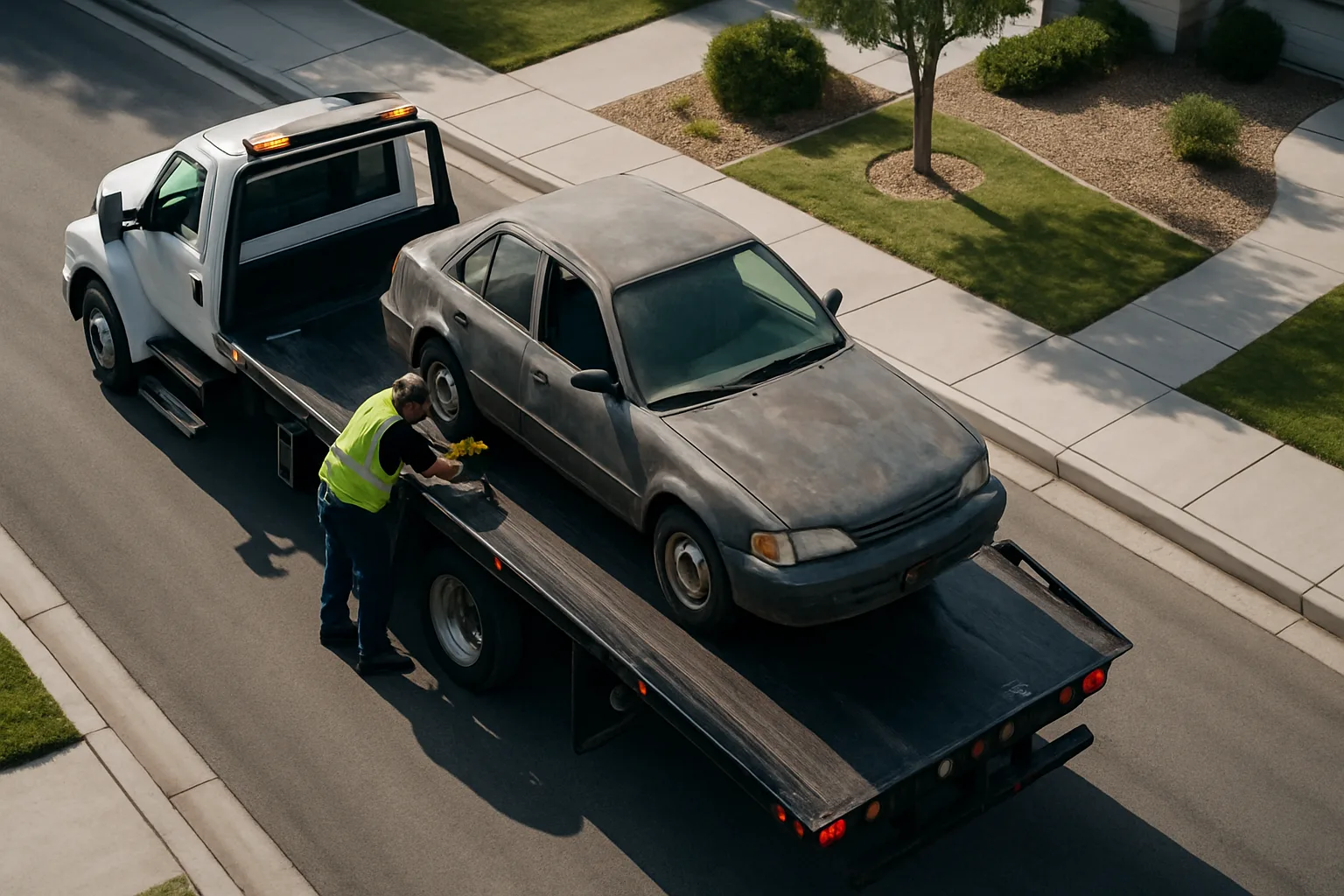
Most people don't realize that a junked car, handled the right way, can keep over 80% of its materials out of a landfill. That's not a marketing claim — it's how modern auto recycling actually works when the process is done properly. If you're sitting on a vehicle that won't run, won't sell, and is taking up space in your driveway, you're not just looking at a headache. You're looking at a resource.
For car owners looking to sell scrap car Las Vegas, the good news is that the desert city has a surprisingly active recycling ecosystem. The dry climate slows rust, which means more usable parts. And with growing pressure on salvage yards and dismantlers to document their processes, the bar for responsible disposal has gotten higher — in a good way.
This article walks through what actually happens when a junk car gets recycled, why it matters for your community, and how platforms like SMASH are pushing the industry toward better transparency and better prices for sellers.
What Eco-Friendly Car Disposal Actually Looks Like in 2026
Let's skip the vague promises and talk about the real process. When a vehicle reaches end-of-life and gets handed over to a licensed dismantler or salvage yard, it goes through a depollution stage first. This is non-negotiable in Nevada and most states — it's not optional, and it's not just good practice. It's the law.
Depollution means removing every hazardous fluid and component before the car gets crushed, shredded, or parted out. Here's what comes out of a typical junk vehicle during this stage:
- Engine oil, transmission fluid, brake fluid — drained and sent to certified recyclers or re-refiners
- Coolant (antifreeze) — recovered and processed separately, often reclaimed for reuse
- Refrigerants (A/C systems) — captured with specialized equipment to prevent atmospheric release
- Fuel — siphoned and either reused or properly disposed of
- Catalytic converters — removed for their platinum-group metals (PGMs), which are high-value and fully recyclable
- Lead-acid batteries — one of the most recycled consumer products in North America, with a recovery rate above 95%
- Airbags — either tested and resold as working units or safely deployed and discarded
- Tires — sent to tire recyclers, crumb rubber processors, or energy recovery facilities
After depollution, the vehicle body gets evaluated for resalable parts. Usable doors, hoods, engines, transmissions, seats, and electronics get pulled and resold through the used parts market. What's left — the bare shell — goes to a shredder.
Shredding produces ferrous metal (steel and iron), non-ferrous metals (aluminum, copper, zinc), and shredder residue (a mix of plastics, glass, and foam). Ferrous and non-ferrous streams go to foundries and smelters. Shredder residue is the toughest part of the chain to manage, but even that is improving as downstream processors develop better sorting technology.
Why Las Vegas Is an Interesting Market for Scrap Car Recycling
Las Vegas doesn't have the heavy industrial base you'd find in Detroit or Houston, but it has volume. Millions of people live in and around the metro area, and the vehicle turnover rate is real. Fleet operators, rental companies, rideshare drivers — all of them cycle through vehicles at scale. When those vehicles age out, they need somewhere to go.
Nevada's arid climate is actually a factor worth mentioning here. Cars that have spent their lives in Las Vegas tend to have less structural rust than vehicles from the Midwest or the Northeast. That matters for parts availability. A ten-year-old sedan from Nevada might have a clean enough body that doors, fenders, and interior components are worth pulling and reselling. A same-age car from a rust belt state might be worth nothing but its weight in steel.
That difference in condition directly affects your scrap car value — and it's why you shouldn't just take the first quote you get. The value of your specific vehicle depends on its make, model, year, weight, condition, and what parts are still intact. A Las Vegas car often has more going for it than owners realize. If you want to explore your options before committing, you can get a free car valuation without any obligation.
What Las Vegas also has is a growing population of environmentally conscious consumers who want to know their old car isn't just going to leak fluids into a dirt lot somewhere. That's a legitimate concern. Not every buyer operates at the same standard, which is exactly why documentation and transparency matter when you're choosing who to sell to.
The Case for Using a Scrap Metal Auction Platform Instead of One Phone Call
Here's the old way of selling a scrap car: you call one salvage yard, they give you a number, you either take it or spend two hours calling three more places and comparing guesses. Nobody tells you how they arrived at that number. You have no idea if the buyer is offering fair market value or low-balling you because they can.
The new way involves competition. When multiple vetted buyers are bidding on your vehicle simultaneously, price discovery happens. You're not guessing. You're seeing what the market actually thinks your car is worth.
That's the premise behind North America's B2B scrap metal auction platform — SMASH. The platform connects sellers with vetted buyers who compete for loads, which means sellers get real market feedback instead of a single take-it-or-leave-it offer. SMASH handles the documentation side too: photo documentation, inventory tracking, and auto-invoicing. For yards and dismantlers, that means cleaner records. For sellers, it means a more credible, accountable process.
SMASH operates across the U.S. and Canada, serving recycling yards and scrap buyers who deal in serious volume. If you're a car owner wondering why this matters to you: the buyers on platforms like SMASH are the same buyers your salvage yard is reselling metal to. The more efficient and competitive that downstream market is, the better the prices can be at the retail level for vehicle sellers.
You can also read car selling guides to understand how the scrap and used car market works before you commit to a sale — knowing your options puts you in a stronger position.
Free Scrap Car Pickup in Las Vegas: What to Expect
One of the most common questions sellers ask is whether free scrap car pickup Las Vegas is actually free — or whether the cost gets quietly deducted from your offer. The honest answer: it depends on who you're working with, and you should ask the question directly before you agree to anything.
Legitimate junk car buyers who offer free pickup typically build the pickup cost into their business model — they're making money on the vehicle itself, so they absorb the tow. Others will make a verbal offer on the phone, then show up and deduct a "transport fee" you weren't told about. That's a bait-and-switch, and it's unfortunately common in this space.
Here's what a clean transaction looks like:
- You get a written or confirmed quote — not just a verbal number. Ask specifically if pickup is included.
- You're given a pickup window — same day or next day is common for scrap vehicles in a metro like Las Vegas.
- The driver arrives with the agreed payment — cash, check, or verified transfer, depending on what you agreed to.
- You hand over the title and keys — in Nevada, you'll need to sign the title over properly. Keep a copy for your records.
- You cancel your registration and notify the DMV — this protects you from liability if the car gets ticketed or involved in an incident after the sale.
If any step in that sequence gets skipped or feels pressured, slow down. The best buyers don't rush you. They want a clean transaction too.
How Responsible Recycling Protects Nevada's Environment — and Your Reputation as a Seller
Nevada has real environmental stakes when it comes to vehicle disposal. The Mojave Desert and its surrounding ecosystems are sensitive to contamination. A vehicle leaking oil, coolant, or battery acid in an unregulated storage yard — or on someone's private land — is a genuine hazard, and in some cases a legal liability for the last registered owner.
Selling your vehicle to a licensed, documented buyer closes that loop. You're no longer the registered owner, and you have a paper trail proving the car was transferred through a legitimate channel. That matters more than most sellers realize until something goes wrong.
Responsible recycling also extends to the Las Vegas scrap metal services that process the downstream materials from your vehicle. When dismantlers and scrap processors operate with proper documentation — accurate packing lists, weight tickets, chain of custody records — the entire supply chain is cleaner. Buyers have more confidence. Sellers get better outcomes. The environment doesn't absorb the cost of someone cutting corners.
SMASH's platform approach reinforces this. When buyers compete for documented, verified loads, the incentive to cut corners on processing decreases. Transparency creates accountability, and accountability is good for everyone in the chain — including the person who originally owned the car.
Getting the Most From Your Junk Car Before It Becomes Scrap
Before you call a junk car removal service and hand over the keys, take twenty minutes to do a quick assessment. You might be leaving money on the table.
Check for the following:
- Catalytic converter — if it's still on the vehicle and intact, it has value. Don't let a buyer low-ball a whole car quote when the cat alone might be worth a meaningful amount.
- Aftermarket parts — new tires, a recently replaced battery, upgraded stereo or rims. These can sometimes be pulled and sold separately for more than the buyer would factor into a scrap offer.
- Personal items — floor mats, charging cables, toll transponders, insurance or registration documents, garage door openers. Check every compartment.
- Title status — a clear title will almost always get you a better offer than a lost or salvage-titled vehicle. If you've lost your Nevada title, visit the DMV to get a replacement before you sell.
When you're ready to move forward, sell your car for cash in the USA through a platform that's transparent about pricing, pickup, and the process. There's no reason to settle for less when competition and documentation exist to protect you.
Frequently Asked Questions
Q: How do I sell a scrap car in Las Vegas if I don't have the title?
Most reputable junk car buyers in Nevada require a clear title to process a sale. If you've lost your title, visit the Nevada DMV to apply for a duplicate — it's straightforward and worth doing before you sell. Some buyers will work with a bill of sale and a DMV-issued record, but confirm this upfront to avoid surprises on pickup day.
Q: Is free scrap car pickup Las Vegas actually free, or are there hidden fees?
Legitimate buyers include pickup at no extra cost as part of their offer. The key is to get the full quote in writing before you agree to anything — confirm that pickup is included and that the quoted price won't change when the driver arrives. If a buyer suddenly deducts a transport fee on pickup day, that's a red flag worth walking away from.
Q: What happens to my car after I sell it to a scrap buyer?
Licensed dismantlers first remove all hazardous fluids and components (depollution), then pull any resalable parts, and finally send the remaining body to a shredder. The metals — steel, aluminum, copper — get separated and sold to foundries and processors. In Nevada, licensed facilities are required to follow state environmental guidelines throughout this process.
Q: How is my scrap car value calculated?
Scrap car value is based on the vehicle's weight, current metal prices, make and model (which affects parts availability), overall condition, and whether the title is clean. A Las Vegas vehicle often benefits from less rust than cars from wetter climates, which can mean more resalable parts and a stronger offer. Prices fluctuate with the scrap metal market — always check current rates and get multiple quotes.
Q: Why should I use a platform like SMASH instead of calling one buyer?
A single phone call gives you one data point — one buyer's assessment, with no competitive pressure. A platform like SMASH connects sellers and yards with multiple vetted buyers who compete for loads, which means price discovery rather than guesswork. More competition generally means better outcomes for sellers, and documented transactions mean accountability on both sides.
If you've got a vehicle sitting idle in Nevada and you're ready to do something with it, now is a good time to act. Metal markets move, and so does demand. The most practical first step is to get a quote from a buyer who's transparent about pricing and process — then decide from a position of knowledge, not pressure. Sell your car for cash in the USA — get a free quote at cashforcars-usa.com.
Disclaimer: Scrap metal and vehicle prices fluctuate based on market conditions. Always check current rates and get multiple quotes before selling your vehicle.
Stay current on scrap metal market trends and industry insights — follow SMASH on LinkedIn for regular updates from across the North American recycling industry.
```