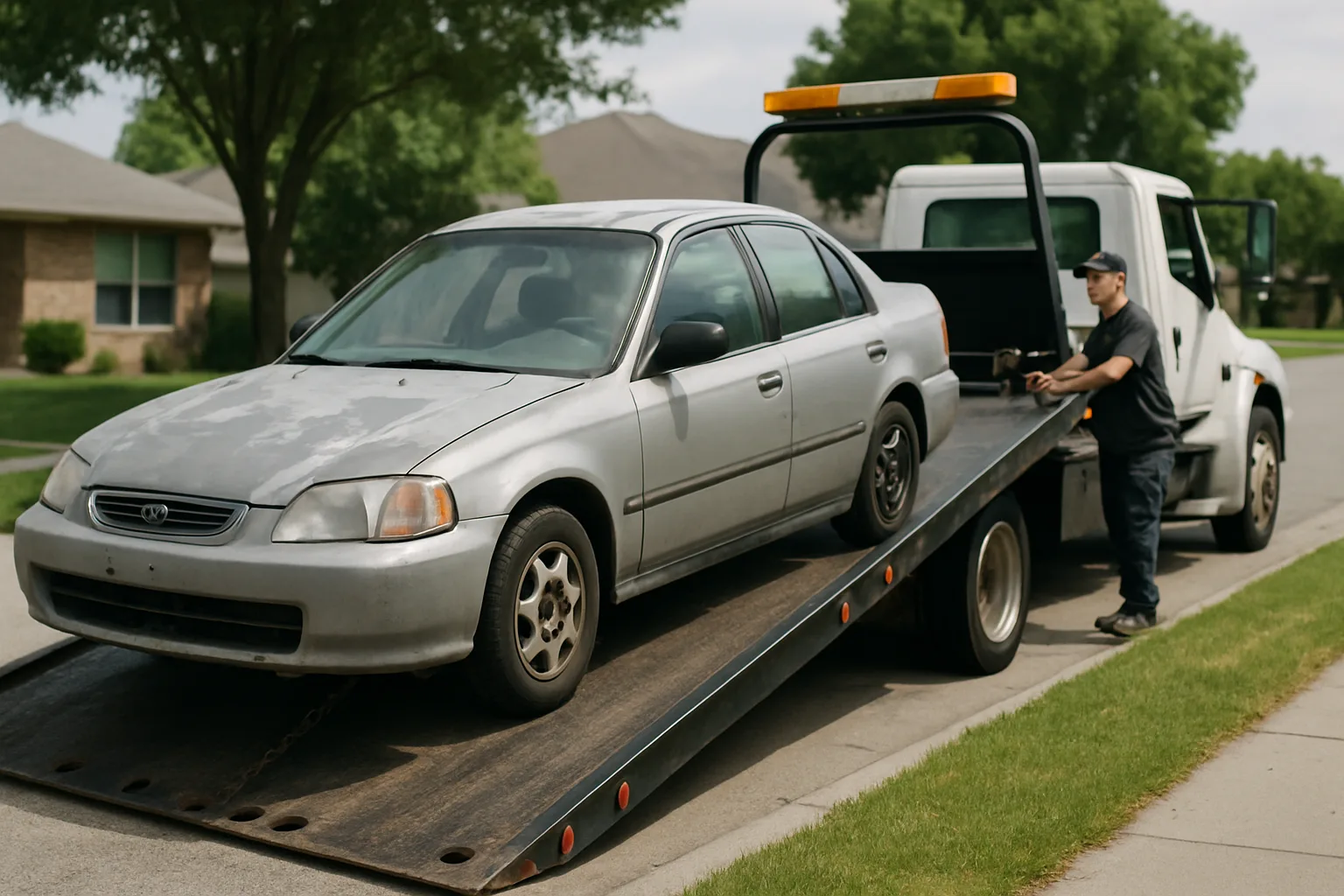
Most people assume a junk car is worth whatever the scrap yard feels like paying that day. That assumption costs them money — sometimes a lot of it. The truth is, scrap car prices are driven by a specific set of factors, and if you don't understand them, you're negotiating blind.
Whether you're searching for junk car buyers near me El Paso or trying to figure out why your neighbor got more for his truck than you got for your sedan, the answer comes down to make, model, condition, and how you sell. Let's break it down.
Why Your Car's Make and Model Affects Its Scrap Value
Not all steel is created equal — and neither are all cars. The make and model of your vehicle determines two critical things: how much metal it contains, and whether any of its parts hold value beyond the scrap pile.
A full-size pickup truck like a Ford F-250 or a Chevy Silverado 2500 can weigh over 5,000 pounds. A compact sedan might come in under 3,000. Since scrap yards pay by weight for the bulk metal content, heavier vehicles almost always command higher base prices. But it goes deeper than that.
- High-demand makes (Toyota, Honda, Ford F-Series) often carry more value because their parts are widely needed and resalable.
- European luxury vehicles can cut both ways — more complex parts, but fewer buyers for those parts in some markets.
- Older American trucks and SUVs tend to have high metal weight and solid catalytic converter value, which is a separate revenue stream from scrap metal entirely.
- Hybrid and EV models are increasingly scrutinized for battery pack value in 2026, which can add meaningful dollars to an otherwise standard scrap transaction.
The bottom line: a buyer looking at your car isn't just seeing a pile of steel. They're running a mental calculation on gross weight, parts value, catalytic converter content, and resale potential. If you don't know what your car is worth across those categories, you're leaving money on the table.
How Vehicle Condition Drives the Price Gap
Condition is where the biggest pricing swings happen. Two identical 2011 Honda Accords can fetch very different prices depending on what's under the hood, whether the transmission works, and if the body is intact.
Scrap car buyers — and platforms like SMASH that bring multiple buyers to the table — evaluate condition along a few key axes:
- Does it run? Running vehicles are worth more. A car that starts and moves can be driven onto a lot, tested for drivability, and potentially resold or parted out more efficiently.
- Is the drivetrain intact? Engines and transmissions in working order have real resale value. A blown engine drops your car closer to pure scrap weight pricing.
- Are the catalytic converters present? Cats are one of the most valuable components on a scrap vehicle. Thieves know this. If your cats have been cut off, that affects your offer — sometimes significantly.
- Body condition and completeness — missing doors, stripped interiors, or fire damage reduce parts value and can complicate the pickup logistics.
- Fluids and environmental hazards — coolant, oil, and refrigerants all need to be handled at end-of-life. A vehicle that's been sitting for years leaking fluids may carry additional disposal costs for the buyer.
Documentation matters too. If you have the title, you'll always get a better offer than if the title is lost or the vehicle's status is unclear. No buyer wants a legal headache baked into a junk car purchase.
The Role of Scrap Metal Markets in Your Final Price
Here's something most casual sellers don't realize: the price your car fetches on any given day is tied directly to the global scrap metal market. Steel, aluminum, copper — these are commodities. They move with energy costs, manufacturing demand, trade policy, and recycling capacity.
In 2026, North American scrap steel markets continue to be influenced by domestic EAF (electric arc furnace) capacity expansion, shifting import/export dynamics, and regional demand from auto manufacturers. What that means practically: the offer you get in September may not be the same offer you'd get in January. Timing matters.
This is exactly where a scrap metal auction platform changes the game. Instead of one buyer quoting you a price based on their current margin and mood, competitive bidding creates price discovery. Multiple vetted buyers competing for your load means the market price — not one buyer's preferred margin — tends to emerge. You can get competitive bids for your scrap metal instead of accepting the first number someone throws at you.
The old way: one phone call, one number, take it or leave it. The SMASH way: documented inventory, competitive bids, and transparency on what's actually driving the price.
Why El Paso Sellers Face Unique Market Dynamics
Geography shapes scrap car pricing more than most people realize. If you're trying to sell your scrap car in Texas — specifically in El Paso — your local market has some distinct characteristics worth understanding.
El Paso sits at a major border crossing point, which influences both the supply of vehicles entering the scrap stream and the demand for functional used parts across the region. The heat and arid climate in West Texas can be surprisingly good for vehicles (less rust), which sometimes means cars that look rough on the surface still have viable parts underneath. That's a detail a knowledgeable buyer will account for — and one you should use in your negotiations.
Local scrap metal infrastructure matters too. El Paso has active recycling operations, but for certain high-value loads or specific vehicle types, regional competition among buyers may be thinner than in larger metro markets like Houston or Dallas. That's exactly why getting multiple offers — not just the first call from a yard down the street — is the smarter play. For more information on local options, explore El Paso scrap metal services to understand what's available in your area.
If you want to sell your car for cash in the USA and you're in the El Paso area, working with a service that connects you to multiple buyers gives you leverage that a single local yard call simply can't provide.
How to Maximize Your Payout When Selling a Junk Car
Understanding the factors that affect price is step one. Doing something with that knowledge is step two. Here's how to position your vehicle for the best possible offer before you make a single call.
Before you reach out to any buyer:
- Locate your title. If it's lost, contact your state DMV immediately — in Texas, replacement titles are handled through TxDMV and the process is straightforward.
- Document what's there. Take photos of the engine bay, interior, undercarriage, and any damage. More documentation gives buyers more confidence and reduces the chance of a lowball offer based on assumed problems.
- Note whether catalytic converters are intact. This is a real money question, not a minor detail.
- Check if any parts have obvious resale value — newer tires, aftermarket wheels, a working stereo, functioning power features. These can be factored into negotiation.
- Know your weight class. Roughly estimating your vehicle's curb weight gives you a floor for what pure scrap value should look like.
When you're ready to get offers:
- Get at least three quotes. One number is not a market — it's one opinion.
- Use platforms that connect you to vetted buyers rather than cold-calling individual yards. The difference in offer quality can be significant.
- Ask what's included in the pickup — same-day service, BOL documentation, and cash on pickup versus delayed payment are all worth clarifying upfront.
- Don't accept a quote that drops significantly at pickup without a specific, verifiable reason. Price protection matters.
Platforms like SMASH are built for exactly this scenario — bringing competitive buyers to documented loads so sellers aren't left guessing. If you want to get a free car valuation and understand what your vehicle is actually worth in today's market, start there before you accept any single offer.
Want to dig deeper into the selling process? Read car selling guides that walk through every step, from documentation to final payment.
Don't Leave Cash on the Table
The scrap car market isn't random. It's driven by weight, make, model, condition, metal commodity prices, and how many buyers are competing for your vehicle. When you understand those levers, you stop guessing and start negotiating from a real position.
Whether you're in El Paso looking for a fast, fair offer on a vehicle that's been sitting in your driveway, or anywhere else across Texas and beyond, the process is the same: document, compare, and sell to a buyer who's actually competing for your business — not just handing you whatever they feel like paying today.
If you're ready to move on your vehicle, cashforcars-usa.com makes it straightforward to get a free quote and connect with buyers who are serious about your load. No subscription fees. No guessing. Just a clear, competitive process that works in your favor.
Frequently Asked Questions
Q: How do junk car buyers near me in El Paso calculate what my car is worth?
Buyers assess your vehicle based on its curb weight (which determines scrap metal value), whether it runs, the condition of key components like the engine and catalytic converters, and current scrap metal commodity prices. Make and model matter because they affect parts resale potential beyond raw metal value. Getting multiple offers is the best way to validate any single quote.
Q: Does it matter if my car doesn't run when selling it for cash in El Paso?
Yes, but it doesn't disqualify you. Non-running vehicles are bought every day — they simply shift more toward pure scrap weight pricing rather than parts or resale value. A non-running car with intact catalytic converters and a clean title can still generate a solid offer. Make sure you disclose the condition upfront so offers are accurate and don't drop at pickup.
Q: How much does a missing catalytic converter affect my scrap car price?
Significantly. Catalytic converters contain platinum group metals (platinum, palladium, rhodium) that have real commodity value. On some vehicles, the cats alone represent a meaningful portion of the total offer. If your converter has been stolen — which is unfortunately common — be upfront about it. A buyer who finds out at pickup will revise their offer downward regardless.
Q: Do scrap car prices in Texas differ from other states?
Regional scrap metal pricing does vary. Local recycling infrastructure, proximity to steel mills and processors, transportation costs, and buyer competition in a given market all influence what you're offered. El Paso's border location creates some unique dynamics in vehicle supply and parts demand. Using a platform that draws buyers from across the region rather than just your immediate area helps neutralize local pricing disadvantages.
Q: How fast can I get cash for my junk car in El Paso?
Many buyers offer same-day or next-day pickup, particularly for vehicles with clear titles and verified condition. The faster you can provide documentation — title, photos, VIN — the faster the process moves. Services that handle billing of lading (BOL) and auto-invoicing digitally tend to close transactions faster than traditional yard calls that rely on paper and manual follow-up.
Stay current on scrap metal market trends and industry updates by following SMASH on LinkedIn — practical insights for yards and sellers across North America.