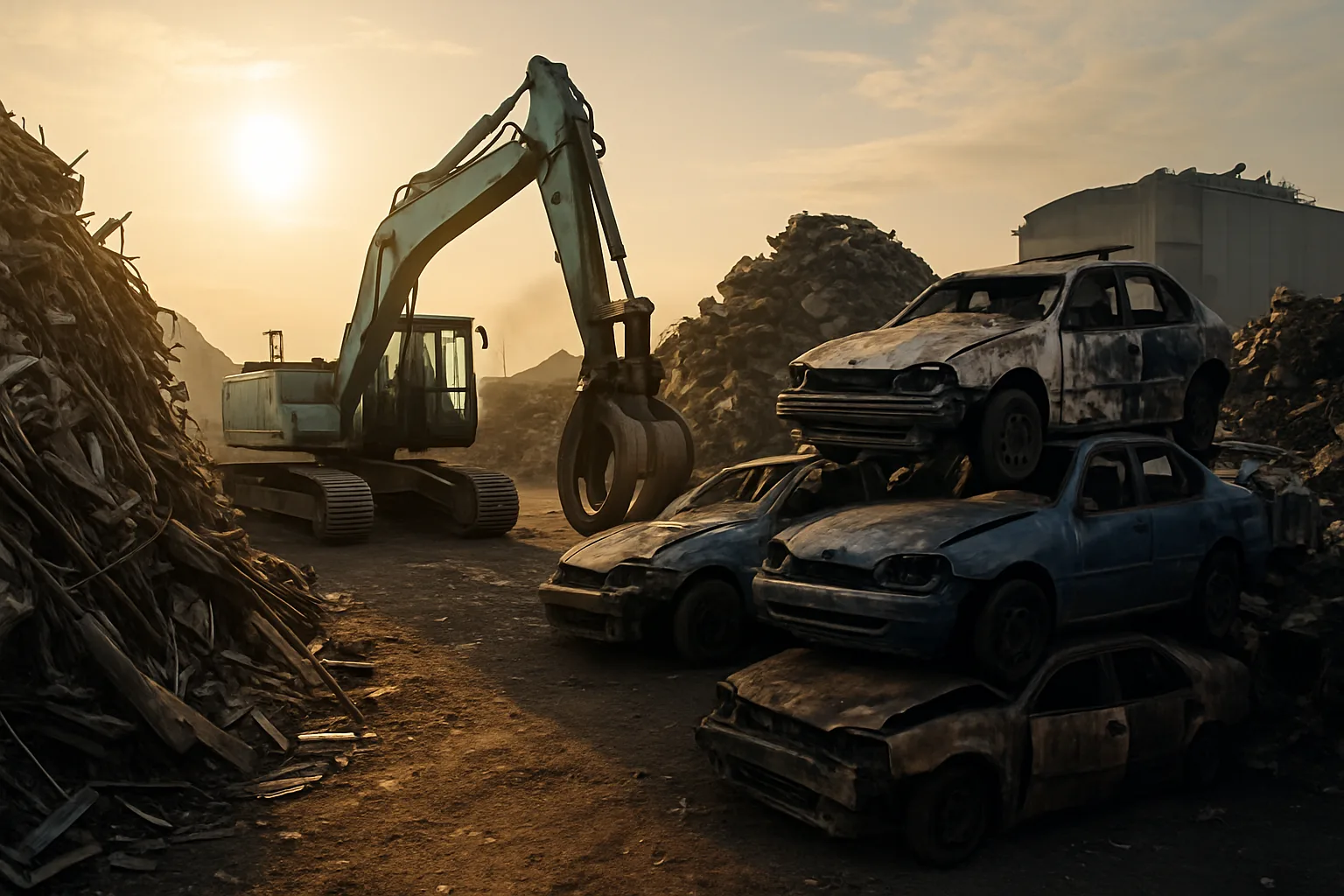
Your car survived a disaster. Now what? Whether a wildfire tore through your neighborhood or last season's storms left your sedan sitting in two feet of water, you're holding a vehicle that most dealers won't touch — and most private buyers won't either. But that doesn't mean it's worthless. In fact, free scrap car pickup San Diego services exist specifically for situations like yours. You don't need a running vehicle to get cash. You just need to know who to call.
This guide breaks down exactly what happens to flood and fire-damaged cars, what they're worth in 2026, and how to stop leaving money on the table.
---What Flood Damage and Fire Damage Actually Do to a Vehicle
Most people assume a damaged car is just... broken. The reality is more complicated — and knowing the difference matters when you're trying to sell your car for cash in the USA.
Flood damage is insidious. Water gets into the electrical system, the ECU, the airbag sensors, the interior foam, and the brake lines. Even if the engine turns over, corrosion sets in fast — especially in California's coastal climates where salt air accelerates rust. A flood-titled vehicle in San Diego will often be flagged by CARFAX immediately. That kills resale value, but it does not kill scrap value.
Fire damage is more visible but equally destructive. It melts wiring harnesses, warps frames, destroys interiors, and can compromise structural steel. However, fire doesn't melt everything. Steel still has ferrous scrap value. Aluminum components — engine blocks, wheels, radiators — survive heat better than you'd expect. A burned-out shell can still weigh 2,500 to 3,500 pounds, and that weight translates to real money at the scrap yard.
Here's the key insight: buyers who pay cash for junk cars aren't buying your car to drive it. They're buying it to dismantle it, recover parts, and sell the metal. Damage type and severity matters less than you think.
---Why Selling a Damaged Vehicle Is Harder Than It Looks — and How to Cut Through It
The traditional route for selling a damaged car goes something like this: post it online, field calls from lowball buyers, waste a weekend haggling, and eventually settle for far less than you expected. That's the old way. One buyer, one offer, no leverage.
The better route puts competition to work. Platforms like smashscrap.com connect sellers with vetted buyers through an auction format. More buyers bidding means better price discovery. You're not guessing what your wreck is worth — the market tells you.
This matters especially for disaster-damaged vehicles because their value is highly variable. A 2019 Ford F-150 with fire damage in the cab but a clean engine could command a very different price than a flooded 2015 Civic with a seized motor. Without real competition, you'll never know if you left $200 or $800 on the table.
Key problems sellers run into with damaged cars:
- Title complications — flood and fire damage often trigger a salvage or total-loss title, which buyers must be equipped to handle
- Towing logistics — a non-running vehicle needs a flatbed or rollback, not just a standard tow
- Lowball phone offers — without competitive bidding, you have zero negotiating leverage
- Documentation gaps — missing titles or incomplete VINs slow everything down
SMASH addresses all of these systematically: VIN lookup, photo documentation requirements, and vetted buyers who know how to handle salvage-titled vehicles. The process is built for exactly the kind of chaos a disaster leaves behind.
---Junk Car Removal San Diego: What the Process Actually Looks Like
If your vehicle is in San Diego — sitting in a driveway, a storage lot, or on your property post-disaster — here's what a legitimate junk car removal San Diego process looks like step by step.
- Document your vehicle. Take photos of all four sides, the engine bay, the interior, and any visible damage. Be honest about what you've got — fire char, water staining, mold, structural warping. Buyers price accurately when they have accurate information.
- Gather your paperwork. You'll need the title. If it's been lost in the disaster itself (a common situation after floods and wildfires), California DMV has a process for duplicate titles — start there before anything else.
- Get a real offer. Use a service that generates competitive offers rather than a single cold-call estimate. This is where SMASH's auction model separates itself from the standard "we'll offer you $X" text message services.
- Schedule pickup. With free scrap car pickup, a flatbed comes to your location. You hand over the keys and the title, sign the release, and receive payment. The whole process — once an offer is accepted — is typically same-day or next-day in San Diego.
- Notify the DMV. In California, you're required to submit a Notice of Release of Liability after transferring a vehicle. Don't skip this — it protects you from any liability the new owner creates.
The entire process, from first quote to vehicle gone, can happen in 24 to 48 hours for most San Diego pickup locations. You don't need to haul it anywhere. You don't need it to run.
---Scrap Metal Prices Today: What Your Damaged Car Is Worth in 2026
Let's talk numbers — carefully, because scrap metal prices today fluctuate with commodities markets, regional demand, and the specific mix of metals in your vehicle. We won't invent numbers here, but we can give you a framework.
An average passenger car contains:
- Ferrous steel — the bulk of the vehicle's weight, priced per ton
- Aluminum — found in engine blocks, wheels, hoods, and trim; priced per pound and worth significantly more per unit weight than steel
- Copper — wiring harnesses contain real copper value, particularly in newer vehicles with extensive electrical systems
- Catalytic converter metals — platinum, palladium, and rhodium; these are high-value components even on damaged vehicles, provided the cat is intact
Fire-damaged vehicles sometimes have intact catalytic converters. Flood-damaged vehicles almost always do. That one component can represent a meaningful portion of your vehicle's total scrap value — and that's a detail a single-buyer phone quote may conveniently leave out of their offer.
Disclaimer: Scrap metal prices change daily based on commodity markets. Always check current rates before accepting any offer. What your car is worth today may differ from what it was worth last week.
For the most competitive pricing on a damaged vehicle in the San Diego area, check out San Diego scrap metal services to get a current quote based on live market conditions.
---The SMASH Difference: Why Competition Beats the Single-Buyer Model
Here's the core problem with how most people sell a damaged car: they accept the first reasonable offer because they assume the car has no leverage. One call, one number, take it or leave it.
SMASH is built on a different premise. Vetted buyers compete for your vehicle through an auction format. Documented inventory — photos, VIN records, condition notes — gives buyers confidence to bid higher. When buyers have real information and real competition, you get real price discovery instead of a guess.
For flood and fire-damaged vehicles specifically, this matters even more. The value range on a damaged car is wide. A single buyer offering $400 might be leaving $700 on the table — not because they're dishonest, but because without competition they have no reason to move higher.
No subscription fees. SMASH only wins when you do. Get a free car valuation and see what your damaged vehicle is actually worth in a competitive market. You might be surprised.
If you want to understand how different car types and conditions affect your payout, read car selling guides that break it down in plain language — no jargon, no runaround.
---California Wildfire and Flood Losses: What It Means for Your Title and Your Payout
California has seen its share of disaster events in recent years, and 2026 is no exception. For San Diego residents dealing with fire or flood loss, the title situation is one of the first hurdles to clear.
When an insurer totals your vehicle — paying you the ACV (actual cash value) — they typically take the title. This converts it to a salvage title. If you retain the vehicle after a total-loss payout, you'll need to go through California DMV to get a branded (salvage) title in your name before you can transfer it to a buyer.
If your vehicle was damaged but never filed as a total loss with insurance — common with older vehicles or underinsured owners — you retain the clean title. That's actually good news for selling. A car with a clean title but obvious damage is easier to transfer than one with a salvage brand, and some buyers will pay a premium because of the title status alone.
Either way, don't let the title situation paralyze you. It's solvable. Start with the California DMV, get the paperwork in order, and then move to the sale.
---Frequently Asked Questions
Q: Can I get free scrap car pickup in San Diego for a fire-damaged vehicle?
Yes. Most legitimate junk car buyers in San Diego offer free pickup via flatbed for non-running, fire-damaged, or flood-damaged vehicles. You don't need the car to drive — you just need a title and photos of the vehicle's condition. Pickup is typically available same-day or next-day for most San Diego locations.
Q: How much is a flood-damaged car worth in 2026?
It depends on the vehicle's year, make, model, weight, and which components are intact — especially the catalytic converter, aluminum parts, and copper wiring. Scrap metal prices fluctuate daily, so get a current quote rather than relying on estimates. A competitive offer from a platform with multiple buyers will get you closer to true market value than a single-buyer phone call.
Q: Do I need a title to sell my junk car in San Diego?
In California, you generally need a title to legally transfer ownership of a vehicle — even a junk car. If your title was lost in the disaster, the California DMV offers a process to obtain a duplicate. Resolve the title first — it makes the sale faster and protects you legally after the vehicle leaves your property.
Q: What's the difference between scrap car removal and selling to a junk car buyer?
Scrap car removal typically means the vehicle goes straight to a recycling yard for metal recovery. A junk car buyer may dismantle it first for usable parts before scrapping the shell — and may pay more as a result. Either way, the vehicle leaves your property and you get paid. The best approach is to get offers from both types of buyers and compare.
Q: How does SMASH help with selling a damaged car?
SMASH connects sellers with vetted buyers through a competitive auction format. For damaged vehicles, this means multiple buyers see your car's documentation — photos, VIN, condition notes — and compete for it rather than leaving you with a single take-it-or-leave-it offer. No subscription fees, and the process is built to handle salvage-titled and non-running vehicles.
---If you're sitting on a flood-damaged or fire-damaged vehicle in San Diego, the worst move is waiting. Metal prices shift. Parts degrade further. And every week that car sits on your property is a week you're not getting paid for it. The process is straightforward, the pickup is free, and the right buyer is out there — you just need a way to find them. That's exactly what services built around competition and transparency are designed to do. Sell your car for cash in the USA — get a free quote at cashforcars-usa.com and find out what your damaged vehicle is worth today.
Stay current on scrap metal market trends and industry news — follow SMASH on LinkedIn for weekly updates and insights from inside the recycling industry.