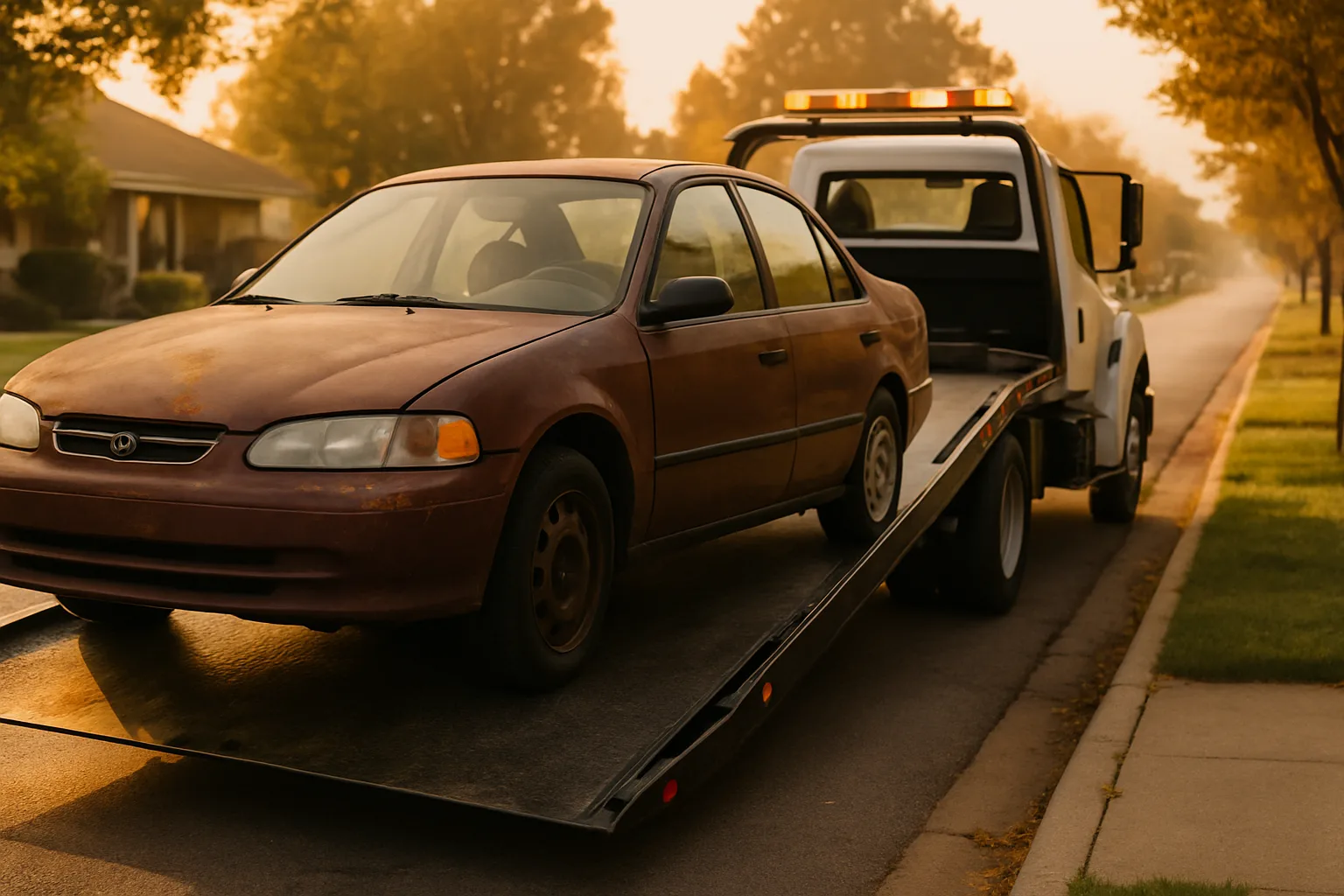
Most people never think about where their car ends up. You drive it, you maintain it (or you don't), and eventually it stops being worth fixing. But here's the part that surprises most people: that rusted-out sedan sitting in your driveway in Riverside still has real value — and knowing why can put real money in your pocket. If you're searching for a way to sell my junk car Riverside, understanding what happens to a vehicle across its entire lifecycle helps you negotiate better, avoid getting lowballed, and move fast.
This is the story every car lives through — from the factory floor to the auction block to the shredder — and exactly where you fit into it.
---Stage One: Manufacturing — Where the Value Starts
Every car begins as raw material. Steel, aluminum, copper wiring, platinum-group metals in the catalytic converter, rubber, glass, and plastics are all sourced, processed, and assembled into a vehicle that rolls off the line worth tens of thousands of dollars. A typical passenger car contains roughly 2,400 pounds of steel, 300+ pounds of aluminum, and anywhere from 3 to 7 grams of platinum, palladium, or rhodium in the catalytic converter alone.
That material value doesn't disappear when the car ages. It changes form. The steel that made your frame in a Michigan plant decades ago is still steel today — it just needs to be recovered. Automakers in 2026 are increasingly building vehicles with recyclability in mind, partly because recycled steel uses significantly less energy than virgin production. The lifecycle was always meant to loop back.
What this means for you: the car you're trying to offload isn't trash. It's a collection of recoverable commodities. The question is who's doing the recovering — and whether they're paying you what those commodities are actually worth on today's market.
---Stage Two: Active Use — Depreciation Doesn't Kill Value, It Shifts It
The moment a new car leaves the dealership, its retail value drops. Most vehicles lose a significant portion of their value in the first few years. But depreciation in the retail sense doesn't mean the car's material value disappears — it just becomes harder to see without the right tools.
During active use, a car accumulates wear, repairs, and history. A vehicle with a clean title and under 100,000 miles is still a used car sale. A vehicle with a salvage title, frame damage, or a blown engine shifts into different territory. It's no longer a transportation asset — it's a parts-and-materials asset. That's where the junk car buyer ecosystem kicks in.
For many Riverside car owners, this transition point arrives sooner than expected. The Inland Empire heat is hard on cooling systems, rubber, and paint. A car that might last 15 years in a mild Pacific Northwest climate might hit the tipping point faster here. Recognizing when you've crossed from "repair it" to "sell it" is the first smart financial decision in the back half of a car's life.
---Stage Three: End-of-Life — What Actually Happens at the Scrap Yard
When a vehicle reaches a licensed dismantler or scrap yard in California, the process is more systematic than most people imagine. It's not just crushed and melted. There's a deliberate sequence designed to extract maximum value from every component.
Here's the typical flow at a professional facility:
- Depollution: Fluids are drained — engine oil, coolant, transmission fluid, brake fluid, refrigerants. In California, strict environmental regulations govern this step. Improper fluid disposal is a serious violation.
- Parts harvesting: High-demand parts — alternators, starters, doors, seats, electronics, wheels — are pulled and inventoried for resale in the used parts market.
- Catalytic converter removal: Cats are recovered separately because of the precious metals they contain. In 2026, with ongoing regulatory scrutiny around cat theft and trafficking, documented provenance matters more than ever.
- Shredding: The remaining hulk — mostly steel — goes through an industrial shredder. The output is sorted by metal type using magnets and eddy current separators.
- Sale to mills: Recovered ferrous and non-ferrous metals are sold to steel mills and smelters, often through competitive processes that include platforms like SMASH.
The scrap yard isn't the end — it's a gateway back into the manufacturing supply chain. Your old Riverside daily driver becomes rebar, auto parts, or infrastructure steel within months of reaching a yard.
---Stage Four: The Transaction Gap — Where Sellers Get Shortchanged
Here's where most people leave money on the table. The gap between what your car is actually worth in scrap and parts value, and what a single buyer will offer you over the phone, is often significant. That gap exists because of information asymmetry — they know the current metal prices, the parts demand, and the margin on both. You don't.
This is the same problem that plagued scrap yards selling their loads for decades. One buyer, one call, one price — take it or leave it. No competition means no real price discovery. Platforms like SMASH Scrap — where verified buyers bid on your metal were built specifically to solve this problem at the yard level. When multiple vetted buyers compete for the same load, the seller gets closer to actual market value rather than whatever a single buyer decides to offer.
The same principle applies when you're trying to sell my car fast Riverside. Getting a single quote from a single buyer is not a market price — it's that buyer's offer. Comparing multiple offers across vetted junk car buyers is how you close the gap. If you want to get a free car valuation without a hard sell or a runaround, start there before you commit to any offer.
For context on how title situations affect your options: many sellers worry about missing paperwork. The reality is that legitimate junk car buyers across the U.S. — including in California — regularly handle non-standard title situations. Whether you have a lien, a lost title, or a vehicle that's been sitting so long you've lost track of the paperwork, options exist. Even queries like cash for cars no title Portland or come up regularly, demonstrating that this is a nationwide pain point — not just a California issue. Know your options before you assume you're stuck.
---Stage Five: The Smart Seller's Move — Documentation and Competition
The sellers who get the best outcomes at end-of-life aren't the ones who act desperate — they're the ones who show up prepared. In a junk car transaction, that means a few simple things:
- Know your VIN. Every buyer will ask for it. It tells them the make, model, engine, and history at a glance. Don't wait for them to ask — have it ready.
- Document what's there. If your car has good tires, a working alternator, or intact interior components, those are value-adds. Note them. Take photos. Buyers discount for uncertainty — remove as much of it as you can.
- Know your title situation. California has specific requirements around vehicle transfer and ARB compliance. If your registration is lapsed or your title is missing, call ahead and ask what you need to bring. Don't let paperwork surprises kill a deal on pickup day.
- Get multiple offers. Never accept the first offer as the only offer. The difference between the first quote and the best quote can be meaningful — especially if your vehicle has a desirable powertrain or a catalytic converter with high precious metal content.
Platforms designed for competitive selling — whether you're a yard moving bulk loads or a private seller offloading a single vehicle — level the information playing field. That's the core value. If you want to understand the broader market dynamics behind what you're selling, read car selling guides that break down how pricing actually works at every stage of the lifecycle.
---What Riverside Sellers Should Know Right Now
Riverside sits in one of the most active vehicle markets in the United States. The Inland Empire has a high concentration of households, long commutes, and a vehicle fleet that ages faster than coastal California averages — partly due to climate and partly due to mileage demands. That means more junk cars entering the market, more competition among buyers, and more opportunity for sellers who know how to play it.
The local scrap market in Southern California is also closely tied to Southern California's port activity and regional steel demand. Metal prices fluctuate based on global commodity markets — what a shredded ton of steel fetches this month may be different next month. If you're planning to sell scrap car in California, timing matters, and so does choosing a buyer who's actually connected to current market pricing rather than running a static price list.
SMASH brings auction-based competition to the scrap metal transaction — the kind of competition that helps reveal true market value instead of accepting whatever a single buyer decides. Whether you're a yard operator managing vehicle inventory or a private seller trying to move a single non-runner, the principle is the same: competition creates better outcomes than isolation.
If you're ready to stop guessing and start getting real offers, the simplest first step is to sell your car for cash in the USA through a platform that works for you, not the buyer. Get your quote, compare your offers, and let the car complete its lifecycle the right way.
---Frequently Asked Questions
Q: How much can I get when I sell my junk car in Riverside?
Junk car values vary based on the vehicle's weight, condition, make, model, and current scrap metal prices. A non-running full-size truck will typically bring more than a compact sedan because of weight and parts demand. Getting multiple quotes is the only reliable way to know your actual market value — a single offer is not a market price.
Q: Can I sell my junk car in California without a title?
Many buyers will work with you on title situations, but California has specific transfer requirements. In most cases, you'll need to contact the DMV for a replacement title or a lien release before completing the sale. Some licensed dismantlers can assist with the paperwork process — ask upfront before scheduling a pickup.
Q: How fast can I sell my car fast in Riverside?
Most legitimate junk car buyers in the Riverside area can complete a transaction within 24 to 72 hours once you've agreed on a price and confirmed paperwork. Same-day pickup is possible in some cases. Having your VIN, title, and a valid ID ready speeds the process significantly.
Q: What happens to my car after the scrap yard picks it up?
Your vehicle goes through a depollution process, parts harvesting, catalytic converter removal, and then shredding. The recovered metals — primarily steel and aluminum — are sold to mills and smelters. In many cases, the materials from your old car are back in production within months.
Q: Does it matter which scrap metal auction platform a buyer uses?
It matters more than most sellers realize. Buyers connected to competitive auction platforms — like SMASH — are working with current market pricing and facing real competition for loads. That competition tends to flow back up the chain, resulting in more competitive offers to sellers. Buyers running isolated, non-competitive purchasing operations have less incentive to offer full market value.
---Prices fluctuate based on global commodity markets. Always check current scrap metal rates before finalizing any transaction. The values referenced in this article are general in nature and should not be taken as guaranteed pricing for any specific vehicle.
Follow SMASH on LinkedIn for ongoing updates on scrap metal market conditions, industry trends, and platform news.