Junkyard, Salvage Yard, or Auto Recycler — Does the Label Actually Matter When You Want Cash for Your Car?
Most car owners in Colorado Springs use these three terms interchangeably. They're not the same thing. And if you don't know the difference, you could end up at the wrong place — leaving money on the table or hauling your car to a facility that doesn't even want it.
Here's the straight version: each type of operation handles end-of-life vehicles differently. They buy different cars, pay differently, and serve different purposes in the scrap and recycling chain. If you're trying to sell my car for cash Colorado Springs, understanding which type of buyer fits your situation can mean the difference between a fair deal and a frustrating runaround.
Let's break it down — no jargon, no fluff.
---What Is a Junkyard? (And Why Most People Get This Wrong)
The word "junkyard" carries a lot of baggage. People picture a chaotic lot full of crushed cars, rusted frames, and a guy with a clipboard who barely looks at your vehicle before quoting you the lowest possible number. That image isn't entirely wrong — but it's incomplete.
A traditional junkyard is primarily a scrap metal operation. Their core business is weight. They buy vehicles by the ton, crush them, and sell the ferrous and non-ferrous metals to processors and mills. The car's condition, make, model, or mileage matters far less than how much it weighs and what the current scrap metal market is paying. If you've got a rusted-out 2009 Chevy pickup that isn't worth repairing, a junkyard may quote you a price based almost entirely on its crushed weight value.
This works fine for genuinely end-of-life vehicles. But if your car still has working parts — a solid transmission, functional catalytic converters, usable interior components — a junkyard may not recognize or pay for that added value. You're essentially selling a steak at ground beef prices.
- Primary focus: Scrap metal recovery and ferrous/non-ferrous material sales
- How they price: Mostly by weight and current scrap rates
- Best for: Completely non-functional, high-damage, or flood-totaled vehicles
- What to watch: Limited transparency on how the number was calculated
What Is a Salvage Yard — And How Does It Differ from a Junkyard?
A salvage yard plays a fundamentally different game. Yes, they take junk cars. But their primary revenue stream isn't scrap metal — it's used parts. Salvage yards buy vehicles, strip them for reusable components, and resell those parts to mechanics, body shops, and DIY repair folks. Think doors, engines, transmissions, alternators, body panels, seats, and wiring harnesses.
Because salvage yards depend on the parts inside your car, they price vehicles based on what's actually useful. A 2016 Honda Civic with a blown engine but a pristine interior and intact catalytic converters might fetch significantly more at a salvage yard than at a junkyard that only cares about the metal weight. The trade-off? Salvage yards are often more selective. If your vehicle is a rare make or model with low parts demand in the local market, they may pass on it entirely — or offer very little.
In Colorado, salvage yards are also subject to state titling and documentation requirements. Most legitimate operations will require your title before they hand over any cash. Bring your paperwork. Don't show up expecting a handshake deal.
- Primary focus: Parts resale — doors, engines, transmissions, cats, interiors
- How they price: Based on parts demand, vehicle age, condition, and make/model
- Best for: Vehicles with functional or reusable components, even if the car doesn't run
- What to watch: May decline common or heavily damaged vehicles with low parts value
If you want to sell your car for cash in the USA and you're unsure whether your vehicle has more parts value or scrap value, getting multiple quotes — from both types of facilities — is the smartest move you can make before you commit.
What Is an Auto Recycler — And Why It's the Most Misunderstood Option
Auto recyclers sit at the top of the sophistication ladder in this space. They do what junkyards and salvage yards do — but with more process, more documentation, and more environmental accountability. A licensed auto recycler typically handles fluid drainage and disposal, catalogues reusable parts using inventory management systems, resells components through online marketplaces, and processes the remaining metal through a compliant recycling chain.
Many auto recyclers are members of industry organizations like the Automotive Recyclers Association (ARA). They operate with formal inventory systems — often tracking parts by VIN, serial number, and condition grade. That level of documentation benefits buyers of used parts because they know exactly what they're getting. It also benefits vehicle sellers, because a recycler with efficient operations can often justify paying more for the right car.
This is where tools like North America's B2B scrap metal auction platform come into the picture. Platforms like SMASH exist because the downstream buyers of processed scrap — the mills, processors, and traders — need the same thing that auto recyclers need: verified inventory, competitive pricing, and a documented transaction chain. The difference between guessing your load's value and actually knowing it comes down to whether there's competition and transparency in the deal.
- Primary focus: Full-cycle vehicle processing — parts, fluids, metals, compliance
- How they price: Based on a combination of parts value, metal content, and operational efficiency
- Best for: Any condition vehicle — they have the systems to extract maximum value
- What to watch: Not every auto recycler buys directly from the public; some are wholesale-only
So Which One Should You Call If You Want to Sell My Junk Car in Colorado Springs?
If you're in Colorado Springs trying to move a vehicle fast — whether it runs or not — the answer depends on what your car actually is. Not what you think it's worth. What it actually is.
Here's a practical breakdown:
- Car is completely trashed — flood damage, major collision, stripped interior, frame damage. Go to a junkyard or call a cash for cars service. The metal is the value.
- Car doesn't run but has good parts — blown head gasket, dead transmission, but solid body and reusable components. A salvage yard may pay more than a straight junk quote.
- Car runs but isn't worth repairing or selling privately — maybe it's high-mileage, cosmetically rough, or has a complex repair history. A cash-for-cars buyer or auto recycler can move this quickly.
- You have no title — this narrows your options significantly. Some buyers will work with a bill of sale and ID. Others won't touch it. Know this before you make calls.
The fastest path to cash is usually a dedicated cash for junk cars service — one that sends a buyer to you, quotes you upfront, handles the tow, and pays on the spot. You don't have to figure out whether your car belongs in column A or column B. They deal with all types.
Want to get a free car valuation before you commit to any buyer? That's a smart first step. Know the number before you pick up the phone.
How Scrap Metal Inventory Management Changes the Equation for Buyers and Sellers
Here's something most private car sellers never think about: the buyer on the other end of your transaction has their own pricing pressures. Salvage yards, auto recyclers, and scrap processors all operate on margins. When their downstream prices move — when scrap metal markets shift or parts demand changes — it affects what they can offer you.
Better scrap metal inventory management on the buyer's side means more accurate pricing, faster offers, and fewer lowball numbers designed to hedge against uncertainty. When a buyer knows exactly what they have in inventory, what it's worth, and who's competing for it, they can make you a cleaner offer. That's the logic behind platforms like SMASH — bringing competitive, transparent auctions to the B2B scrap and recycling space so buyers and sellers both get honest market prices.
For you as a car seller, the practical takeaway is this: work with buyers who have their operations together. Sloppy inventory management at a yard usually means sloppy offers to you. Operators who invest in process — documentation, VIN tracking, photo records, competitive selling — tend to run tighter, fairer operations across the board.
If you want to go deeper on how this works from the buyer's side, read car selling guides that break down how cash-for-cars buyers and scrap operations actually price vehicles. The more you understand the other side of the table, the better deal you negotiate.
Getting Paid: What to Expect When You Sell a Car for Cash in Colorado Springs
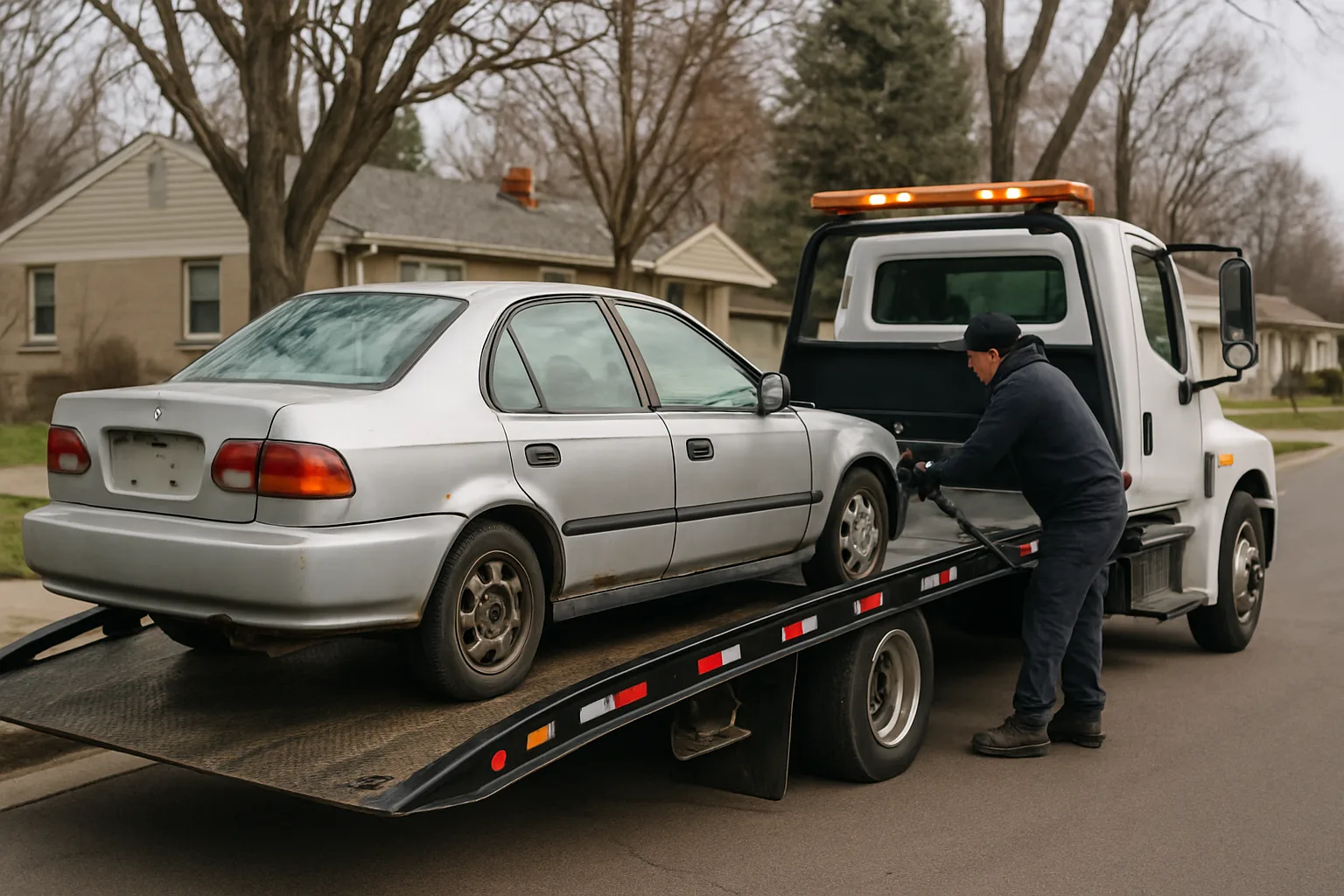
Whether you're dealing with a junkyard, salvage yard, or auto recycler, the transaction basics are the same in Colorado Springs. You'll need your title (or proof of ownership). You'll get a quote — ideally in writing before anyone touches your car. A tow truck picks up the vehicle, you sign over the title, and you get paid. Done.
The variables are in the quote, the speed, and the hassle. Legitimate cash-for-cars buyers eliminate most of the friction: free towing, same-day or next-day pickup, payment on the spot. You don't have to negotiate with three different departments or wait for a parts assessment before someone tells you a number.
If you're ready to move your vehicle and want a clean, straightforward process, cashforcars-usa.com is the place to start. Get your quote, schedule your pickup, and get paid — without the runaround.
Frequently Asked Questions
Q: What's the fastest way to sell my junk car in Colorado Springs?
The fastest route is a dedicated cash-for-cars buyer who offers free towing and same-day or next-day pickup. You get a quote upfront, schedule a pickup, sign over the title, and receive payment on the spot. No trips to a yard required.
Q: Do I need a title to sell my car for cash in Colorado Springs?
Most legitimate buyers require a clean title in your name. Colorado state law requires proper title transfer for vehicle sales. Some buyers will work with a bill of sale or ID in limited situations — but having your title ready speeds up the process significantly and protects you legally.
Q: Does it matter if my car doesn't run when I'm trying to sell it?
Not at all. Cash-for-cars buyers and scrap buyers purchase non-running vehicles regularly. They bring a tow truck to you. The condition of the car affects the offer, but a non-running vehicle can absolutely still generate a cash payment.
Q: How do junkyard prices compare to what a cash-for-cars service pays?
It depends on the vehicle. Junkyards price primarily by metal weight and current scrap rates. Cash-for-cars services typically factor in more variables — make, model, year, parts value — which can mean a higher offer for the right car. Getting quotes from both is always worthwhile.
Q: Can I sell a car for cash in Colorado Springs if it has mechanical problems?
Yes. Mechanical problems — blown engines, bad transmissions, failed emissions — are common reasons people sell to cash buyers. These buyers specialize in vehicles that aren't viable for private sale. Your car's mechanical state affects the price, but it won't disqualify it from being purchased.
Ready to move your vehicle without the back-and-forth? Sell your car for cash in the USA — get a free quote at cashforcars-usa.com and find out what your car is actually worth today.
For industry updates, scrap metal market insights, and B2B recycling news, follow SMASH on LinkedIn — the people building transparency into the scrap and recycling trade across North America.