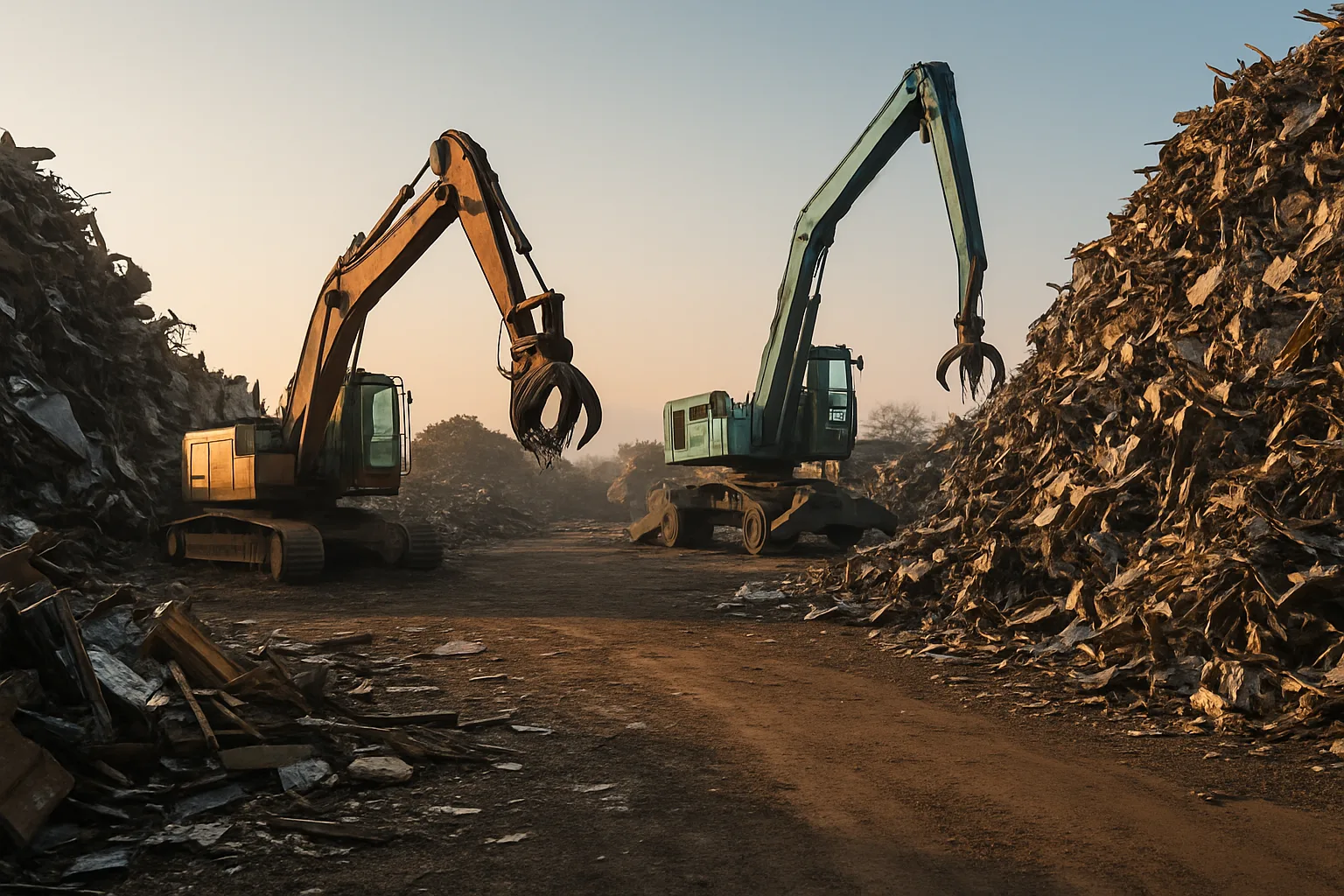
Most people use the words "junkyard," "salvage yard," and "auto recycler" like they mean the same thing. They don't — and if you're trying to sell my car fast Fort Wayne, knowing the difference could mean walking away with significantly more cash in your pocket.
These three types of operations handle end-of-life vehicles very differently. They pay differently, process vehicles differently, and serve different kinds of buyers. If you call the wrong one, you might get lowballed — or worse, get stuck with a car nobody wants to touch.
Here's what you actually need to know before you make that call.
---What Is a Junkyard — And Why Most People Picture It Wrong
The word "junkyard" conjures a specific image: acres of crushed cars, a mean dog, a guy in overalls who doesn't want to talk to you. That image isn't entirely wrong, but it misses what these operations actually do.
A traditional junkyard is primarily a scrap processing facility. They're in the business of buying vehicles by weight — specifically, the value of the steel, aluminum, copper, and other metals inside. They're not interested in your working alternator or your low-mileage transmission. They want pounds. They'll quote you a price based on the weight of your vehicle multiplied by the current scrap metal rate.
What that means for you practically:
- Offers are tied directly to SMASH Scrap — where verified buyers bid on your metal and current commodity prices — which fluctuate week to week
- The condition of your car matters very little beyond drivability (can it be towed easily?)
- Payouts tend to be lower because the operator is taking on the cost of processing and reselling the metal
- Most will handle the title and towing logistics, but payment terms vary
In Fort Wayne, Indiana, there are several of these operations scattered along the industrial corridors northeast and southeast of the city. They primarily serve yards looking to move bulk metal — not individual sellers trying to maximize return on a single vehicle.
Salvage Yards: Parts First, Scrap Second
A salvage yard plays a completely different game. These businesses buy vehicles to dismantle them and resell working parts. Before any car gets crushed, a salvage yard strips it for usable components — doors, engines, transmissions, catalytic converters (cats), seats, mirrors, ECUs, and hundreds of other parts that still have real market value.
This changes the math entirely. A salvage yard can potentially extract two, three, or even four times the scrap value of a vehicle by selling parts individually before what's left goes to the metal processor. That's why salvage yards often pay more for specific vehicles than a straight junkyard will.
What they're looking for:
- Late-model vehicles with parts still in demand (think 2015–2024 makes)
- Vehicles with low-damage, high-value components — a car that's been rear-ended but has a perfect engine
- Common makes where parts move quickly: Ford F-Series, Chevy Silverado, Honda Civic, Toyota Camry
- Vehicles where the catalytic converter hasn't already been stolen — cats carry serious value in scrap and parts markets
The catch? Salvage yards are selective. If your 2004 Dodge Stratus has 220,000 miles and a cracked block, there's not much there worth parting out. They may still take it, but at closer to scrap value. Salvage yards in Indiana are regulated and licensed — they're required to track vehicle identification numbers (VINs) and maintain paperwork, which actually protects you as a seller.
Auto Recyclers: The Modern, Transparent Version
Auto recyclers are where the industry has evolved. An auto recycler is essentially a salvage yard operating with higher standards — better inventory systems, digital part listings, environmental compliance, and increasingly, participation in competitive pricing networks.
The difference between a salvage yard and an auto recycler is often process and accountability. Auto recyclers typically:
- Use digital inventory systems with VIN lookup and serial tracking
- Document vehicle condition with photos before and during dismantling
- Comply with environmental regulations around fluid removal and hazardous material handling
- List parts through national networks, reaching buyers far beyond their local market
- Provide cleaner title transfers and proper bill of lading (BOL) documentation
For sellers, this matters because documented processes create trust — and trust enables competition. When an auto recycler can accurately assess and document what they're buying, they can also participate in platforms where multiple buyers compete for that inventory. That competition is exactly what platforms like SMASH are built on.
If you want to sell your car for cash in the USA and get something closer to actual market value, finding an auto recycler — or listing through a competitive buyer network — is the smarter path than calling the first junkyard number you find.
How to Know Which One You're Dealing With — And Why It Matters for Cash for Junk Cars Fort Wayne
Here's the honest truth: in Fort Wayne and across Indiana, many operators wear multiple hats. The same facility might function as a junkyard, salvage parts operation, and auto recycler depending on the vehicle. What matters is knowing how they're going to evaluate your specific car — and whether you're getting a single-buyer price or something based on actual market demand.
Questions to ask any buyer before you accept an offer:
- "Are you quoting me based on scrap weight or parts value?" — This tells you immediately how they're thinking about your car.
- "How did you arrive at that number?" — A serious buyer can explain their logic. If they just throw out a number, push back.
- "Will you handle the title transfer and towing?" — These costs can eat into your payout if they're not included.
- "Is this price locked in or does it change when you pick up?" — Some buyers quote high and adjust on arrival. Get it in writing.
- "What's the current scrap rate per ton you're working from?" — If they can't answer this, they may not be offering you a fair cut of the underlying commodity value.
In competitive markets, cash for junk cars Fort Wayne buyers know they're competing against other offers. The best way to leverage that competition is to get multiple quotes — and ideally, to use a platform where buyers are already competing against each other in real time.
What's Your Car Actually Worth in Scrap vs. Parts?
This is the question most sellers never ask — and it's the most important one. Junk car prices today are driven by two separate markets that often move in different directions: the commodity scrap metal market and the used auto parts market.
Scrap value is relatively straightforward. A mid-size sedan weighs roughly 3,000–3,500 lbs. The ferrous (steel) content makes up a large percentage of that weight. Scrap steel prices vary, but as a seller, you can get a rough idea of the floor value of your vehicle just by knowing its approximate weight and checking current regional scrap rates. Prices fluctuate — always check current rates before making decisions.
Parts value is harder to estimate without expertise, but some components are consistently valuable:
- Catalytic converters — precious metals inside (platinum, palladium, rhodium) make these high-value, especially on hybrid vehicles
- Engines and transmissions — particularly from reliable, high-demand makes
- Aluminum wheels — non-ferrous metals command better prices per pound than steel
- Airbag modules — if undeployed, these have significant resale value
- Body panels and glass — on late-model vehicles with clean panels
If you want to understand how much is my car scrap value versus its parts value, the answer depends heavily on year, make, model, mileage, and condition. Getting a free valuation before you commit to any single buyer is the smartest move you can make. You can get a free car valuation right now without any obligation to sell.
The Smarter Way to Sell — Let Buyers Compete for Your Car
The old way of selling a junk car in Fort Wayne looked like this: you called one buyer, they gave you a number, you either took it or spent two days calling around trying to find something better. Most people just took the first offer because the process was exhausting.
That model benefits the buyer, not you. When there's only one number on the table, you have no idea if it's fair. You're guessing. And in a market where scrap prices and parts values shift constantly, guessing is expensive.
The better model is competition. When multiple vetted buyers can see your vehicle details, photos, and documentation and place competing bids, you stop guessing and start seeing what the market actually thinks your car is worth. That's the principle behind platforms like SMASH — bringing transparency and buyer competition to a market that's been operating on opacity for decades. For more on navigating this process, read car selling guides covering everything from title transfers to getting the most from your junk car.
Whether you're in Fort Wayne or anywhere else across Indiana and the broader U.S., the math is simple: more buyers competing for your vehicle means better price discovery. One phone call to one buyer means you're leaving money on the table by default.
If you're ready to stop guessing and start getting real offers, sell your car for cash in the USA and get a free quote at cashforcars-usa.com. No pressure, no obligation — just real numbers from real buyers.
---Frequently Asked Questions
Q: What's the fastest way to sell my car fast in Fort Wayne, Indiana?
The fastest way is to have your title ready, know your vehicle's year, make, model, and approximate mileage, and submit it to a buyer network where multiple buyers can make offers simultaneously. Avoid calling individual junkyards one at a time — that process is slow and rarely gets you the best price. Most reputable cash-for-cars buyers in Fort Wayne can complete pickup within 24–48 hours once an offer is accepted.
Q: How do I get the best cash for junk cars in Fort Wayne?
The key is competition. Don't accept the first offer you receive. Get at least two or three quotes, and ideally use a platform where buyers are already competing against each other. Know the difference between a scrap-weight offer and a parts-value offer — they can differ significantly depending on your vehicle.
Q: How much is my car worth in scrap value today?
Scrap value depends on your vehicle's weight, the current price of steel and non-ferrous metals, and whether high-value components like the catalytic converter are still intact. Prices fluctuate with commodity markets — always check current rates and get a real quote rather than relying on outdated price guides. A free valuation gives you a real baseline.
Q: Do I need a title to sell a junk car in Indiana?
In most cases, yes. Indiana requires a title for vehicle transfers, including junk car sales. If you've lost your title, you can apply for a duplicate through the Indiana Bureau of Motor Vehicles before selling. Some buyers will work with you on title issues, but having a clean title ready speeds up the process and often results in a better offer.
Q: Is there a difference between selling to a junkyard versus an auto recycler in terms of payout?
Often, yes. Auto recyclers that assess and document parts value before purchase can afford to pay more than a straight junkyard quoting you purely on scrap weight. The difference can be meaningful, especially for late-model vehicles, hybrids, or cars with intact catalytic converters. It's worth getting quotes from both types of buyers before making a decision.
---Stay current on scrap metal market trends and auto recycling industry insights by following SMASH on LinkedIn: linkedin.com/company/scrap-metal-auction-sales-hub.