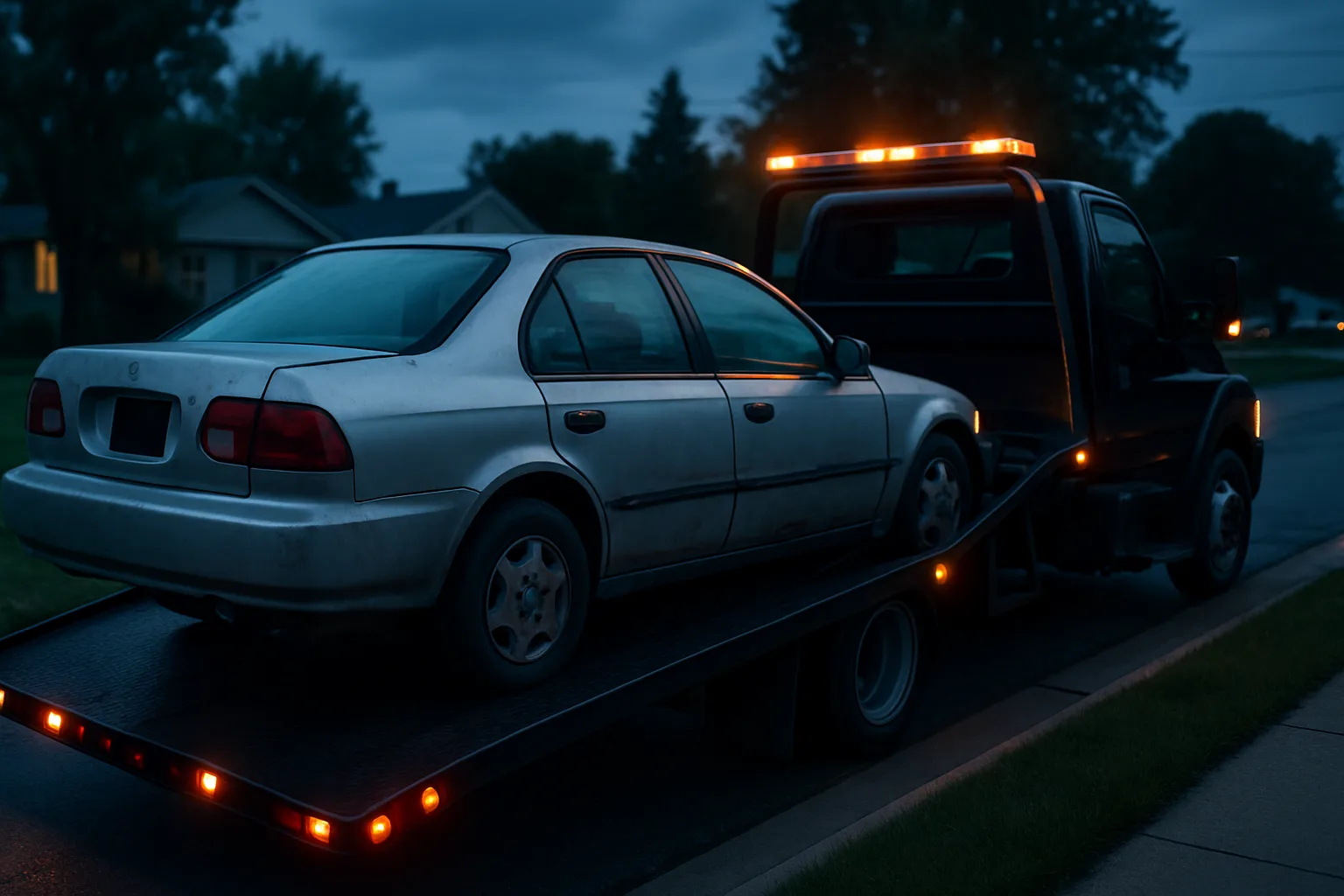
Most people use the words "junkyard," "salvage yard," and "auto recycler" like they mean the same thing. They don't. And if you're trying to sell my junk car Milwaukee and get the best return, knowing the difference could put more money in your pocket — or save you a wasted trip across town.
These three types of facilities operate differently, pay differently, and want different things from your vehicle. Here's how to tell them apart — and how to make sure you're talking to the right buyer before you pick up the phone.
What Is a Junkyard? (And Why It's Not Always Your Best Option)
The word "junkyard" is the oldest of the three — and it carries some baggage for a reason. Traditional junkyards were essentially holding lots for broken, abandoned, or written-off vehicles. Some still operate this way: a fenced field full of cars in various states of decay, organized loosely (or not at all), with staff who may or may not know what's worth pulling.
At a classic junkyard, the pricing is often informal. You show up, someone looks at your car, and they give you a number based on gut feel and whatever they think they can unload. There's no market data driving that quote. No competition. Just one buyer making an offer on their terms.
That's not always a bad experience — but it's rarely a great one if you're trying to maximize what you walk away with. You're essentially negotiating blind, against someone who does this every day and has every incentive to pay you as little as possible.
What Is a Salvage Yard? How It Differs From a Junkyard
A salvage yard is more organized and more focused. The core business model is parts resale. They buy vehicles — often accident-damaged, flood-damaged, or high-mileage — strip them for usable components, and resell those parts to repair shops, DIY mechanics, and dealerships.
If your car has value beyond its weight in steel — a solid transmission, low-mileage engine, intact door panels, or a good set of wheels — a salvage yard may pay you more than a junkyard. They're looking at your vehicle as a parts inventory, not just scrap.
A few things to keep in mind when dealing with salvage yards:
- They're selective. If your car is too far gone or too common (saturated parts supply), they may lowball you or pass entirely.
- Negotiation is normal. Salvage yards know which parts are worth pulling. Don't be afraid to ask what they're valuing on your specific vehicle.
- Title requirements vary. Many salvage yards require a clean title to legally process the transaction. If you're dealing with cash for cars no title no registration situations, verify their policy before driving out.
- Towing logistics differ. Some offer free pickup; others expect you to deliver.
In Milwaukee and across Wisconsin, there are established salvage operations that handle everything from late-model passenger cars to light commercial trucks. If your vehicle is relatively recent and has intact mechanical components, it's worth getting a salvage yard quote alongside any other offers you receive.
What Is an Auto Recycler — and Why Serious Sellers Should Pay Attention
Auto recyclers are the most sophisticated operation of the three. They're not just buying your car and flipping parts — they're processing vehicles in compliance with environmental regulations, recovering materials at scale, and often operating within certified industry standards.
In 2026, proper end-of-life vehicle processing matters more than ever. Fluids, batteries, airbag modules, refrigerants — these all require controlled handling. A licensed auto recycler manages all of that. They also tend to be more systematic about how they assess and document vehicles, which means their pricing is often more data-driven and consistent.
Many auto recyclers have relationships with downstream buyers — steel mills, non-ferrous processors, and specialty scrap dealers. That supply chain integration means they can sometimes offer more competitive payouts than a traditional junkyard, especially on vehicles with meaningful non-ferrous content or parts that move fast in secondary markets.
Here's where it gets interesting for anyone trying to sell scrap car in Wisconsin: platforms like the SMASH scrap metal auction marketplace are changing how auto recyclers and scrap dealers connect with sellers. Instead of one buyer, one phone call, and one take-it-or-leave-it number — you get competition. Multiple vetted buyers bidding on your material. That competition is what drives price discovery, and it's what the old model was never designed to give you.
Which Type of Buyer Is Right for Your Vehicle?
There's no single right answer — it depends on the condition of your car, your timeline, and whether you have paperwork in order. Here's a practical breakdown to help you decide where to start:
Your Car Is Completely Dead — No Parts Worth Pulling
If the engine is seized, the body is crushed, or the vehicle has been sitting so long it's more rust than steel, you're looking at scrap weight value. A junkyard or auto recycler that processes for scrap is your target. Get multiple quotes. Weight matters here, and so does the current price of steel and non-ferrous metals in your region.
Your Car Has Good Mechanical Components
A running transmission, a solid engine, or a low-mileage drivetrain can attract salvage yard interest. If the vehicle is a popular make and model — think late-model trucks or common commuter sedans — you may find a salvage operation willing to pay a premium for the parts inventory potential.
You Have a Catalytic Converter Still Attached
This is worth a separate conversation. Catalytic converters contain platinum, palladium, and rhodium — precious metals with real commodity value. If your cat is intact and the vehicle hasn't been stripped, that converter can be a meaningful portion of your vehicle's total value. Some buyers specialize specifically in this. A catalytic converter auction format — like what SMASH facilitates — means those cats get exposed to real market competition rather than a single buyer quoting you whatever they feel like that afternoon.
You're Missing Title or Registration
This is common and it's not automatically a dealblock. Many junk car buyers near me for cash will work with you if you have proof of ownership through alternate documentation — an old registration, a bill of sale, or a court-issued title replacement. Laws vary by state, so if you're in Wisconsin, check your specific county DMV requirements before assuming you're stuck.
How Milwaukee Sellers Can Work the System Smarter
Here's the honest truth about selling a junk or scrap vehicle in Milwaukee: most people leave money on the table because they call one place, get one number, and accept it. The buyer knows they're your only option. That's not competition — that's a negotiation you've already lost.
The smarter move is to treat your vehicle like what it is: a commodity with real market value. Get at least three quotes. Know whether your car has parts value, scrap value, or both. And understand that different buyers are optimized for different things.
If you've got a load with meaningful non-ferrous content — copper wiring, an aluminum block, or intact catalytic converters — don't just hand it to the first buyer who answers the phone. Explore Milwaukee scrap metal services that connect you with multiple buyers and give you a transparent look at what your material is actually worth.
For broader vehicle sales across the US, platforms that create auction-style competition among vetted buyers are changing the game. SMASH is built exactly on this premise: no subscription fees, no guessing, just documented inventory exposed to real buyer competition. More buyers means better price discovery. That's not hype — it's how markets work.
If you want to sell your car for cash in the USA without the runaround, start by knowing which type of buyer you're actually dealing with — and make sure they're competing for your business, not the other way around.
Documentation, Titles, and What to Have Ready Before You Call
Regardless of which type of facility you approach, showing up prepared puts you in a stronger position. Here's a quick checklist of what to have ready:
- Title (if available): Clean titles mean faster transactions and often better offers. If you've lost it, start the replacement process early — Wisconsin DMV processes replacement titles through standard channels.
- Photo documentation: Take photos of all four sides, the interior, the engine bay, and the undercarriage if accessible. Good photos help buyers make more confident offers — which means higher bids.
- VIN: Every legitimate buyer will run a VIN check. Have yours ready. It helps buyers verify the vehicle history, confirm the make and model, and assess parts demand.
- Odometer reading: Even on junk vehicles, mileage affects parts value assessments.
- List of known issues: Be upfront. Buyers who feel confident about what they're getting are more likely to make strong offers — and less likely to renegotiate at pickup.
If you want to get a free car valuation before you start making calls, doing that homework upfront gives you a baseline to measure every offer against. Knowledge is negotiating leverage.
For more practical guides on navigating the car selling process, read car selling guides that break down real scenarios — from title issues to parts value to what happens at pickup.
The bottom line: a junkyard, a salvage yard, and an auto recycler are three different businesses with three different value models. Matching your vehicle to the right buyer — and making sure that buyer is competing against others — is how you stop leaving money on the table. If you're ready to move your vehicle and want a straightforward, no-guesswork process, get a free quote at cashforcars-usa.com and find out what your car is actually worth today.
Frequently Asked Questions
Q: What's the fastest way to sell my junk car in Milwaukee?
The fastest route is to have your VIN, photos, and basic vehicle info ready before you make any calls. Contact multiple buyers at once — junkyards, salvage yards, and platforms that aggregate offers. Cash For Cars USA can often turn around a quote and schedule pickup within 24–48 hours for Milwaukee-area vehicles.
Q: Can I sell my car in Wisconsin without a title?
It depends on the buyer and the vehicle's age. Wisconsin has specific rules around title requirements for vehicle transfers. Some junk car buyers will accept alternate proof of ownership for older vehicles. Always ask upfront — and if you need a replacement title, Wisconsin DMV processes them online or in person at your local county office.
Q: Do junkyards pay more or less than auto recyclers?
It varies by vehicle. Traditional junkyards tend to price on gut feel and scrap weight. Auto recyclers often use more systematic pricing that accounts for parts value and downstream commodity markets. If your vehicle has intact components or valuable non-ferrous materials like a catalytic converter, an auto recycler or auction-based platform may return more.
Q: What happens to my catalytic converter when I sell my car for scrap?
Catalytic converters contain precious metals — platinum, palladium, and rhodium — and are processed separately from the vehicle's steel. Buyers often value them independently. If your cat is intact, make sure any quote you receive accounts for its value. A catalytic converter auction format ensures multiple buyers compete on that component's actual market value rather than a flat guess.
Q: Do I need to be present for junk car pickup in Milwaukee?
Most buyers require the registered owner — or their authorized representative — to sign off on the transaction at pickup. Have your ID ready and, if possible, your title or alternate ownership documentation. Pickups in the Milwaukee area are typically scheduled same-week for most vehicles.
Follow SMASH on LinkedIn for scrap metal market updates, industry insights, and auction news across North America.