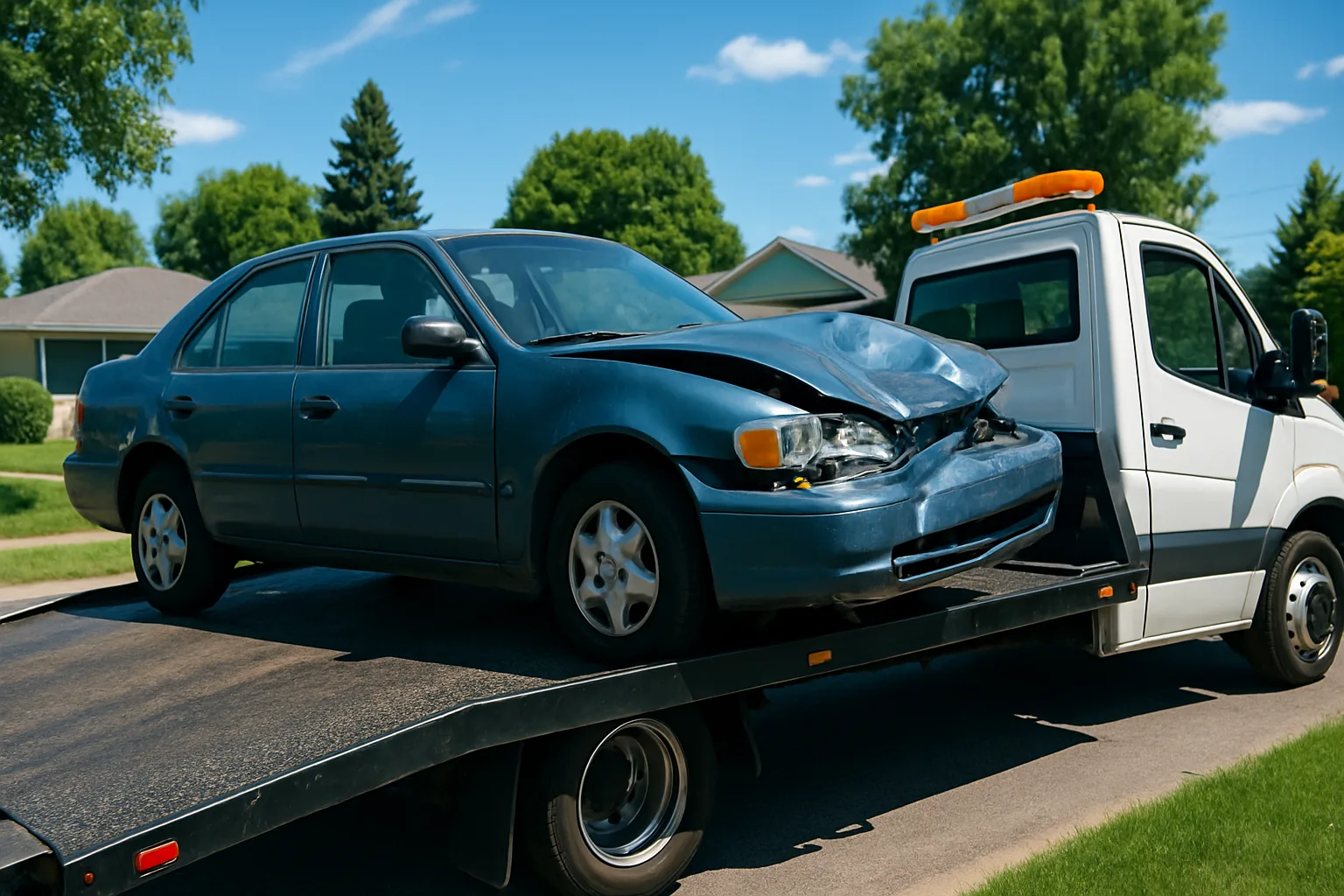
What's Your Scrap Car Actually Worth? A Realistic Guide for 2026
Most people selling a junk car expect more than they get — or settle for less than they should. The gap between those two outcomes usually comes down to one thing: knowing what actually drives your car's value before you make a single phone call. If you're sitting on a dead vehicle in your driveway in Syracuse or anywhere else across New York, this guide breaks down exactly what your scrap car is worth and how to get a fair price for it in 2026.
The honest answer is: it depends on a handful of real, measurable factors. Scrap car value isn't random. It's driven by metal prices, vehicle weight, condition, and what parts can be pulled before the car hits the crusher. Understanding these factors puts money back in your pocket.
The Biggest Factor: Scrap Metal Weight and Current Market Prices
At its core, a scrap car is a pile of metal. The baseline value starts with weight. A typical passenger car weighs between 3,000 and 4,500 pounds. Trucks and SUVs run heavier — sometimes 5,000 to 6,000 pounds or more. Most of that weight is ferrous metal (steel and iron), which gets priced per ton at your local scrap yard.
Scrap steel prices fluctuate constantly based on global demand, domestic manufacturing activity, and commodity markets. What a yard paid per ton in early 2026 may look different by the time you read this. That volatility is real — don't let anyone quote you a locked-in price weeks out. The smart move is to get current quotes from multiple buyers so you know where the market actually sits the day you're ready to sell.
Beyond ferrous metal, a scrap car contains smaller amounts of higher-value non-ferrous materials: copper wiring, aluminum trim and engine components, and sometimes a catalytic converter. That cat alone can be worth a meaningful amount depending on the vehicle — some contain platinum, palladium, and rhodium. Knowing whether your car has a cat — and whether it's still attached — matters.
What Adds Value Beyond the Metal: Parts, Condition, and Components
A car that still has working parts in it is worth more than a bare shell. Salvage buyers and scrap yards look at what's recoverable before they price a load. If your engine still turns over, your transmission shifts, or your body panels are rust-free, those components may have more resale value than the scrap metal underneath them.
Here's a quick breakdown of what can add real value to a junk car:
- Catalytic converter (intact): One of the highest-value components on many vehicles. Precious metal content varies by make and model.
- Engine and transmission: Running or rebuildable units are worth significantly more than scrap weight alone.
- Aluminum wheels: Non-ferrous metal — priced separately from steel at better per-pound rates.
- Battery: Lead-acid batteries have scrap value. Many yards deduct if it's missing.
- Airbags (undeployed): Salvage yards may recover these for resale.
- Late-model electronics: Infotainment units, sensors, and modules on newer vehicles can have used parts value.
The condition of the car matters, but not the way most sellers assume. A car doesn't need to run or drive to have solid value. What actually matters is whether the key components are still there, whether the body is solid enough to pull parts, and whether you can provide documentation — title, registration, or ownership proof — to complete the transaction cleanly.
How Junk Car Buyers in Syracuse Determine Your Quote
If you're in Syracuse looking to sell your car for cash in the USA, here's what the buyer on the other end of the phone is actually calculating when they give you a number.
First, they're checking live scrap metal prices in their market. Second, they're estimating the vehicle's weight based on year, make, and model. Third, they're accounting for towing distance and fuel costs for pickup. Fourth — and this is the part most sellers miss — they're building in their margin based on how confident they are in what they're buying.
That last point is important. A buyer who has never seen your car, has no photos, and can't verify the condition is going to price in risk. They'll lowball to protect themselves. A seller who shows up with photos, has the title in hand, and knows what components are still on the vehicle is a much easier transaction — and typically gets a better offer because the buyer doesn't have to guess.
This is exactly the problem that platforms like SMASH are built to solve. When you document your vehicle properly — photos, VIN, condition notes, component checklist — you give buyers the confidence to compete on price instead of guessing and hedging. SMASH Scrap — where verified buyers bid on your metal — means you're not accepting the first lowball from one buyer. You're letting the market tell you what your car is actually worth.
The Old Way vs. The Right Way to Sell a Scrap Car
The old way: call one yard, take their word for it, accept their offer, get a check. It's fast — but it's rarely accurate. You have no idea if that number is fair because you have no comparison point. The yard knows that. They benefit from it.
The right way takes maybe 30 minutes more and can mean a meaningfully different outcome:
- Pull your title and verify ownership. No title, no sale — or at least a significantly lower offer.
- Do a quick walkaround. Note what's present: catalytic converter, battery, wheels, engine condition.
- Take clear photos. Exterior, interior, engine bay, undercarriage if accessible.
- Get your VIN. Buyers use this to verify year, make, model, and engine type instantly.
- Request quotes from at least 3 buyers. Include local yards, national cash for cars services, and auction-based platforms.
- Compare apples to apples. Is towing included? Are they quoting for the full vehicle or stripping it first?
This process isn't complicated. It's just not how most people approach it. And in Syracuse — where weather, salt corrosion, and long winters can accelerate rust — being able to document what's solid and what isn't makes your listing credible. Buyers in New York know the difference between a rust-free southern car and a salt-eaten upstate vehicle. Your documentation either confirms or dispels their concerns before they low-ball you for the unknown.
What Paperwork Do You Need to Sell a Junk Car?
This is where a lot of sellers hit a wall. You need to prove you own the vehicle before any legitimate buyer will complete the transaction. In most U.S. states, that means a clean title in your name. If the title is lost, you can typically apply for a duplicate through your state DMV — in New York, that's a straightforward process online or in person.
No title doesn't automatically mean no sale, but it does mean fewer buyers and lower offers. Some buyers will work with a bill of sale and registration in specific circumstances, particularly on older vehicles. Ask upfront — don't find out the day of pickup.
Other paperwork worth having ready:
- Current or most recent registration
- Photo ID matching the name on the title
- A lien release if the vehicle had financing (lien must be cleared before transfer)
- Any maintenance records — not required, but useful for part-salvage buyers
Once paperwork is squared away, get a free car valuation to understand your baseline before you commit to any offer. Knowing the number gives you leverage in every conversation that follows.
How to Make Sure You're Getting a Fair Price — Not Just a Fast One
Fast and fair aren't the same thing. Most junk car buyers compete on speed — same-day pickup, instant offers, cash on the spot. That's genuinely useful when you need a car gone. But speed shouldn't cost you money you're owed.
The most reliable way to know you're getting a fair price in 2026 is competition. Multiple buyers, transparent documentation, and a process that lets the market respond — not just one buyer with a take-it-or-leave-it number. That's where SMASH changes the dynamic for sellers. Instead of one phone call and one quote, you get a structured process where vetted buyers review what you're selling and respond competitively. No subscription fees. The platform only wins when you do.
For more guidance on navigating vehicle sales and scrap transactions, read car selling guides that break down the process step by step — so you walk in knowing what questions to ask and what to watch out for.
If you're ready to stop guessing and start selling, sell your car for cash in the USA and get a real quote based on what your vehicle actually is — not what one buyer decides to offer on a cold call. Head to cashforcars-usa.com and see what your car is worth today.
Frequently Asked Questions
Q: How much is a scrap car worth in Syracuse, New York in 2026?
It depends on the vehicle's weight, metal content, condition, and current scrap metal prices. A typical car in Syracuse can range from a few hundred dollars for a stripped-out shell to significantly more if key components like the catalytic converter, engine, or transmission are still intact. Get multiple quotes — don't rely on a single estimate.
Q: Do I need a title to sell my junk car in Syracuse?
In most cases, yes. A clean title in your name is the standard requirement for any legitimate buyer in New York. If you've lost your title, you can apply for a duplicate through the New York DMV. Some buyers may work with other documentation on older vehicles — always ask before scheduling a pickup.
Q: How do I find we buy junk cars services near me in Syracuse?
Start with a search for local scrap yards and national cash-for-cars services operating in the Syracuse area. Compare at least three quotes before accepting an offer. Look for buyers who ask specific questions about your vehicle — that's a sign they're pricing based on real information, not a flat lowball to cover their risk.
Q: Does towing cost extra when I sell a scrap car?
It depends on the buyer. Many cash-for-cars services include free towing as part of their offer — but confirm this upfront. Some buyers quote a price and then deduct a towing fee at pickup. Get the all-in number in writing before you agree to anything.
Q: Why does my scrap car value change week to week?
Scrap metal prices are tied to commodity markets that shift based on global steel demand, manufacturing activity, and trade conditions. What a yard pays per ton today may be different next month. Always get a current quote rather than relying on numbers you heard weeks ago — and check back if there's been a delay between your quote and your scheduled pickup.
Stay ahead of scrap metal market trends — follow SMASH on LinkedIn for industry updates, pricing insights, and practical advice for recyclers and sellers across North America.