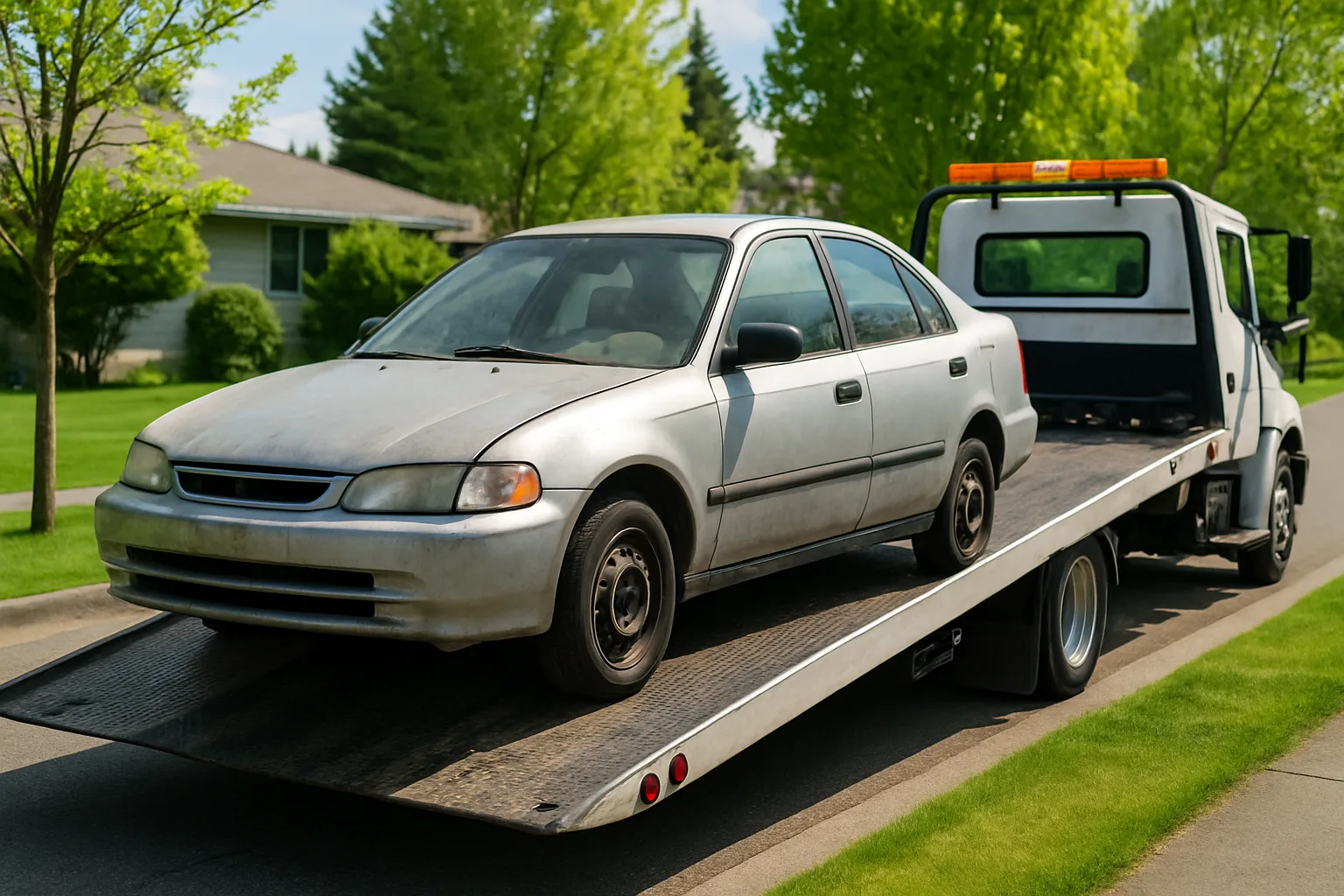
Most people hand over their keys, pocket their cash, and never think about what happens next. But your old car doesn't just disappear — it starts a surprisingly efficient second life the moment the tow truck pulls away.
Understanding that process can actually help you make smarter decisions before you sell. Knowing what your vehicle is worth in parts, fluids, and raw metal changes the conversation entirely. If you're sitting on a dead Honda in a Seattle driveway right now, this is worth reading before you call anyone.
The First 24 Hours: What Happens When Your Car Hits the Yard
The vehicle gets logged immediately. Most modern recycling yards use inventory management software to photograph the car, record the VIN, and catalogue its condition on arrival. That documentation matters — it protects the yard legally and helps buyers know exactly what they're bidding on.
After check-in, the car goes through fluid extraction. This isn't optional — it's regulated. In Washington state, environmental rules require yards to drain and properly store:
- Engine oil and transmission fluid
- Coolant (antifreeze)
- Brake and power steering fluid
- Fuel remaining in the tank
- Air conditioning refrigerants
These fluids are either recycled, reclaimed, or disposed of through certified channels. A yard that skips this step is cutting corners — and in Washington, that creates real liability. Reputable operations don't rush this stage.
The Parts Pull: Where the Real Value Lives in a Junk Car
Once depolluted, the car moves to the dismantling bay. This is where trained techs — not just laborers — identify which parts still have resale value. High-demand components get pulled first, cleaned, tested, and shelved for resale to repair shops, body shops, or individual buyers.
Parts that consistently hold value at recycling yards include:
- Catalytic converters — these contain platinum, palladium, and rhodium, making them among the most valuable single components on any vehicle
- Engines and transmissions — especially from popular platforms like Toyota 4-cylinders or GM V8s, which have huge demand in the used parts market
- Alternators, starters, and power steering pumps — high-turnover rebuild candidates
- Doors, hoods, fenders, and bumpers — body panels in decent condition move fast
- Wheels and tires — if the rubber has tread and the rims aren't bent, these sell quickly
- Seats and interior trim — increasingly valuable as interior components get harder to source new
This parts-pull phase is one reason why we buy junk cars Seattle services can offer meaningful money on vehicles that seem totally worthless. A car that won't start can still be carrying $400 in catalytic converter metal and another $600 in sellable body parts. That's before anyone touches the steel.
If you want to get a free car valuation before committing to a sale, it's worth understanding that a good buyer has already run these numbers on your make and model. You should too.
Scrap Metal Prices Today: How the Steel Gets Sold After Parts Are Pulled
Once the usable components are out, what remains is a stripped body shell — mostly stamped steel, with some aluminum, copper wiring, and the occasional non-ferrous surprise hiding in the firewall or subframe. This is where scrap metal prices today come directly into play.
The stripped hulk gets crushed or shredded. Shredder operations in the Pacific Northwest process hundreds of tons of vehicle steel per day. The shredded output — called "shred" or "auto shred" — gets sorted magnetically and sold to steel mills for remelting. Ferrous scrap from automotive sources is a consistent feed material for electric arc furnace operations across North America.
The non-ferrous fraction — aluminum, copper, zinc — gets separated and sold separately at a premium. Those fractions are tracked closely because commodity markets move daily. A single load of auto shred can swing significantly in value depending on what steel mills are paying that week.
Platforms like find the best price for your scrap on SMASH exist specifically to solve this price discovery problem. Instead of a yard calling one buyer and guessing the market, competitive bidding surfaces what the load is actually worth. More buyers means better price discovery — and that matters from the recycling yard all the way back to what you were offered for your car.
The Title and Documentation Side of the Process
Here's something many first-time sellers in Seattle don't realize: the paperwork trail matters just as much as the physical process. When a recycling yard accepts your vehicle, they're required to properly document the transfer of ownership. This protects you from liability if anything unusual surfaces later.
What happens if you don't have a title? Many yards and cash for cars services will still work with you — particularly on older vehicles. In Washington, the process for selling a vehicle without a title involves the buyer running a VIN check to confirm ownership history and, in many cases, applying for a replacement title or a bonded title on your behalf.
There's also the cash for cars no title no registration scenario, which is more common than people think. Maybe the registration lapsed years ago. Maybe you inherited a vehicle and never transferred it. These situations are solvable — they just require a buyer who knows what they're doing. Washington state has clear processes for this, and experienced junk car buyers navigate it regularly.
One thing to always confirm before handing over the keys: get a signed bill of sale and make sure the buyer notifies the Department of Licensing (DOL) in Washington that ownership has transferred. That step protects you from any future parking tickets, towing charges, or legal issues tied to the vehicle.
Want to sell your car for cash in the USA without getting burned by paperwork gaps? Work with buyers who handle the documentation side for you — it's a sign they actually know what they're doing.
Environmental Standards and Why Seattle Yards Have to Get This Right
Auto recycling is one of the more regulated activities in Washington state. The Department of Ecology enforces strict standards on how yards manage hazardous materials — everything from the fluid storage mentioned earlier to how they handle crushed vehicle remnants, tire disposal, and battery recycling.
Seattle-area yards operate under both state and King County environmental rules, which tend to be among the more stringent in the country. That's actually good news for sellers. It means reputable operations in the region have invested in proper infrastructure — concrete pads, fluid containment systems, certified recycling vendors for hazardous materials.
Lead-acid batteries pulled from vehicles get sent to certified battery recyclers. Tires that can't be resold go to tire-derived fuel processors or crumb rubber manufacturers. Even airbag inflators — which contain small amounts of hazardous propellant — require special handling and disposal procedures under current federal regulations as of 2026.
If you've been relying on read car selling guides to understand this side of the process, the environmental piece often gets skipped over. It shouldn't. Choosing a properly certified yard in Seattle or anywhere in Washington protects you legally and supports genuinely responsible recycling — not just the appearance of it.
What This Means for What You Should Expect When You Sell
Now that you understand the full lifecycle, you can think about your car the way a recycler does: as a collection of parts, fluids, and raw materials — each with a specific market value on a specific day.
That perspective changes a few things:
- Don't strip the car yourself unless you know what you're doing. A missing catalytic converter lowers your offer fast, because the buyer knows exactly what it was worth. If you haven't already pulled it, don't.
- Condition matters less than you think — but honesty matters more. Buyers price the vehicle based on what they'll recover. Be upfront about major missing components. It saves everyone time and prevents deal blowups at pickup.
- Multiple quotes are always worth getting. Scrap metal prices shift weekly, and different buyers have different part inventories they need. What one yard won't pay a premium for, another might.
- Timing has a mild effect. Steel markets move. If commodity prices are strong, scrap-heavy vehicles (older, larger, heavier) see slightly better offers. It's not dramatic, but it's real.
SMASH — a platform built specifically for scrap and recycling transactions — brings competitive bidding to the yards that are buying your car's downstream materials. When buyers compete, pricing gets more honest at every level of the chain. That includes what ends up in your pocket at the curb.
Whether your car ran last week or hasn't moved in three years, the recycling chain will find value in it. Seattle has active junk car buyers and recycling operations ready to move quickly. Get what your vehicle is actually worth — Seattle scrap metal services can connect you with buyers who know this market.
Ready to move your vehicle? Sell your car for cash in the USA and get a free quote at cashforcars-usa.com — the process is straightforward, the pickup is fast, and you don't need to figure any of this out on your own.
Frequently Asked Questions
Q: How long does it take to get paid when I sell my junk car in Seattle?
Most reputable cash for cars services in Seattle pay at the time of pickup — meaning you have cash or a check in hand before the tow truck leaves your property. Same-day and next-day pickups are common for sellers in the Seattle metro area. Always confirm payment method before scheduling.
Q: Can I sell my car in Washington state without a title?
Yes, in many cases. Washington state allows the sale of older vehicles without a clean title, particularly if the vehicle is being sold for parts or scrap. Experienced junk car buyers handle the paperwork — including VIN verification and title replacement applications — regularly. Be upfront about your documentation situation when you request a quote.
Q: How do scrap metal prices today affect what I'm offered for my junk car?
Scrap metal prices directly influence the base offer on any vehicle, especially older or heavier cars with limited parts value. When steel and non-ferrous metal prices are strong, offers tend to be slightly higher. Prices fluctuate daily, so the quote you get today may differ from one you receive next week. Check current rates and get multiple quotes if timing isn't urgent.
Q: What condition does my car need to be in to get cash for it in Seattle?
It doesn't need to run, drive, or even be complete. Junk car buyers in Seattle purchase vehicles in all conditions — non-running, wrecked, flood-damaged, or sitting on flats. What matters is what the vehicle contains: metal, parts, fluids, and sellable components. Even a badly damaged car typically has recoverable value.
Q: Does it matter if my registration has lapsed when I sell my car for cash?
For junk car sales, lapsed registration is generally not a deal-breaker. Buyers who specialize in cash for cars no title no registration scenarios handle these situations regularly. The VIN is what matters for ownership verification. Confirm with your specific buyer what documentation they require before pickup to avoid any last-minute delays.
Stay current on scrap metal market trends and industry news — follow SMASH on LinkedIn for regular updates on commodity prices, recycling industry shifts, and platform news.