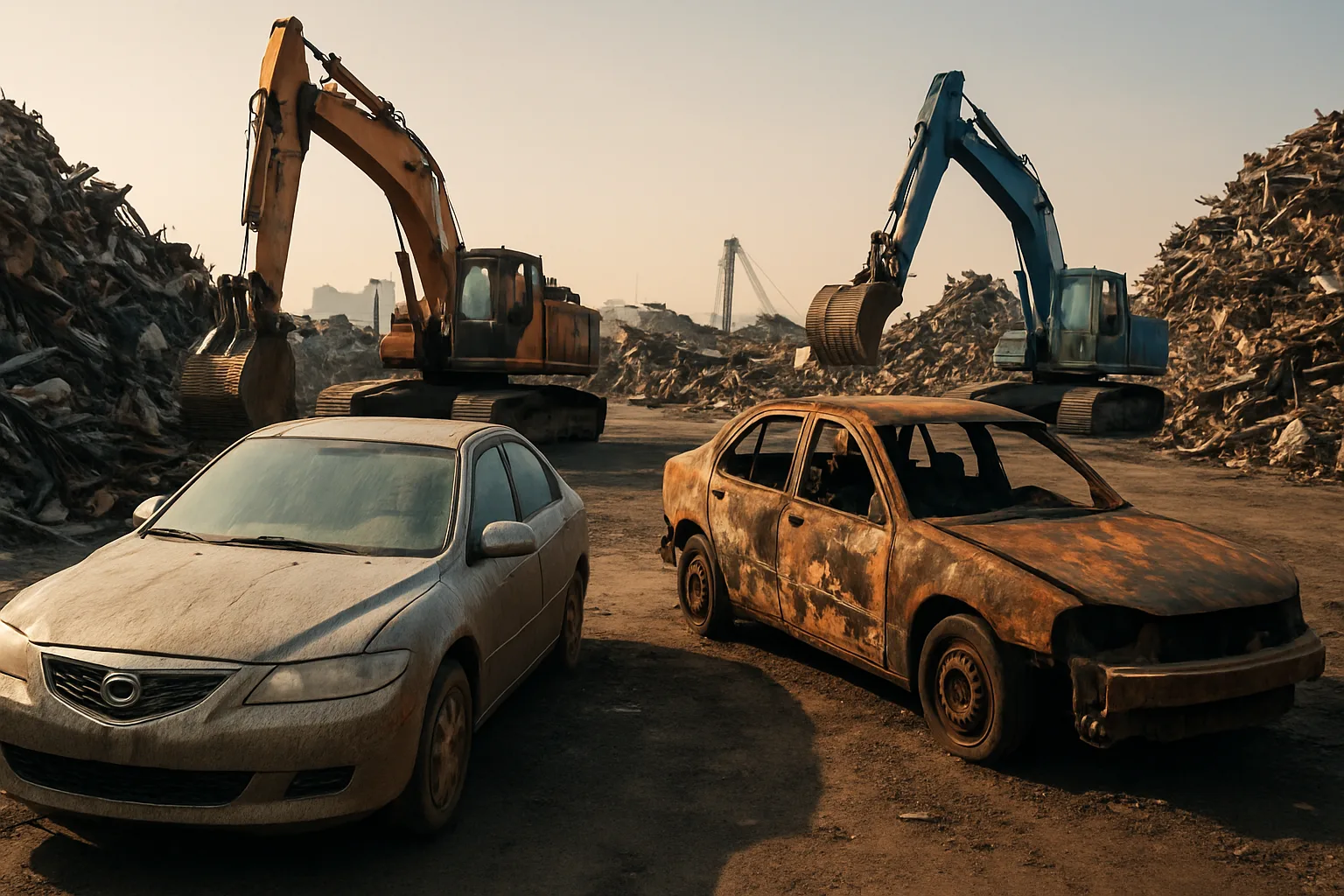
A flood or fire doesn't just destroy a vehicle — it creates a paperwork nightmare, a safety hazard, and a depreciating problem sitting in your driveway. If you're in Jersey City trying to figure out what to do with a storm-wrecked or fire-damaged car, you're not alone. And the good news is that damaged vehicles still have real value — if you know how to move them.
Whether your car took on water during a coastal storm surge or caught fire in a parking garage, the path forward is the same: document it, title it correctly, and get it in front of buyers who actually want it. That's where platforms like SMASH change the game for scrap and salvage sellers — and why understanding the 2026 regulatory landscape matters before you list or sell anything.
What Happens to a Flood or Fire-Damaged Vehicle Title in New Jersey
In New Jersey, a vehicle that sustains significant damage from flooding or fire gets flagged with a salvage title by the NJMVC (Motor Vehicle Commission). This happens automatically when an insurance company totals the vehicle — meaning the cost to repair exceeds a set percentage of the car's pre-damage value. Once that declaration is made, the insurer transfers ownership and the title gets branded.
That branded title matters for every transaction that follows. You cannot legally sell a flood or fire-damaged vehicle in New Jersey as a standard used car without disclosing the damage history. Doing so is fraud. The 2026 federal used vehicle disclosure rules — enforced through the FTC Used Motor Vehicle Rule — also require private sellers and dealers to disclose known material defects, and flood or fire damage absolutely qualifies.
Here's what you need before selling:
- The vehicle's current title (branded salvage or certificate of title)
- Any insurance settlement documentation
- Photos of the damage — the more, the better
- VIN documentation (the VIN doesn't change, even after total loss)
- Odometer disclosure statement if the vehicle is under 10 model years old
If you lost the title in the flood or fire itself, you'll need to apply for a duplicate through the NJMVC before transferring ownership. Don't skip this step — it protects you legally and speeds up the sale.
Why Flood and Fire Damage Doesn't Mean Zero Value — Especially for Scrap
Here's what most car owners don't realize: a totaled vehicle is not worthless. It's just worth something different than it was before. A flood-damaged car still contains steel, aluminum, copper wiring, a catalytic converter (in most cases), and usable core components. A fire-damaged vehicle often still has a serviceable drivetrain, axles, and structural metal that recyclers and parts buyers want.
Scrap buyers price vehicles by weight and metal composition, not by whether they run. In 2026, junk car prices per ton for processed steel remain active across the Northeast market, and Jersey City sits in a dense industrial corridor with multiple active recyclers and dismantlers nearby. That geographic advantage means more potential buyers competing for your vehicle — which directly affects what you walk away with.
The critical factors that affect your payout on a damaged vehicle:
- Vehicle weight: Heavier vehicles (trucks, SUVs, full-size sedans) yield more in scrap value by volume
- Catalytic converter status: If the cat is intact and not fire-melted, it adds meaningful value — platinum group metals inside have their own market
- Non-ferrous metals: Aluminum wheels, copper wiring harnesses, and brass fittings all add up
- Core components: Transmissions, engines, and differentials that survived the damage may have parts value beyond scrap weight
- Extent of flood contamination: Saltwater flood damage is typically worse than freshwater — buyers know this and price accordingly
Want to understand how the market actually values your specific load? Find the best price for your scrap on SMASH — where vetted buyers compete instead of one caller making a lowball offer.
Sell My Junk Car Jersey City: The Regulatory Update That Changes How You Move a Damaged Vehicle in 2026
In 2026, two overlapping developments are shaping how flood and fire-damaged vehicles get sold in the Northeast. First, stricter anti-title washing enforcement at the federal level — pushed through in late 2025 and now fully active — means that salvage titles follow a vehicle more reliably across state lines. Buyers in other states can no longer easily "clean" a branded New Jersey title by re-registering in a lenient state. This is good news for honest sellers: it levels the playing field.
Second, New Jersey's enhanced consumer protection framework, updated in early 2026, increases seller liability for non-disclosure of flood or fire history. If you sell a damaged vehicle privately and the buyer later proves you withheld material damage information, you face civil liability and potential NJMVC penalties. This makes documentation — photos, service records, insurance letters — more important than ever, not just for compliance but for your own legal protection.
The practical takeaway: sell my junk car Jersey City is no longer just a Craigslist transaction. The regulatory environment pushes toward documented, transparent sales. Platforms that provide photo documentation, VIN tracking, and buyer verification aren't just convenient — they're the right way to transact under 2026 rules.
If you're unsure about your specific obligations, consult the NJMVC or a licensed salvage dealer before listing. But don't let uncertainty paralyze you — the market still moves these vehicles every day.
How to Get the Best Offer When You Sell a Scrap Car in New Jersey
The single biggest mistake damaged-vehicle sellers make is calling one buyer and taking whatever they offer. One call equals zero competition. Zero competition equals a price set entirely by the buyer's margin, not your vehicle's actual market value. This is exactly how the old way of selling scrap operates — and it's exactly why competitive platforms exist.
Here's how to position your damaged vehicle for the strongest possible offer:
- Photograph everything before it's moved. Timestamp your photos. Show the flood line, the fire damage extent, the VIN plate, all four corners of the vehicle, and the interior. Documented inventory gives buyers more confidence — and confident buyers bid higher.
- Know your VIN history. Pull a VIN report. Buyers will anyway. Knowing what they'll find lets you price and position accurately rather than having a buyer use discovered history to knock your price down mid-negotiation.
- Confirm the catalytic converter is present and note its condition. If the cat is intact, say so explicitly. If it was stolen post-damage (common in flood situations where cars sit exposed), disclose that too.
- Get multiple offers. This sounds obvious but most sellers don't do it. Reach out to at least three to four buyers — salvage yards, recyclers, dismantlers — before accepting anything. Better yet, use a platform where buyers come to you.
- Confirm tow logistics upfront. Most junk car buyers in Jersey City include free towing, but confirm it. The difference between a tow fee and no tow fee can be $150–$300 depending on distance and vehicle condition.
SMASH brings competitive auction dynamics to exactly this kind of sale. Instead of guessing what your damaged vehicle is worth and hoping one buyer is honest, you get vetted buyers competing. More buyers means better price discovery — that's not a promise, it's just how markets work. Sell your car for cash in the USA through a process that doesn't leave money on the table.
Sell My Car Fast Jersey City: What the Timeline Looks Like for a Damaged Vehicle
Speed matters. A flood-damaged vehicle sitting in a driveway or storage lot is costing you money in storage fees, potential towing costs, and ongoing depreciation of salvageable parts. Fire-damaged vehicles left exposed to weather deteriorate faster than most sellers expect. Getting this done in days — not weeks — is achievable if you move correctly.
Realistic timeline for a fast sale of a damaged vehicle in Jersey City:
- Day 1: Gather title, VIN documentation, and damage photos. Confirm insurance settlement paperwork is complete.
- Day 1-2: Contact buyers or list on a platform. Provide complete information upfront — incomplete listings slow everything down.
- Day 2-3: Receive and compare offers. Don't accept the first one.
- Day 3-5: Accept the best offer, confirm tow pickup time, and complete the title transfer at time of pickup.
- Day 4-6: Vehicle is gone. You have cash. Done.
That's a realistic five to six day window from decision to done — assuming your title is clean and documentation is ready. Delays almost always trace back to title issues or missing paperwork, not buyer availability. Jersey City's density of buyers and recyclers works in your favor on timeline.
Want guidance specific to your vehicle situation? Read car selling guides that break down the process step by step — from documentation to payout.
The Right Buyer Makes All the Difference — Vetted, Competitive, and Transparent
Not all junk car buyers operate the same way. Some quote high over the phone and drop the price when the tow truck arrives — a practice called price switching that's unfortunately common in the salvage space. Others lowball upfront knowing most sellers won't bother to shop around. Neither scenario serves you well.
The solution is structural: get buyers competing for your vehicle with full information on the table. When a buyer knows other buyers are in the mix, the race-to-the-bottom quoting stops. When documentation is complete — photos, VIN, damage disclosure — buyers can bid confidently rather than hedging price on unknowns.
SMASH operates on this model. Vetted buyers. Competitive auction format. Auto-invoicing and photo documentation built into the process. No subscription fees — SMASH only wins when you do. If you're looking to get a free car valuation before committing to any buyer, that's where you start.
Flood or fire-damaged vehicle sitting in Jersey City? You've already done the hardest part by dealing with the loss. The transaction itself should be straightforward. Get your documentation together, put your vehicle in front of real competition, and let the market tell you what it's worth. Sell your car for cash in the USA — get a free quote at cashforcars-usa.com and move forward today.
Frequently Asked Questions
Q: Can I sell my junk car in Jersey City if it has a salvage title?
Yes. A salvage title doesn't prevent a sale — it just changes who the likely buyers are. Salvage yards, recyclers, dismantlers, and rebuild specialists all actively purchase salvage-titled vehicles. You must disclose the branded title as part of the transaction. In New Jersey, transferring a salvage title follows the same NJMVC process as a standard title, just with the branded designation noted.
Q: How much is a flood-damaged car worth as scrap in Jersey City?
Value depends on the vehicle's weight, metal composition, condition of high-value components like the catalytic converter, and current scrap metal market prices. A full-size sedan or SUV will generally yield more than a compact car by pure weight. Saltwater flood damage typically reduces value compared to freshwater damage because of accelerated corrosion. Get multiple quotes — don't accept a single offer as the market price. Disclaimer: scrap metal and junk car prices fluctuate — check current rates before making decisions.
Q: Do I need to notify my insurance company before I sell my junk car near me?
If your insurer has already totaled the vehicle and transferred the title back to you as part of a settlement, you're free to sell independently. If you're selling before completing an insurance claim, talk to your adjuster first — selling the vehicle can affect your claim. Don't skip this step if there's any active claim in process.
Q: How fast can I sell my car fast in Jersey City after flood or fire damage?
With complete documentation ready, most sellers complete the transaction within five to six business days — sometimes faster. The biggest delays come from missing or incorrect titles. If your title was destroyed in the fire or flood, apply for a duplicate through the NJMVC immediately — that process takes additional time and is the most common bottleneck.
Q: Is it legal to sell a fire-damaged car in New Jersey without disclosing the damage?
No. New Jersey's consumer protection laws and the federal FTC Used Motor Vehicle Rule both require disclosure of known material defects — and fire damage absolutely qualifies. Selling without disclosure exposes you to civil liability and regulatory penalties. Full disclosure protects you legally and, with the right buyers, doesn't significantly hurt your outcome — buyers who want salvage vehicles expect and price for disclosed damage.
Stay current on scrap metal market trends and industry updates — follow SMASH on LinkedIn for insights that matter to recyclers and sellers across North America.
```