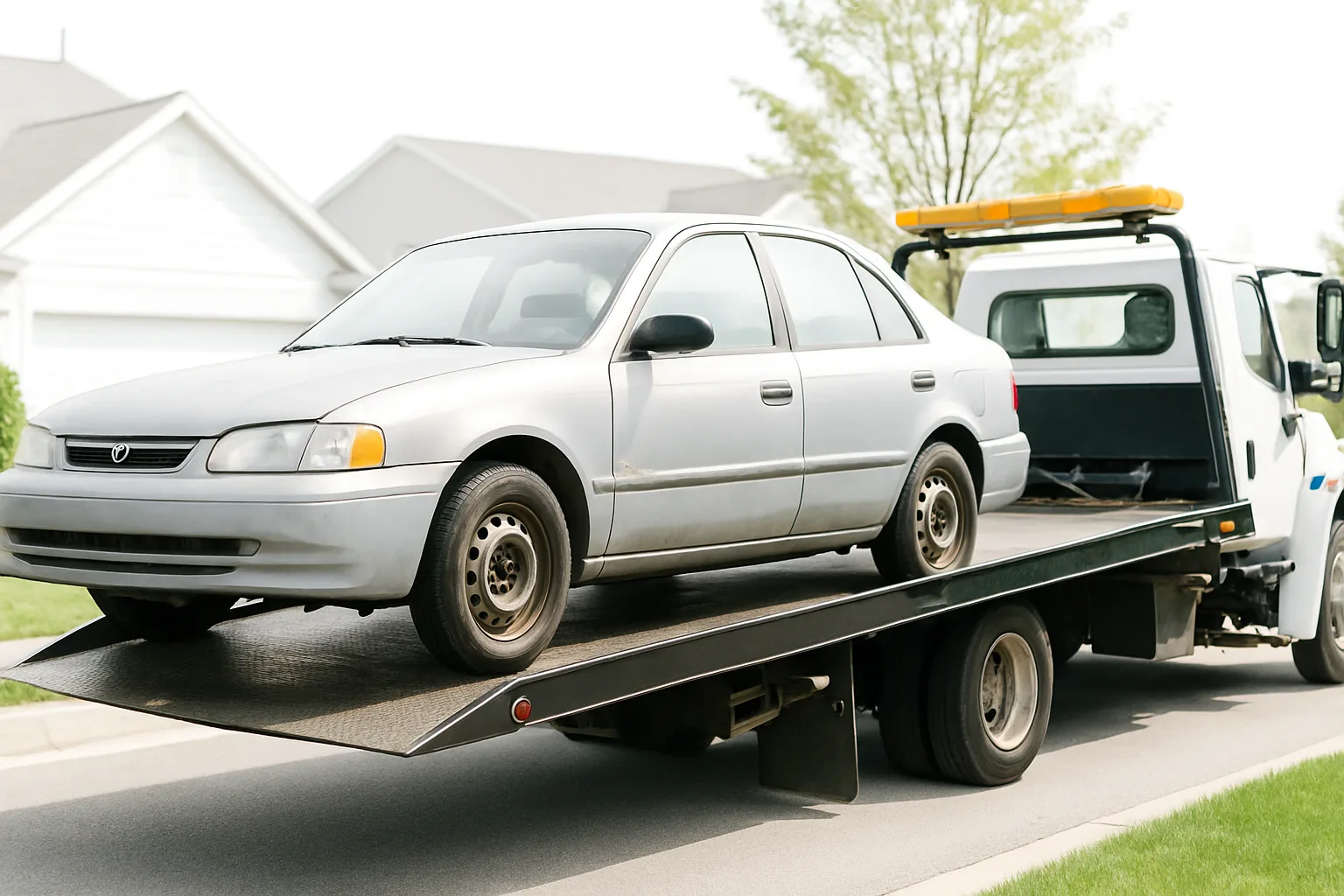
Two neighbors. Same year. Same make. One gets $800 for their old Honda. The other walks away with $1,400. Same car — different outcome. If you've ever wondered why scrap car prices swing so wildly, you're not alone. It's one of the most common frustrations for anyone trying to sell a junk car, especially if you're getting quotes that feel random or unfair.
The truth is, scrap car pricing isn't random at all. There's a logic to it — one that most buyers never explain and most sellers never hear. Whether you're searching we buy junk cars Allentown or just trying to figure out why your 2009 F-150 is worth more than your neighbor's 2012 Civic, this breakdown will make the picture clear.
Let's get into it.
The Foundation: Weight, Metal, and Market Prices
At the most basic level, a junk car is a pile of metal. When a scrap yard buys your vehicle, they're thinking about what they can recover — steel, aluminum, copper, and in some cases, catalytic converter metals like platinum, palladium, and rhodium. The heavier the vehicle, the more raw material it contains. A full-size pickup truck or an old SUV has a significant weight advantage over a compact sedan, which is why trucks tend to fetch more at scrap.
But weight alone doesn't tell the whole story. Scrap metal commodity prices fluctuate constantly — steel prices can shift week to week based on demand from manufacturers, global trade conditions, and energy costs. In 2026, volatility in industrial metals markets has kept scrap values unpredictable. A car that's worth $600 today might be worth $750 in six weeks, or $500 if the market dips. This is exactly why getting multiple quotes matters — and why platforms like compare scrap metal bids from verified buyers exist in the first place.
- Steel: The dominant material in most vehicles — heavier cars yield more.
- Aluminum: Found in engine blocks, wheels, and body panels. Higher value per pound than steel.
- Copper: Wiring harnesses, motors, and radiators. Smaller volume but valuable per pound.
- Catalytic converter metals: Platinum group metals can make a single cat worth hundreds of dollars.
Disclaimer: Scrap metal prices fluctuate daily. Always verify current rates before accepting a quote.
Why Make and Model Matter More Than You Think
Here's where most sellers get surprised. Two cars of similar weight can have dramatically different scrap values based on make and model — and it comes down to parts, catalytic converters, and buyer demand.
Take catalytic converters as an example. Toyota vehicles — particularly Priuses and Tacomas — are well known for containing higher concentrations of precious metals in their catalytic converters. A Prius cat can be worth several hundred dollars on its own. Compare that to a domestic economy sedan from the same year, where the cat might fetch a fraction of that. If you're researching how to sell catalytic converters online, you'll quickly discover that the vehicle origin (the make and model the cat came from) is one of the first things a buyer wants to know.
Salvageable parts also drive value. A popular model with a large owner base — like an F-series Ford, a Chevy Silverado, or a Honda Accord — has a ready market for used parts. Doors, engines, transmissions, suspension components: these all have value beyond scrap weight if the vehicle still has functioning parts. A rare or discontinued model, by contrast, might have limited parts demand even if the car is in decent shape.
If you're in the Allentown area and looking to sell your car for cash in the USA, knowing your vehicle's make and model value before you call is the difference between accepting the first number you hear and negotiating from a position of knowledge.
Condition: The Variable That Changes Everything
Condition is where the biggest price swings happen — and where sellers often leave money on the table by not documenting what they have.
A junk car is not automatically worth scrap-only prices. If the engine runs, even poorly, that increases value. If the transmission shifts, that matters. Interior condition, body panel damage, rust level, missing components — all of these feed into the buyer's mental math. A buyer who sees a car with four good tires, a functioning engine, and minimal rust thinks differently than one looking at a stripped shell with a blown motor.
Here's how condition typically breaks down in practice:
- Running and driving: Best case scenario. More buyers interested, higher offers, potential for private sale or dealer trade-in alongside scrap quotes.
- Starts but doesn't drive: Engine or transmission issue. Still worth significantly more than pure scrap if key components are salvageable.
- Doesn't start, but complete: Full vehicle with body panels, interior, engine in place — scrap plus parts value.
- Stripped or heavily damaged: Missing major components, fire damage, flood damage — closer to raw scrap weight pricing.
Photo documentation changes the dynamic entirely. When sellers can show a buyer what they actually have — engine bay photos, undercarriage shots, interior condition — buyers can offer more confidently. That's why scrap car removal Allentown sellers who show up with detailed photos consistently get better first quotes than those who just describe their car over the phone. Buyers price uncertainty into low offers. Remove the uncertainty, and the offer goes up.
The One-Buyer Problem — and Why Competition Fixes It
Here's an uncomfortable truth about the traditional junk car process: you call one buyer, they give you a number, and you either take it or spend an afternoon making more calls. Most people take it. And that's exactly what a single buyer is counting on.
When only one buyer sees your vehicle, you have no reference point. Is $500 fair for your 2008 Tahoe? Maybe. Maybe not. You genuinely don't know — and neither does the buyer, until they run their own numbers. The result is a quote padded with enough margin to make sure they're profitable regardless of what the parts are actually worth.
Competition changes that math entirely. When multiple vetted buyers are looking at the same vehicle at the same time, they can't afford to low-ball. Platforms like SMASH are built on exactly this principle — buyers compete for loads, sellers see real market-driven offers instead of single-source guesses. If you're selling in Pennsylvania and want to understand what your vehicle is actually worth, putting it in front of multiple buyers simultaneously is the only way to find out.
For a deeper look at how the selling process works and what to expect, read car selling guides that walk through the full process from quote to pickup.
Local Market Conditions in Allentown and the Lehigh Valley
Geography plays a real role in scrap car pricing — and Allentown is a solid example of why.
The Lehigh Valley sits within reasonable distance of major scrap processing facilities and auto salvage operations. That generally means competitive pickup availability and active buyer interest in the area. Pennsylvania also has a dense enough population of vehicle owners that parts demand for common makes is consistently strong. That's good news for sellers — you're not in a rural market where a buyer has to factor in long-haul transport costs before they even make an offer.
That said, local conditions still vary. Seasonal demand for certain vehicles, local steel mill activity, and the density of competing scrap yards all influence what buyers will pay at any given moment. A seller in Allentown running multiple simultaneous quotes in August 2026 is going to get a different result than one who calls a single yard and accepts the first number. The market is there — you just have to access it the right way.
When you're ready to get a free car valuation, having your vehicle details — make, model, year, condition, and any functioning components — ready before you start will make every conversation more productive.
What Sellers Get Wrong (And How to Avoid It)
After looking at why prices vary, it's worth addressing the mistakes that cost sellers real money. These aren't rare — they're the norm for first-time scrap sellers.
- Accepting the first offer: One quote is a starting point, not a final number. Always get at least two or three.
- Not mentioning the catalytic converter: If your cat is intact, say so. It's a meaningful part of the vehicle's value — especially on certain makes.
- Underestimating a running engine: A car that starts is worth more than one that doesn't. Always mention this upfront.
- Forgetting about the title: A clean title makes the transaction faster and can increase offers. No title complicates things — but it's usually not a dealbreaker.
- Skipping documentation: Photos of the engine bay, interior, and body condition help buyers trust their own quotes. More confidence in condition means better offers.
- Searching 'sell my junk car near me' and stopping there: Local isn't always best. The right buyer for your specific make and model might not be the closest one.
SMASH was built because these mistakes are preventable. Documented inventory, vetted buyers, and a competitive auction format address every one of these problems without requiring the seller to become an expert negotiator overnight.
Frequently Asked Questions
Q: How much can I get for a junk car in Allentown, Pennsylvania?
Scrap car prices in Allentown depend on the vehicle's weight, make, model, condition, and current metal market prices. Heavier trucks and SUVs generally fetch more than compact sedans. Prices fluctuate frequently — always get multiple quotes before accepting an offer to make sure you're seeing real market value.
Q: Does the make and model of my car affect the scrap price?
Absolutely. Make and model influence the value and demand for salvageable parts, the type and precious metal content of the catalytic converter, and how much buyer interest exists in your area. Certain makes — particularly trucks and some Japanese vehicles — tend to command stronger interest from buyers and salvage yards.
Q: What is the best way to sell a junk car near me for the most money?
Get quotes from multiple buyers, document your vehicle's condition with photos, mention all functioning components (especially if it runs), and don't accept the first number you're given. Platforms that put your vehicle in front of multiple vetted buyers simultaneously — like SMASH — remove the guesswork and let competition work in your favor.
Q: Can I sell my car for scrap if I don't have the title?
Many buyers will still purchase a vehicle without a title, though it may affect the offer and add steps to the process. Requirements vary by state — in Pennsylvania, you'll want to check the specific documentation requirements for a title-less transfer. Always disclose the title situation upfront so there are no surprises at pickup.
Q: How do I get a fair price for a junk car in Allentown?
Know your vehicle's details — year, make, model, condition, mileage, and whether it runs. Photograph it thoroughly before calling anyone. Get at least two or three quotes from different buyers. If your car has a catalytic converter still in place, ask specifically about its value. And consider platforms that let vetted buyers compete for your vehicle — that's the most reliable way to find out what your car is actually worth in today's market.
Ready to stop guessing and start getting real offers? If you're in the Lehigh Valley or anywhere across the country, cash for cars Pennsylvania sellers have more options than ever in 2026 — you just need to use them. Head over to cashforcars-usa.com and get a free quote today. No pressure, no obligation — just a clear number for your vehicle so you can make a decision that actually makes sense.
Stay current on scrap metal market trends and industry updates by following SMASH on LinkedIn — it's one of the fastest ways to know when market conditions shift in your favor.
```