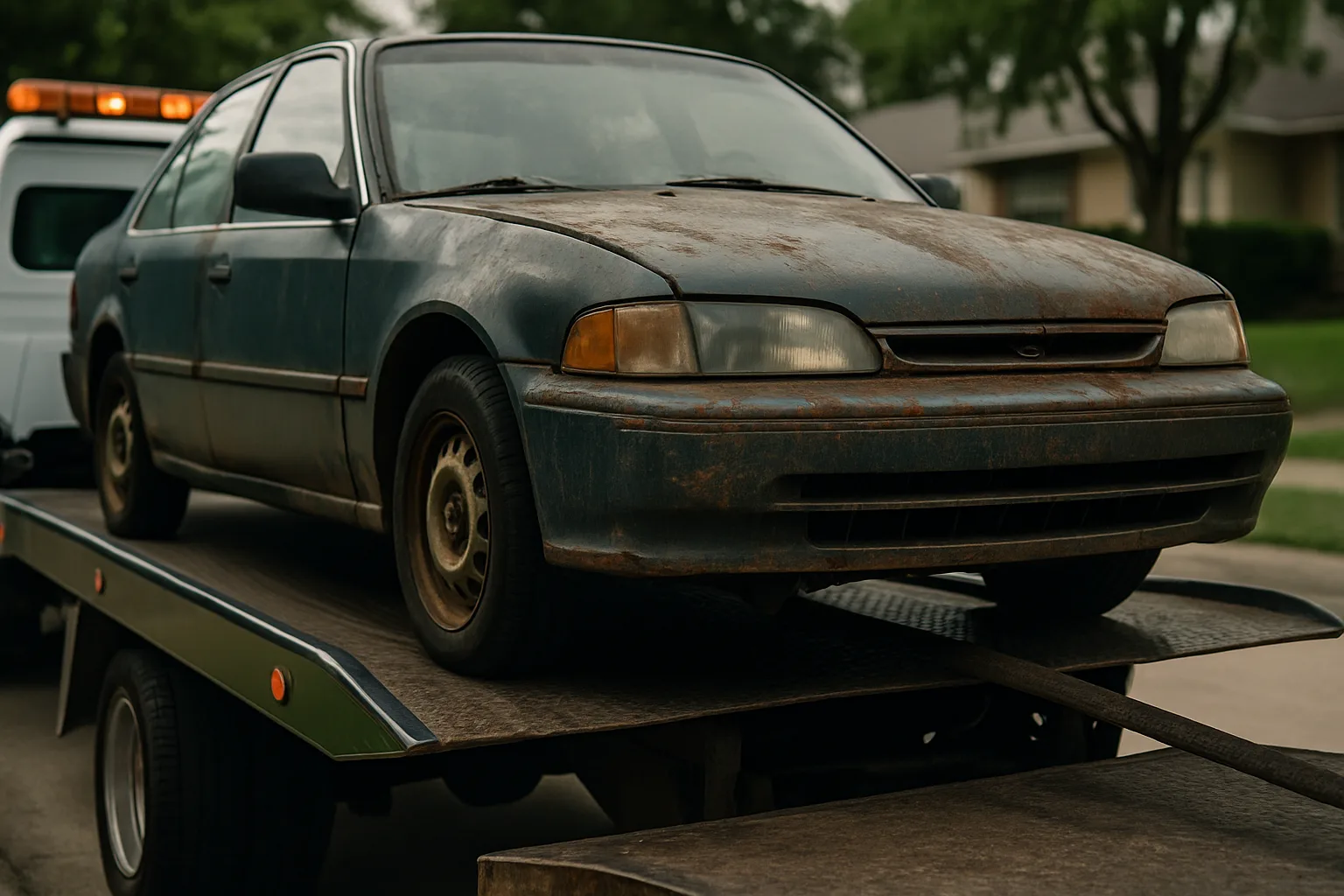
Why the Calendar on Your Wall Affects the Cash in Your Pocket
Most people assume scrap car prices are set in stone — that a junked-out 2009 Silverado is worth the same in January as it is in July. It isn't. Timing your sale can mean the difference between a fair payout and leaving real money on the table. If you're trying to sell my junk car Houston and you haven't thought about the season, you're already behind.
Steel markets move. Demand cycles. Buyer appetite shifts with the weather. Understanding these patterns won't make you a commodity trader, but it will help you make a smarter decision about when to pull the trigger on that dead vehicle sitting in your driveway.
This guide breaks down how weather, seasons, and regional conditions affect scrap car prices — with a focus on what Houston sellers specifically need to know.
How Steel Markets Drive Scrap Car Values Year-Round
Before we get into seasons, you need to understand one thing: scrap car prices are tied to the steel market. When steel mills are buying, scrap yards pay more. When orders slow down, prices drop. It's that direct. A full scrap vehicle — average curb weight roughly 3,000 to 4,500 pounds depending on make and model — gets crushed, shredded, and sold as raw material. Mills dictate what that material is worth.
Steel demand doesn't stay flat all year. Construction and manufacturing ramp up in spring and early fall. That increased activity pulls more scrap into the pipeline. More demand, tighter supply, better prices at the yard. Junk car prices per ton reflect these swings almost directly — and sellers who understand the cycle can time their sales accordingly.
Here's the seasonal breakdown you need:
- Spring (March–May): Construction restarts across North America. Demand for structural steel climbs. Scrap yards get busier. This is historically one of the better windows to sell.
- Summer (June–August): Demand stays relatively strong, but extreme heat — especially in Texas — can slow yard operations. Fewer buyers actively searching. For Houston sellers, this period can be a wash.
- Fall (September–November): A second strong window. Manufacturing ramps back up before the year-end slowdown. Processors start stocking inventory. Scrap values often stabilize or tick upward.
- Winter (December–February): Historically the weakest season. Mills reduce orders, yards aren't aggressively acquiring, and cold weather slows operations in northern markets — which affects national pricing benchmarks even in warm-weather cities like Houston.
None of this is a guarantee. Markets move on more than just seasons. But these patterns are consistent enough that they're worth factoring into your decision.
What Houston Weather Does to Scrap Car Values Specifically
Houston is not Minneapolis. The Gulf Coast climate creates its own set of variables that affect how much your junk car is worth — and when the best time to sell scrap car in Texas actually is.
First, heat and humidity accelerate vehicle deterioration. A car sitting in a Houston driveway for two summers corrodes faster than the same car sitting in Denver. Rust spreads. Wiring degrades. Catalytic converters — one of the most valuable components on any scrap vehicle — can get damaged or stolen while the car sits. Every month you wait is potentially a month of value disappearing.
Second, hurricane season runs June through November. Major storms — and Houston has taken its share — create sudden surges in scrap volume as flooded and totaled vehicles flood the market. More supply hitting the yards at once can push per-vehicle prices temporarily lower. If a significant weather event hits the region, selling before the flood of flood vehicles makes sense.
Third, Houston's economy is deeply tied to the energy sector. When oil prices are strong and the energy industry is active, regional demand for steel and raw materials stays elevated. That tends to support scrap prices locally even when national markets are softer. Pay attention to both national steel trends and what's happening in the local Texas economy.
If you're looking at Houston scrap metal services, understanding these local dynamics gives you an edge most sellers never bother to develop.
Catalytic Converters: The Component That Changes Everything
No conversation about scrap car value in 2026 is complete without talking about catalytic converters. The platinum group metals inside a catalytic converter — platinum, palladium, rhodium — trade on global commodity markets that don't follow the same seasonal patterns as steel.
A single catalytic converter can represent a meaningful portion of your vehicle's total scrap value. On some hybrid models and trucks, the converter value rivals or exceeds the scrap metal value of the rest of the vehicle. If your junk car still has its original cats intact, that matters significantly to what a buyer will pay.
The problem is that catalytic converter theft remains rampant in Texas and across the U.S. A car sitting unsecured in a driveway is a target. The longer it sits, the higher the risk you lose that value entirely before you ever get a quote.
Platforms like compare scrap metal bids from verified buyers — SMASH, for example — give buyers and processors access to a competitive auction environment where catalytic converter value is properly priced in. A single buyer offering you a flat rate over the phone has no incentive to reflect real converter value. Competition does.
If you're thinking about a catalytic converter auction format for processing your vehicle's components, SMASH connects vetted buyers who actually bid against each other. That's price discovery. That's how you stop leaving money on the table.
5 Seasonal Factors That Directly Affect What You'll Get Paid
Let's make this concrete. Here are five specific variables — tied directly to weather and season — that influence how much you'll get when you try to sell my car fast Houston:
- Steel mill utilization rates. When mills are running at high capacity (typically spring and fall), they buy more scrap. When they idle or reduce output (often December–January), demand drops and so do prices. This is the single biggest seasonal driver of scrap car values.
- Extreme heat in Houston summers. Houston yards deal with operational slowdowns in brutal summer heat. Fewer active processors means lower competition for your vehicle, which can suppress offers. August is often not the optimal month to sell — though waiting always carries its own risk of vehicle deterioration.
- Post-storm vehicle surplus. After major weather events, scrap yards see significant volume increases from insurance totals and flood vehicles. That sudden supply increase can temporarily push prices down. Selling ahead of storm season gives you more pricing control.
- Precious metal commodity cycles. Platinum, palladium, and rhodium prices fluctuate independently of steel. If you have a vehicle with a high-value catalytic converter, timing that sale against precious metal market peaks — not just steel cycles — adds another layer to the calculation.
- Year-end tax and inventory decisions. Some scrap buyers and yards manage their inventory and purchases around year-end accounting. This can create unusual buying activity in November or an unusual slowdown in late December. It's not a dominant factor, but it can affect individual offers.
None of these factors work in isolation. The best time to sell is rarely a single perfect date — it's a window where multiple favorable conditions align. If you can sell your car for cash in the USA during a strong steel demand window, before storm season floods the market, with the converter still intact, you're in the best position possible.
How to Stop Guessing and Start Selling Smart
The old way of selling a junk car involves calling one buyer, getting one number, and taking it or leaving it. You have no idea if that number reflects current market conditions, seasonal demand, or what your catalytic converter is actually worth. You're guessing — and the buyer isn't.
The smarter move is to get multiple buyers competing for your vehicle. That's exactly what platforms like SMASH make possible. Instead of one cold call to one local buyer, vetted buyers across the region see your vehicle and bid. The competition surfaces what the market actually values your car at — in that moment, under current conditions.
You can also get a free car valuation before you commit to anything. Knowing your vehicle's baseline value — including the weight category, condition, and what major components are still present — puts you in a stronger negotiating position whether you go through an auction platform or a direct buyer.
For more practical guidance on timing your sale and maximizing your payout, read car selling guides that cover everything from documentation requirements to what happens on pickup day.
The bottom line: seasons matter, weather matters, and local market conditions in Houston and across Texas matter. A car sold at the right time, through the right channel, with full documentation and intact components, consistently attracts stronger offers than one that's been sitting, deteriorating, and sold to the first number that comes along. Don't guess. Get competing bids. Sell when the conditions favor you.
When you're ready to stop waiting, cashforcars-usa.com makes it straightforward to connect with real buyers and get a fair quote — no pressure, no guesswork, just an honest number based on what your vehicle is actually worth today.
Frequently Asked Questions
Q: What is the best time of year to sell my junk car in Houston?
Spring (March through May) and early fall (September through October) are generally the strongest windows. Steel demand picks up during these periods, which pushes scrap prices higher. In Houston specifically, selling before hurricane season reduces the risk of competing with a surge of flood vehicles hitting the market.
Q: Does weather in Houston affect how much my scrap car is worth?
Yes, in several ways. Extreme heat and humidity accelerate vehicle deterioration, reducing value the longer a car sits. Post-storm surges in salvage vehicles can temporarily suppress local prices. And Houston's energy-tied economy can support or soften local scrap demand depending on oil market conditions.
Q: How much does a junk car weigh, and how does that affect the price I get?
Most passenger cars weigh between 3,000 and 4,500 pounds at the curb. Junk car prices per ton fluctuate with the steel market, so the heavier the vehicle, the more raw scrap value it carries. Trucks and SUVs typically command more on weight alone than compact cars. Always confirm what components are still intact — the catalytic converter often adds significant value beyond the base metal weight.
Q: Will I get more money if my catalytic converter is still on the car?
Almost certainly yes. Catalytic converters contain platinum group metals — platinum, palladium, and rhodium — that trade separately from steel. On many vehicles, the converter can represent a significant portion of the total scrap value. A buyer offering a flat rate over the phone may not fully price that in. Competitive bidding through a platform like SMASH helps ensure that value is reflected in what you're paid.
Q: How fast can I sell my car fast in Houston and get paid?
With the right buyer, same-day or next-day pickup is common for junk vehicles in the Houston area. Have your title ready, know your vehicle's basic specs (year, make, model, condition), and get multiple quotes before accepting an offer. The faster you move, the less risk of further deterioration — especially during hot Texas summers.
---Stay current on scrap metal market trends and industry news — follow SMASH on LinkedIn for regular updates on pricing cycles, buyer activity, and what's moving in the North American scrap market.