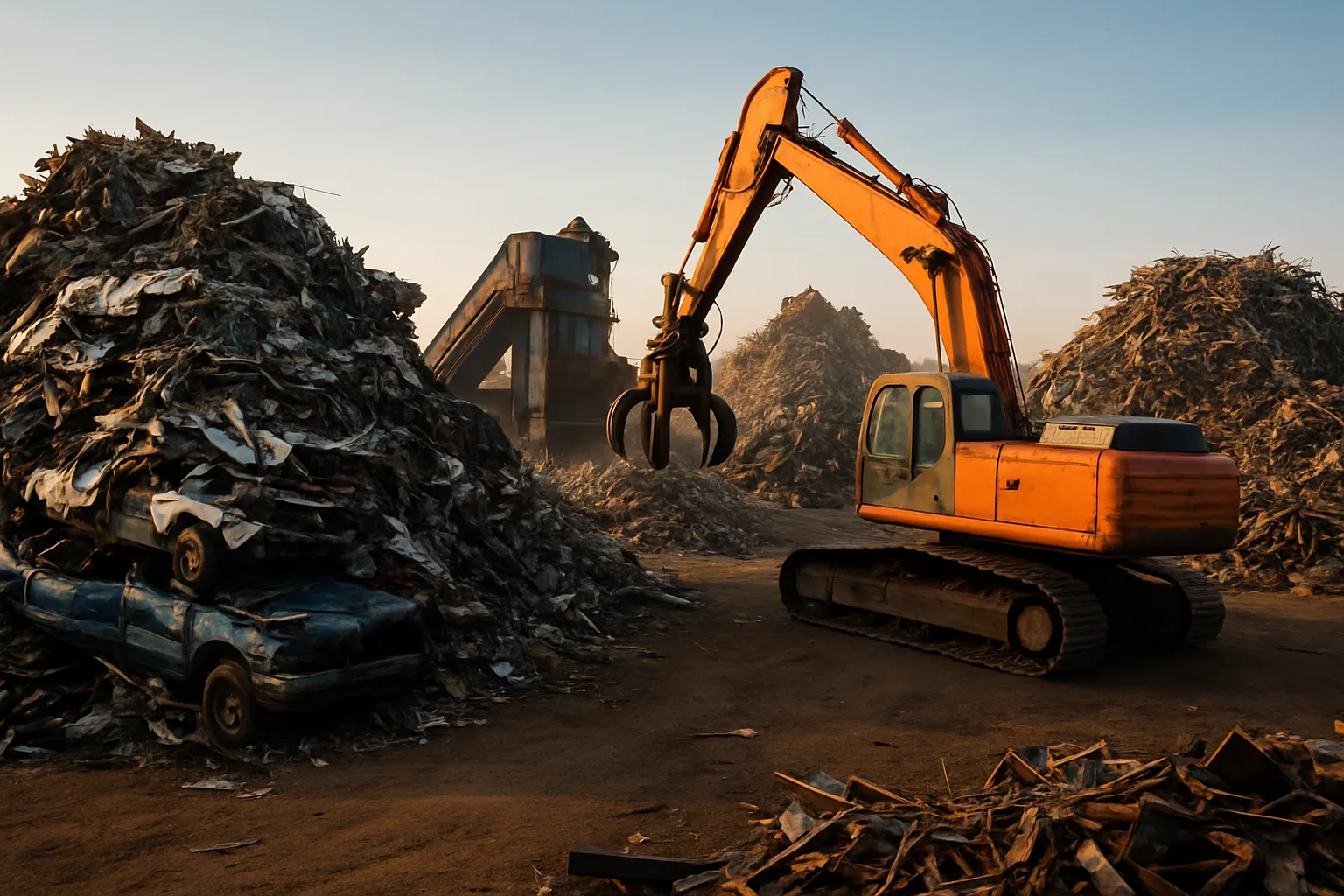
Your car started as molten steel and precision engineering. It's going to end up as a crushed cube — and everything that happens in between determines how much cash it puts in your pocket at the end. If you've got an old vehicle sitting in your driveway in Bakersfield and you're wondering what it's actually worth, understanding the full lifecycle of a car is the most useful thing you can read today.
This isn't a sentimental story about your first set of wheels. It's a practical breakdown of how a vehicle moves from factory floor to scrap yard — and exactly where you fit in that chain when it's time to sell.
Stage 1: Manufacturing — Where the Value Starts
A new vehicle rolls off the assembly line loaded with value. Steel frames, aluminum body panels, copper wiring, platinum-group metals in the catalytic converter, lithium or lead-acid batteries — a modern car is essentially a rolling inventory of commodities. Manufacturers spend tens of thousands of dollars building something that's engineered to depreciate the moment it leaves the lot.
That's not cynicism. It's just the math. A new car loses a significant chunk of its retail value in the first few years of ownership. The materials themselves don't disappear — they just become less accessible as the vehicle ages, wears, and requires more to maintain. Understanding what went into the car helps you understand what you can still get out of it when the time comes.
- Steel and iron — the heaviest components; form the bulk of scrap weight
- Aluminum — wheels, engine blocks, hood panels; commands higher scrap pricing than steel
- Copper — wiring harnesses, alternators, starters
- Platinum, palladium, rhodium — concentrated in the catalytic converter; highly valuable
- Rubber and plastics — lower scrap value but recoverable
Every component has a downstream market. The scrap yard isn't a dead end — it's an entry point into the recycling supply chain that feeds manufacturers back at the beginning.
Stage 2: Useful Life — The Long Middle
The average car stays on the road for well over a decade. During that time it burns fuel, accumulates miles, and costs its owner money in maintenance, insurance, and repairs. Most vehicles hit peak ownership cost somewhere in the 10-to-15-year range — when original parts fail faster than it makes economic sense to replace them.
This is where a lot of Bakersfield car owners find themselves right now. The repair estimate just came back higher than the car is worth. Or registration is due and the smog check failed. Or the transmission went, and the vehicle has been sitting in the driveway for six months collecting dust and costing space.
At this stage, the car still has real value — it just isn't worth repairing. The metal is still there. The catalytic converter is still there. If you sell your car for cash in the USA at the right time — before it deteriorates further — you maximize what the scrap and parts markets will pay.
Stage 3: End-of-Life — What Actually Happens at the Scrap Yard
When a vehicle reaches end-of-life status, it enters a highly structured dismantling process. This isn't random. Professional scrap yards follow a specific sequence designed to extract maximum value from every component.
- Fluids removal — gasoline, oil, coolant, transmission fluid, and refrigerants are drained and processed separately. Environmental regulations in California are strict on this step.
- Battery removal — lead-acid batteries are recycled separately. In 2026, EV battery packs follow their own specialized recycling stream.
- Catalytic converter removal — this is often done first because it's one of the highest-value components on the vehicle. The platinum-group metals inside are extracted and sold to refiners.
- Parts harvesting — usable parts like alternators, starters, doors, and seats are pulled for resale in the used parts market.
- Shredding — the remaining hulk goes through an industrial shredder. Steel is separated magnetically. Aluminum and other non-ferrous metals are sorted by eddy current separators.
- Commodity sale — sorted metals are sold to mills and foundries that melt them down and start the cycle over.
That process generates real money. The question is how much of it flows back to you — the original owner — versus getting absorbed by middlemen who never told you what your vehicle was actually worth.
Where Scrap Car Value Comes From — and Why You Should Care
The scrap car value today on any given vehicle depends on a handful of real factors. Weight is the biggest driver for ferrous metal. But non-ferrous components — especially the catalytic converter — can dwarf the steel value entirely on certain makes and models.
Catalytic converter values vary dramatically by vehicle type. Trucks and SUVs with larger engines typically have larger converters with higher platinum-group metal content. Hybrid vehicles often carry multiple converters. If you've been thinking about how to sell catalytic converters online separately before scrapping the body, that's a legitimate approach — but it requires knowing what you have and finding a vetted buyer who'll pay market rates rather than lowball you.
This is exactly where platforms like SMASH change the equation. Instead of calling one buyer who sets the price, SMASH puts your scrap in front of vetted buyers who compete. Competition reveals the actual market. That's how you stop guessing and start getting paid what your material is worth.
Want to understand what your vehicle might fetch before you commit to anything? Get a free car valuation and see what the numbers look like before you hand over the keys.
Junk Car Removal Bakersfield — What the Local Market Looks Like
Bakersfield sits in the heart of California's Central Valley — a region with a heavy concentration of working vehicles. Pickup trucks, older sedans, fleet vehicles, farm equipment-adjacent cars that have seen hard use. The local scrap market reflects that reality. There's consistent demand for end-of-life vehicles, and junk car buyers near me for cash is one of the most searched phrases in the area for good reason.
But searching and finding a fair deal are two different things. The junk car removal Bakersfield market — like most local scrap markets — has historically been dominated by a handful of buyers who set their own prices. You call, they quote, you take it or leave it. There's no visibility into what other buyers would pay. There's no competition driving the number up.
California's vehicle retirement and scrap regulations add another layer of complexity. Smog exemptions, title transfer requirements, and fluid disposal rules all vary by county. Getting it wrong costs time and money. Working with buyers who understand the California market — and platforms that document the transaction properly — protects you on both sides of the deal.
If you're sitting on a non-running vehicle in Bakersfield and want to understand your real options, read car selling guides that walk through the process step by step before you make a move.
How SMASH and Competitive Bidding Change the End-of-Life Equation
The old model for selling a junk car: call around, get a few quotes, pick the highest one, hope you didn't miss a better offer. It's slow, it's opaque, and it almost always leaves money on the table.
SMASH scrap runs on a different model. Your vehicle — or the scrap components from it — gets listed with proper documentation. Vetted buyers see it and bid. You see competing offers in real time. The market sets the price, not a single buyer with a low opening offer and no reason to go higher.
For sellers in California dealing with non-ferrous material like catalytic converters, copper wire, or aluminum wheels, that difference in approach can be significant. More buyers means better price discovery. Documented inventory gives buyers more confidence to bid aggressively. No subscription fees means you're not paying to list — SMASH only wins when you win.
If your end-of-life vehicle has recoverable non-ferrous components, don't let them disappear into a single buyer's pocket at an undisclosed price. Platforms like SMASH exist precisely to fix that problem. Sell your scrap metal on the SMASH marketplace and let the market tell you what it's actually worth.
The lifecycle of your car is ending. That doesn't mean your leverage is. When you're ready to turn that driveway anchor into cash, start with a quote at cashforcars-usa.com — and let competition work in your favor for once.
Price disclaimer: Scrap metal prices and vehicle valuations fluctuate based on commodity markets, vehicle condition, and buyer demand. Always check current rates before making a final decision.
Frequently Asked Questions
Q: How does junk car removal in Bakersfield work?
You contact a junk car buyer or platform, provide details about your vehicle (make, model, year, condition), and receive a cash offer. If you accept, they typically arrange pickup — often within 24 to 48 hours. In Bakersfield, most buyers handle the towing at no extra cost, and you sign over the title at pickup.
Q: How do I find out my scrap car's value today?
Your scrap car's value depends on its weight, the current price of steel and non-ferrous metals, and the condition of high-value components like the catalytic converter. Getting multiple quotes is the most reliable way to understand what the market will actually pay — not just what one buyer tells you. A scrap car value calculator can give you a ballpark, but competitive bids give you the real number.
Q: Can I sell just my catalytic converter before scrapping the rest of the car?
Yes — and it's often worth doing, especially on trucks, SUVs, and hybrids where converter value can be significant. Make sure you sell to a vetted buyer and document the transaction. In California, converters have specific transfer documentation requirements to help prevent theft-related fraud.
Q: What paperwork do I need to sell a junk car in California?
At minimum, you'll need the vehicle's title signed over to the buyer. California also requires a Notice of Release of Liability filed with the DMV to protect you after the sale. If you've lost the title, you'll need to apply for a duplicate before the sale can be completed legally.
Q: Is cash for cars in California available for non-running vehicles?
Yes. Most junk car buyers across California — including the Bakersfield area — purchase vehicles regardless of condition. Non-running, damaged, flood-affected, or high-mileage vehicles all have scrap value. The offer will reflect the vehicle's condition, but you don't need a running car to get paid.
Follow SMASH on LinkedIn for scrap metal market insights, industry updates, and platform news: linkedin.com/company/scrap-metal-auction-sales-hub.
```