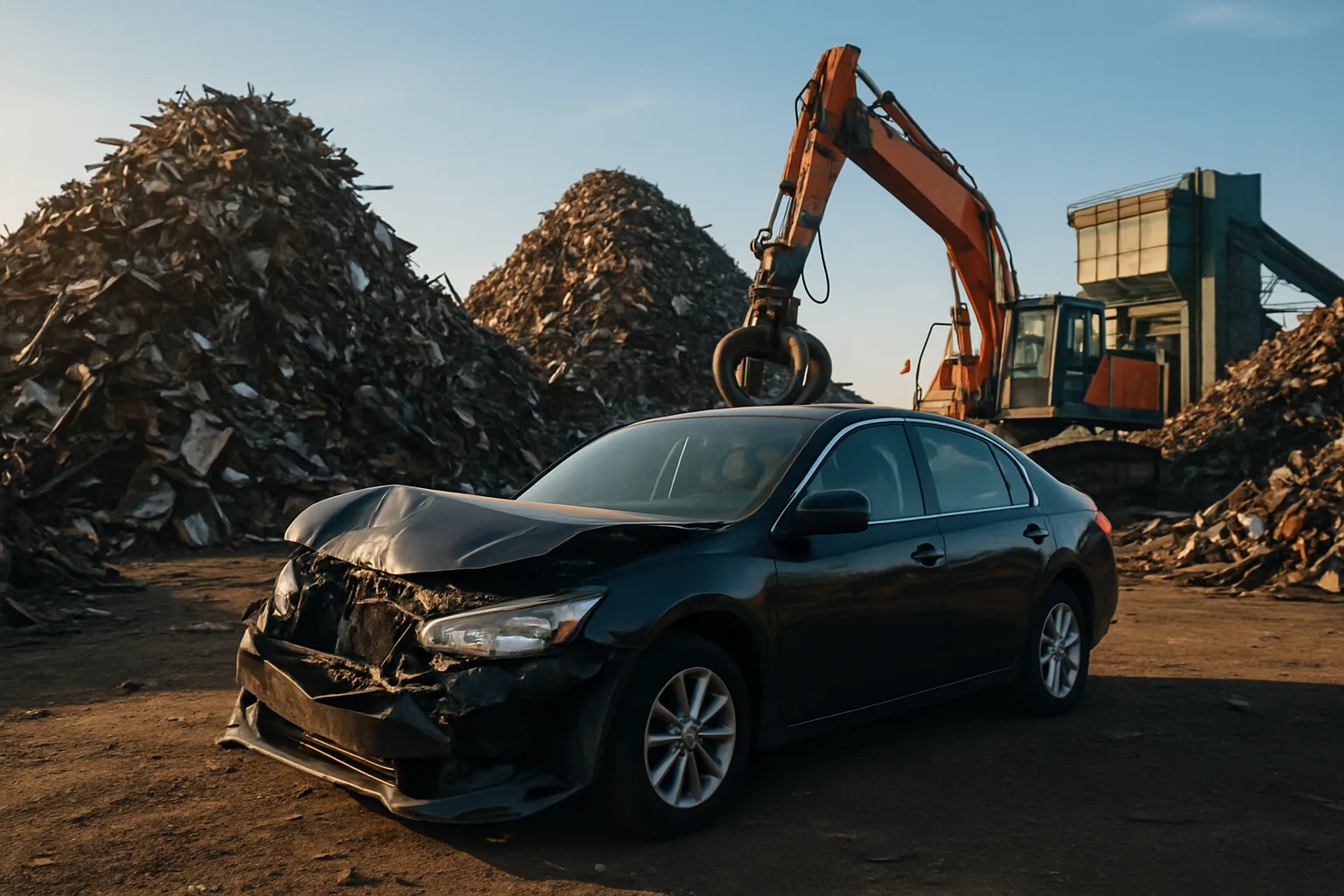
What Actually Happens to Your Wrecked Car — And How to Get Paid for It
Most people assume a car that's been in an accident is worthless. That assumption costs them money. A wrecked vehicle still has an engine block, axles, catalytic converter, alternator, and hundreds of pounds of steel — all with real market value. If you're searching for junk car buyers near me Miami, you need to understand what your car is actually worth before anyone makes you an offer.
This guide walks you through the entire process — from the moment after the accident to the day you get paid. No fluff. No runaround. Just the straight path from wrecked car to cash in hand.
Step 1: Assess the Damage Honestly Before You Call Anyone
Before you contact a buyer, know what you have. There's a big difference between a car with a smashed front end and a fully operational drivetrain versus one that's been totaled, flooded, or rolled. Buyers price these differently, and you should understand why.
Here's what affects the value of your accident-damaged car:
- Drivability: Can it move under its own power? Even partially? That matters.
- Engine condition: A running engine in a wrecked car adds significant value.
- Catalytic converter: Still there? That's one of the most valuable parts on the vehicle.
- Body damage severity: Frame damage versus cosmetic damage are priced very differently.
- Year, make, and model: A 2019 Honda Accord with accident damage is worth more in parts than a 2004 Dodge Neon in the same condition.
- Weight: Steel price is per ton. A full-size truck yields more scrap value than a compact sedan.
Take photos of everything — front, rear, both sides, engine bay, interior, odometer. Documented condition gives buyers more confidence and tends to produce stronger offers. This is exactly the kind of transparency that platforms like SMASH are built on: photo documentation and verified inventory details that let buyers compete with real information instead of best guesses.
Step 2: Understand Your Title Situation in Florida
Here's where a lot of sellers get stuck. If your car was in a serious accident, the insurance company may have issued a salvage title — or you might be missing paperwork entirely. In Florida, the rules around vehicle titles are specific, and ignoring them can delay your sale or kill the deal entirely.
Florida title types you need to know:
- Clean title: No branded history. Easiest to sell, highest value.
- Salvage title: Issued when a vehicle is declared a total loss by an insurer. Sellable, but to a narrower buyer pool.
- Certificate of Destruction: Issued for cars that cannot be retitled for road use. These go to scrap only.
If you're wondering about how to sell my junk car without title near me — it's possible in Florida under certain conditions. If you own the vehicle outright, have ID, and can demonstrate ownership through registration or insurance records, some buyers will still work with you. Always verify with the buyer upfront. Don't assume.
To sell your car for cash in the USA, having your title ready — or knowing exactly what documentation you have — speeds up the process considerably. Get your paperwork organized before you make the first call.
Step 3: Know What "Scrap Value" Actually Means for a Wrecked Car
When buyers talk about scrap value, they're usually referring to the vehicle's worth as raw material — primarily steel, aluminum, and copper — based on current commodity prices. But a wrecked car that still has salvageable parts is worth more than pure scrap weight alone.
The two ways buyers price a damaged vehicle:
- Parts value: Buyers assess which components can be resold — doors, hoods, transmissions, catalytic converters, airbag modules. This can significantly increase the offer.
- Scrap weight value: If the car is crushed and sold as bulk metal, the price is based on tons of steel at current market rates. Rates fluctuate — always check current pricing before accepting an offer.
In the Miami area specifically, scrap metal markets move with national commodity indexes plus regional demand from local processors and exporters. South Florida has active export activity through the Port of Miami, which can influence local buyer competition. That competitive environment is exactly why you don't want to settle for the first offer you get.
Platforms like SMASH operate as a scrap metal auction platform — connecting sellers with vetted buyers who compete for loads. Competition can help reveal the market. More buyers means better price discovery. Instead of one buyer making a lowball call, you get actual market pressure working in your favor. You can get competitive bids for your scrap metal and see what your wrecked vehicle is actually worth on the open market.
Step 4: The Case Study — A Wrecked F-150 in Hialeah
Here's a real-world scenario that illustrates how this process plays out. A vehicle owner in Hialeah, just outside Miami, had a 2017 Ford F-150 that was rear-ended at highway speed. The insurance company totaled it. The frame had minor deformation, the tailgate and bed were destroyed, but the engine ran, the transmission shifted clean, and the catalytic converter was intact.
First call they made: a local salvage yard offered a flat rate based on scrap weight alone. The buyer didn't ask about the engine or the cat. The offer reflected scrap metal prices for roughly 4,500 lbs of steel — and nothing more.
Second approach: they documented the vehicle properly — photos of the engine bay, a note on the running condition, VIN confirmation, and a clear description of the intact components. That documentation went out to a wider buyer pool through a competitive process. The result? Multiple offers. Buyers who needed the drivetrain for parts paid more than the scrap-only buyer. The final number was meaningfully higher — not because magic happened, but because the right buyers saw the right information and competed.
The lesson is straightforward. Documented inventory gives buyers more confidence. And confidence drives competition. If you want to sell scrap car in Florida for what it's actually worth, your documentation is as important as the car itself.
For local sellers, Miami scrap metal services are available through Cash For Cars USA — with fast pickup and transparent offers for vehicles in any condition.
Step 5: What to Do If You're Comparing Offers Across States
Some sellers — especially snowbirds and people who split time between states — end up with a vehicle registered in one state and physically located in another. We occasionally hear from sellers referencing junk car prices Massachusetts as a comparison point when they've relocated to Florida with a vehicle.
Here's the practical reality: scrap metal prices and buyer demand vary by region. Massachusetts and Florida have different active processors, different export access, and different local buyer competition. A quote you received in Boston last year doesn't reflect what your car is worth in Broward County today.
Always get a current, location-specific offer. The car's physical location determines pickup logistics, and the regional scrap market determines the price floor. Don't anchor to old quotes from other states. Get a free car valuation based on where your vehicle actually sits right now.
Step 6: Finalizing the Sale — What to Expect on Pickup Day
Once you accept an offer, the process should be simple. Here's what a clean transaction looks like:
- Confirm pickup details: Date, time window, exact address. Make sure the car is accessible — not blocked in a driveway or locked in a gated lot without access arrangements.
- Remove personal items: Check under seats, in the trunk, in the glove box. People leave important documents and valuables in accident-damaged cars all the time.
- Have your title ready: Or whatever documentation you've confirmed with the buyer. Sign the title over at pickup — not before.
- Collect payment: Cash or electronic transfer, depending on the buyer. Confirm the payment method before they load the car.
- Cancel insurance and notify the DMV: In Florida, you're required to notify the FLHSMV when a vehicle is transferred or destroyed. Don't keep paying insurance on a car you no longer own.
If anything feels off on pickup day — the payment method changed, the offer dropped at the last minute, or the paperwork seems unusual — you have every right to walk away. Reputable cash for cars Miami buyers don't play games at the door. Read car selling guides to learn how to spot red flags before they cost you.
Frequently Asked Questions
Q: Can I sell a wrecked car without a title in Miami?
In some cases, yes. Florida allows title transfers using alternative documentation if you're the registered owner and can prove it. You'll need a valid photo ID and likely your current registration. Always confirm with the buyer before assuming they'll accept it — requirements vary by buyer and vehicle age.
Q: How much is a wrecked car worth for scrap in Florida?
It depends on the vehicle's weight, condition of salvageable parts, and current scrap metal commodity prices — all of which fluctuate. A running engine and intact catalytic converter significantly increase value above base scrap weight. Get current quotes from multiple buyers rather than relying on general estimates. Prices change week to week.
Q: How do junk car buyers near me in Miami determine their offer?
Buyers look at the year, make, model, weight, condition, running status, and which parts are intact. The more accurate and documented your vehicle information, the more competitive the offer tends to be. A platform that puts your car in front of multiple buyers — rather than one — creates real price competition.
Q: How long does the whole process take — from quote to pickup in Miami?
Most sellers complete the process in one to three business days. Same-day pickups are sometimes available depending on the buyer and location. Having your title and documentation ready up front speeds everything up considerably. Miami's density of buyers typically means faster turnaround than rural markets.
Q: Do I need to drain fluids before the car is picked up?
No — reputable buyers handle fluid draining as part of the processing. You don't need to do anything mechanical before pickup. Just make sure the car is accessible, your personal belongings are removed, and your paperwork is ready to sign over at the time of pickup.
If your car was in an accident and it's sitting in your driveway collecting dust, it still has value — you just need the right buyers competing for it. Stop guessing what it's worth. Sell your car for cash in the USA — get a free quote at cashforcars-usa.com and find out exactly what the market will pay for your vehicle today.
Stay current on scrap metal market trends and industry updates by following SMASH on LinkedIn — practical insights for anyone dealing in scrap, salvage, and recycling.