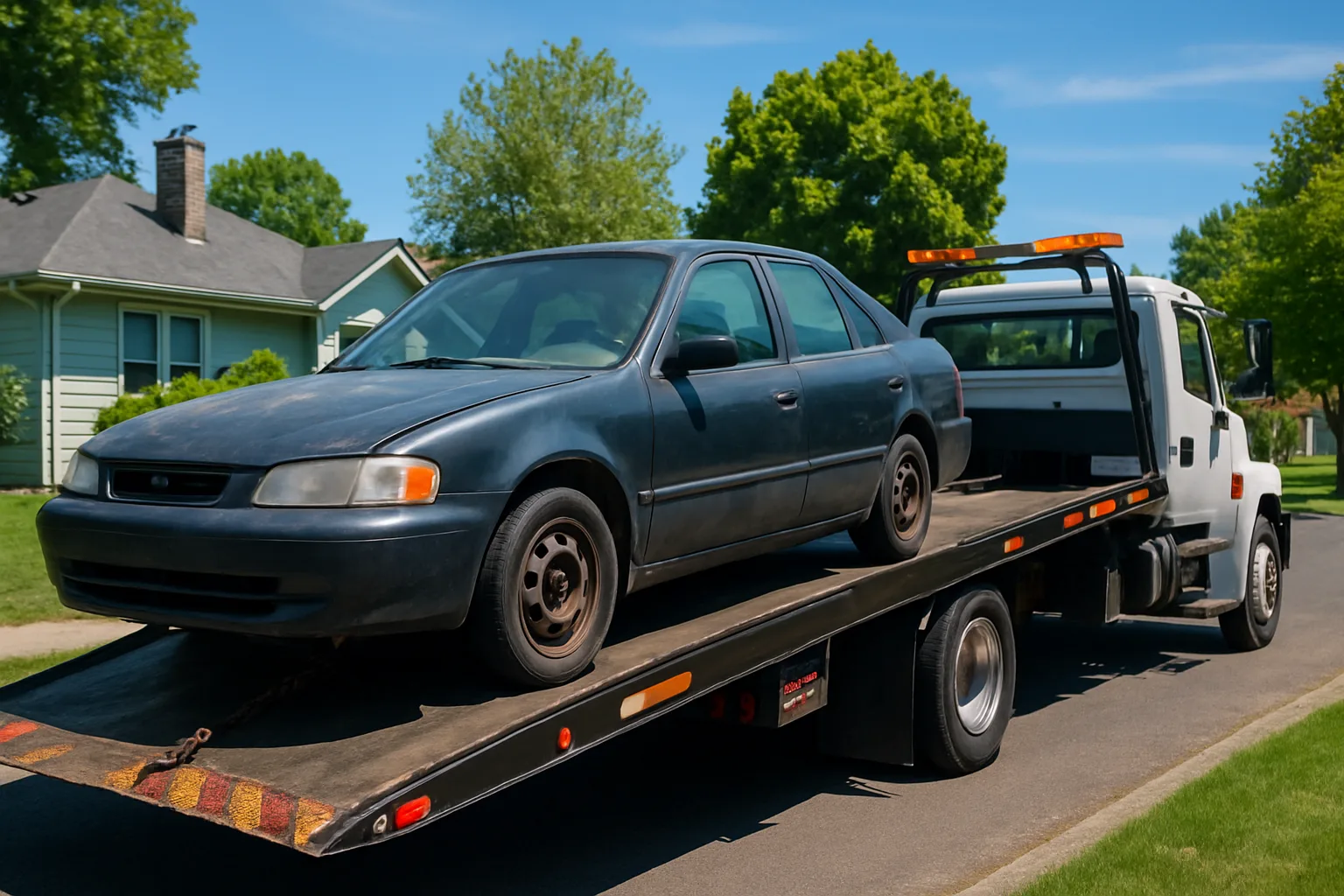
Most people don't realize that a junk car sitting in a driveway is actually about 65% steel and iron by weight — material that can be melted down, reformed, and back on a production line within weeks. That's not a feel-good story. That's how the recycling supply chain actually works. If you're dealing with an end-of-life vehicle in Portland and wondering what responsible disposal actually looks like, this guide breaks it down step by step.
Junk car removal Portland doesn't have to mean dropping your vehicle with the first buyer who calls you back. Understanding the recycling process helps you ask better questions, make smarter choices, and get fair value for material that still has real worth.
Why Eco-Friendly Car Disposal Matters More Than You Think
A single vehicle contains a surprising range of hazardous materials — motor oil, transmission fluid, coolant, brake fluid, power steering fluid, refrigerants, and battery acid. When an old car is abandoned or improperly scrapped, those fluids don't disappear. They leach into soil and groundwater. In Oregon, environmental regulators take that seriously, and licensed recyclers are required to manage fluid extraction before any crushing or shredding takes place.
Beyond the hazmat side, there's a significant opportunity cost when materials aren't recovered properly. Catalytic converters contain platinum group metals. Copper wiring runs throughout the vehicle. Aluminum shows up in engine blocks, wheels, and trim. None of that should end up in a landfill. Responsible recyclers capture all of it. When you choose a licensed junk car buyer, you're not just getting paid — you're making sure those materials re-enter the supply chain instead of a hole in the ground.
- Fluids must be drained and disposed of according to EPA and state environmental standards
- Mercury switches (found in older vehicles) require separate handling
- Batteries are recycled separately — lead-acid and lithium chemistries both have active recycling streams
- Refrigerant (freon) must be captured, not vented into the atmosphere
- Tires are processed through dedicated tire recycling programs
In Portland specifically, the Oregon DEQ (Department of Environmental Quality) sets standards that licensed auto dismantlers must meet. When you're vetting a buyer, asking whether they're DEQ-compliant is a reasonable question — and a legitimate buyer won't hesitate to answer it.
The Step-by-Step Eco-Friendly Car Recycling Process
Understanding what happens after a junk car is picked up puts you in a better position to evaluate who you're selling to. Here's how the process works at a responsible facility.
- Vehicle Assessment and Documentation — The car is logged, the VIN is recorded, and ownership documents are verified. This protects both parties and ensures the vehicle isn't flagged as stolen before it enters the recycling stream.
- Fluid Extraction (Depollution) — All hazardous fluids are drained into separate containment systems before any physical dismantling begins. This is non-negotiable at licensed facilities.
- Parts Harvesting — Usable parts are removed and catalogued for resale. Engines, transmissions, alternators, doors, glass, and seats in good condition go back into the used auto parts market, extending the life of materials that don't need to be melted down yet.
- Battery and Refrigerant Removal — Both require specialized handling. Lead-acid batteries are nearly 100% recyclable. Refrigerant is captured with recovery equipment rather than released.
- Hulk Processing — The stripped body shell (the "hulk") goes to a shredder or crusher. At a shredding facility, powerful hammermills break the car into fist-sized pieces, which then pass through magnetic and eddy current separation to sort ferrous from non-ferrous metals.
- Material Separation and Sale — Sorted steel, aluminum, copper, and other metals are baled or containerized and sold to mills and foundries. This is where platforms like SMASH create real value — connecting recyclers and buyers through competitive auctions rather than single-buyer phone calls.
Each step matters. Skipping fluid extraction or skipping parts harvesting doesn't just cut environmental corners — it also reduces the total value recovered from the vehicle. A thorough process benefits both the recycler and the original seller, because a well-run yard can afford to pay better prices.
What Drives Your Scrap Car Value Today
If you want to know your scrap car value today, you need to understand what's actually being priced. It's not just the weight of the car. Buyers are looking at the composition of what you have — how much usable steel, what's left of the non-ferrous metals, whether any parts are salvageable, and what the current commodity market looks like for each material class.
Steel prices fluctuate with global demand, energy costs, and domestic mill activity. Aluminum prices follow their own cycle tied heavily to manufacturing output and aerospace demand. Copper — even the relatively small amount in a passenger car — trades at a premium and adds meaningfully to the recovery value of a vehicle. A truck with a large aluminum engine block is worth more at the scale than a compact with a smaller iron block, even if the truck weighs less overall.
Other factors that affect what you'll be offered:
- Vehicle make and model — Some platforms and buyers specifically seek certain models for parts demand
- Condition of the catalytic converter — Cats contain platinum group metals and carry significant standalone value if intact
- Whether the car runs — Running vehicles sometimes attract higher offers because buyers have more options with them
- Location — Logistics matter. A Portland seller is competing for buyers in the Pacific Northwest market, with proximity to ports for export material
- Current commodity prices — Check current rates before accepting any offer
Disclaimer: Scrap metal and vehicle prices fluctuate based on market conditions. Always check current rates before finalizing any transaction.
The best way to understand what your car is worth isn't to guess — it's to get multiple offers. That's exactly what transparent platforms are built for. If you want to get a free car valuation, you're already ahead of the seller who takes the first number they're given.
How to Sell Your Junk Car Responsibly in Portland
Portland has a solid ecosystem of licensed auto recyclers and junk car buyers. Oregon's environmental standards mean that most established buyers here are already operating to a higher baseline than you'd find in less regulated markets. That said, not every buyer operates the same way — and price differences between offers can be significant.
Here's a practical process for selling responsibly in the Portland area:
- Gather your paperwork first. You'll need the title. Oregon requires a signed-over title for most vehicle sales, including junk vehicles. If you've lost it, Oregon DMV can issue a duplicate.
- Remove personal items. Check the glove box, trunk, under seats. You'd be surprised what people leave behind.
- Cancel your registration and insurance before or immediately after the sale. Oregon DMV has a straightforward process for this.
- Get more than one offer. Call or submit to multiple buyers. Prices vary. There's no reason to accept the first number you receive.
- Confirm the buyer handles fluid disposal properly. A licensed buyer should be able to confirm DEQ compliance without hesitation.
- Ask about same-day or next-day pickup. Most reputable junk car buyers in Portland can move quickly.
If you want to go further and explore how platforms like SMASH are changing the way scrap material gets sold — including the ability to get competitive bids for your scrap metal rather than accepting a single offer — that's worth understanding before you lock in a deal. Competitive pricing isn't just for large recyclers. Individual sellers benefit from the same market dynamics.
For location-specific resources and services, check out Portland scrap metal services to see what's available in your area.
The Role of Technology in Modern Scrap Car Recycling
The recycling industry has changed significantly in recent years. Where sellers once had to rely entirely on relationships and local knowledge to get a fair price, platforms built around transparent auctions and real-time market data have shifted the power balance. That matters whether you're a yard operator moving hundreds of tons per month or a homeowner selling one vehicle.
SMASH — a scrap metal auction platform operating across North America — is a direct example of how technology is improving price discovery for sellers. Instead of one buyer, one phone call, and a take-it-or-leave-it number, SMASH creates competitive bidding environments where vetted buyers compete for material. More competition typically means better outcomes for the seller. You can read car selling guides to understand how the broader market works before you make your move.
On the documentation side, modern recycling platforms track serial numbers, photo documentation, and inventory data in ways that make transactions more transparent and disputes less likely. For buyers, documented inventory builds confidence. For sellers, it creates a paper trail that protects against liability questions down the road.
The technology isn't just about price. It's about moving material efficiently, reducing friction, and making sure both sides of a transaction have the information they need. That's good for the seller in Portland looking to offload a 2009 pickup. It's also good for the broader recycling supply chain that depends on consistent material flow.
Ready to Sell Your Car for Cash in Oregon?
You don't have to navigate this alone. Whether your car is running, non-running, damaged, or sitting on a flat tire in a driveway, there are buyers in the Portland market who want it. The materials have value. The parts may have value. And with the right approach — multiple offers, proper documentation, and a buyer who handles disposal responsibly — you walk away with fair cash and a clean conscience.
If you're ready to stop guessing what your vehicle is worth, the simplest next step is to get a real offer. Sell your car for cash in the USA through cashforcars-usa.com — get a free quote, understand your options, and move forward on your timeline, not someone else's.
Frequently Asked Questions
Q: How does junk car removal in Portland actually work?
Most junk car buyers in Portland offer free towing and same-day or next-day pickup. You get a quote — by phone or online — agree on a price, and the buyer comes to your location with payment in hand. You sign over the title at pickup. The whole process typically takes less than 24 hours from first contact to completed pickup.
Q: Do I need a title to sell a junk car in Oregon?
In most cases, yes. Oregon requires a signed-over title for vehicle sales, including junk and salvage vehicles. If you've lost your title, you can apply for a duplicate through the Oregon DMV. Some buyers may work with vehicles that have a lien or branded title — ask upfront about their process for those situations.
Q: What happens to my car after it's picked up for recycling?
A licensed recycler will drain all hazardous fluids, remove usable parts for resale, extract the battery and refrigerant separately, and then process the body shell through a shredder or crusher. The resulting sorted metals — steel, aluminum, copper — are sold to mills and foundries to be melted down and used again in manufacturing.
Q: How do I know if I'm getting a fair price for my junk car?
The best protection is getting multiple offers before you commit. Prices vary between buyers based on what they see in your vehicle's make, model, condition, and current commodity prices for steel and non-ferrous metals. Platforms like SMASH help sellers understand what competitive pricing looks like by creating bidding environments rather than one-sided offers.
Q: Is cash for cars in Oregon subject to any environmental fees or rules?
Oregon has environmental standards for auto dismantlers through the DEQ. Licensed buyers are required to handle hazardous materials — fluids, refrigerants, mercury switches — according to those standards. As a seller, you're not typically responsible for those compliance costs, but choosing a licensed buyer protects you from any liability related to improper disposal after the vehicle leaves your hands.
Stay current on scrap metal market conditions and industry trends by following SMASH on LinkedIn — practical insights for recyclers, yard operators, and sellers across North America.
```