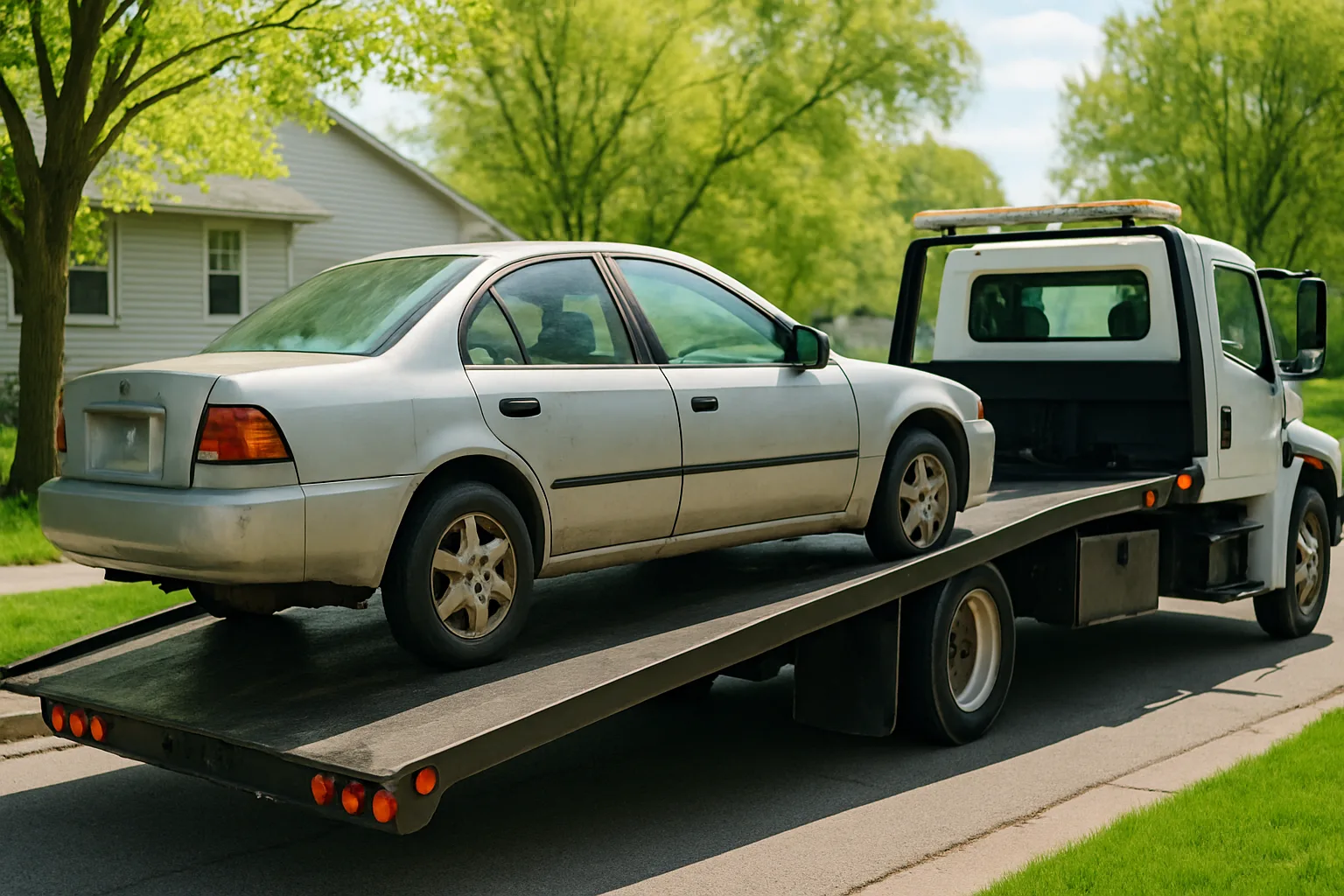
Most people hand over their keys and never think twice about what happens next. You accepted the offer, the truck showed up, and the car disappeared down the street. But here's the thing — what happens after that pickup directly affects how much the recycler gets paid, which ultimately affects how much you get paid the next time around. Understanding the full picture makes you a smarter seller.
If you're trying to sell my car for cash Rochester, knowing what happens downstream isn't just interesting — it's useful. It tells you why documentation matters, why certain vehicles fetch more than others, and why the scrap metal market is far more complex than most car owners realize. Let's walk through the whole process.
The Moment Your Car Arrives at the Recycling Facility
The truck backs in. Your car gets logged. That's where the real work begins. The first thing a recycling yard does is assess what they've actually got. Every vehicle gets categorized — by make, model, year, condition, and what components are still salvageable. This isn't a five-minute process. A thorough assessment can take hours on complex vehicles.
Fluids come out first. Engine oil, transmission fluid, brake fluid, coolant, and refrigerant are all drained and either recycled or disposed of properly. Environmental regulations in New York are strict on this. Failing to depollute a vehicle correctly before crushing it isn't just a fine — it's a serious liability. Reputable yards treat this step like a checklist, not an afterthought.
- Fuel is siphoned and either reused or disposed of per local regs
- Battery is removed and sent to a battery recycler
- Tires are pulled and sold separately or sent to a tire recycler
- Airbags are deployed safely before crushing (undeployed airbags are a hazard in shredders)
- Refrigerant (R134a or R1234yf) is captured with certified equipment
Skipping any of these steps creates environmental and legal exposure for the yard. The good ones don't cut corners here.
Parts Harvesting — Where the Real Money Lives
Once the car is depolluted, the yard makes a decision: part it out or crush it. This depends on the vehicle's age, mileage, demand for its components, and the current scrap metal price. A 2018 Honda CR-V with a clean engine and intact interior gets treated very differently than a 2005 Chevy Malibu with a blown head gasket.
In Rochester, where winters are brutal and road salt is part of life, body panels and undercarriage components from rust-prone vehicles often have limited resale value. But engines, transmissions, alternators, starters, and interior electronics from the same car can still move fast. Yards know their local demand. They pull what sells and scrap what doesn't.
High-value components typically harvested include:
- Catalytic converters — contain platinum, palladium, and rhodium, making them one of the most valuable parts on any car
- Engines and transmissions — particularly from reliable models with strong secondary market demand
- Alternators and starters — rebuilt and resold
- Doors, hoods, fenders — if rust-free and undamaged
- Seats and interior trim — if clean and in usable condition
- Rims and tires — especially alloy wheels
If you're wondering why some buyers pay more for your car than others, this is a big part of the answer. A buyer who can quickly identify and resell high-value parts will outbid a buyer who's only thinking about the scrap weight. Platforms like smashscrap.com connect scrap sellers with vetted buyers who actually compete — which means better price discovery for everyone in the chain.
What Happens to the Metal Shell — The Shredding and Sorting Process
After parts are pulled, what's left is a hulk — a stripped vehicle body with the non-metallic materials still attached. Plastics, glass, foam, fabric, rubber seals. The hulk goes to a shredder. Industrial auto shredders are massive machines that reduce a vehicle to fist-sized fragments in seconds. What comes out is a mixed stream of ferrous metal, non-ferrous metal, and what the industry calls "auto shredder residue" (ASR) — the fluff that's left over.
The metal fragments are then sorted using magnetic separators (for ferrous steel), eddy current separators (for non-ferrous like aluminum and copper), and increasingly, sensor-based optical sorting systems. The result: clean streams of shredded steel, aluminum, copper wire, and other non-ferrous materials that go to mills and smelters.
This is where the B2B scrap metal marketplace becomes critical. Shredded ferrous and non-ferrous material doesn't just get sold to whoever calls first. Serious yards use competitive processes — auctions, bids, vetted buyer networks — to make sure they're getting market value for every load. The difference between a single-buyer phone call and a competitive auction can be significant on a large load of non-ferrous material.
If you want to understand how that competitive process works on the buyer side, read car selling guides on how the scrap supply chain connects back to what you're offered at the curb.
How Your Car's Scrap Value Gets Calculated
Here's where a lot of car owners get surprised. The price you're quoted when you sell your junk car in Rochester isn't pulled from thin air. It's based on the vehicle's estimated scrap weight, the current price of shredded steel, the condition and resale potential of key components, and the buyer's cost to transport and process the vehicle.
A full-size pickup truck or SUV will almost always generate a higher offer than a compact car — simply because there's more metal. But a compact car with an intact, in-demand catalytic converter might outperform a heavier vehicle with a stripped cat. Weight matters, but composition matters more.
Key factors that affect your offer:
- Vehicle weight — the baseline calculation for scrap value
- Catalytic converter condition — intact cats with full cores add significant value
- Battery condition — EV and hybrid batteries are increasingly valuable
- Drive status — running vehicles are easier to move and often worth more
- Title availability — a clean title simplifies the transaction for the buyer
- Current ferrous and non-ferrous prices — these fluctuate with global market conditions
Disclaimer: Scrap metal and vehicle prices change frequently based on market conditions. Always check current rates before accepting an offer.
If you're in Rochester or elsewhere in New York and you haven't gotten multiple quotes, you're leaving money on the table. The market is competitive — use that to your advantage. To sell your car for cash in the USA, getting more than one offer is the single easiest way to make sure you're not underselling.
Documentation, Title Transfers, and Why They Matter More Than You Think
Once a vehicle is sold, there's a paper trail. The title transfers to the buyer, the yard logs the VIN, and in most states — including New York — that information flows to a state database. This protects you from future liability on the vehicle. If the car gets used fraudulently or ticketed after the sale, you want documentation proving it was sold and transferred.
Buyers who use proper systems track this automatically. Serial tracking, VIN lookup, and photo documentation aren't just operational tools — they're legal protection for both sides of the transaction. If a yard can't produce a clean paper trail on vehicle acquisitions, that's worth asking about before you sign anything.
This is also why the "no title" situation comes up so often. Some sellers — particularly those searching for cash for cars no title options — worry that a missing title will kill the deal. In many states, there are pathways for title-less vehicles, but they require additional documentation and buyer cooperation. The process varies by state, so ask your buyer directly what they accept before assuming you can't sell.
SMASH's approach to buyer vetting exists precisely because the scrap and salvage industry has too many actors operating without clear documentation standards. When you use a platform like SMASH, you're working with buyers who know what documentation is required and handle it correctly.
The Weekly Market Recap — What's Moving in Scrap Right Now
As of late July 2026, the scrap metal market continues to respond to shifting steel mill demand across North America. Ferrous prices have seen moderate movement tied to construction activity and import dynamics. Non-ferrous — particularly copper and aluminum — remains active, driven by EV manufacturing demand and infrastructure spending.
For Rochester-area sellers, the regional market reflects national trends with some local nuance. Yards in western New York are actively buying, and the volume of end-of-life vehicles entering the market remains steady. If you have a vehicle sitting in your driveway depreciating, now is a reasonable time to move it.
The auto recycling sector as a whole is adapting to a changing vehicle mix — more EVs, more hybrids, more aluminum-intensive platforms. What that means for sellers is that the value calculation on older, traditional ICE vehicles remains straightforward, while EVs and hybrids require more specialized buyer knowledge. Work with buyers who understand what they're buying.
If you're ready to move your vehicle, get a free car valuation and see what your car is actually worth in today's market. No guessing, no lowball surprises.
Frequently Asked Questions
Q: How long does it take to get paid after I sell my car for cash in Rochester?
Most reputable cash-for-cars buyers pay at the time of pickup or within 24 hours. Payment is typically by check or electronic transfer. Confirm the payment method before scheduling your pickup — it varies by buyer.
Q: Can I sell my junk car in Rochester without a title?
It depends on the buyer and New York state regulations. Some buyers accept a government-issued ID, registration, and proof of ownership in lieu of a title for older vehicles. Always ask the buyer directly what documentation they require before assuming you can't sell.
Q: What parts of my car are worth the most to the recycler?
Catalytic converters, engines, transmissions, and aluminum wheels typically carry the highest individual part values. The condition of these components significantly affects your overall offer — a working engine in a wrecked car is still worth real money.
Q: Does it matter if my car is running or not when I sell it for scrap?
Yes — running vehicles are generally easier to move and process, which means buyers often offer more for them. Non-running vehicles are still bought, but you may receive a slightly lower offer to account for the extra handling required.
Q: How do I know I'm getting a fair price when I sell my car for cash in Rochester?
Get at least two or three offers before accepting anything. Scrap prices fluctuate with the market, and not all buyers value components the same way. A competitive offer process — whether through a platform or by calling multiple buyers — is your best protection against underselling.
Your car doesn't stop having value the moment it stops running. The recycling chain that follows your pickup is sophisticated, and the buyers who understand it best are the ones who pay the most. Whether you're in Rochester, across New York, or anywhere in the US, sell your car for cash in the USA by working with buyers who are transparent about the process and competitive in their pricing. Get your free quote at cashforcars-usa.com and stop leaving money on the table.
Stay current on scrap metal market trends and industry insights — follow SMASH on LinkedIn for weekly updates.