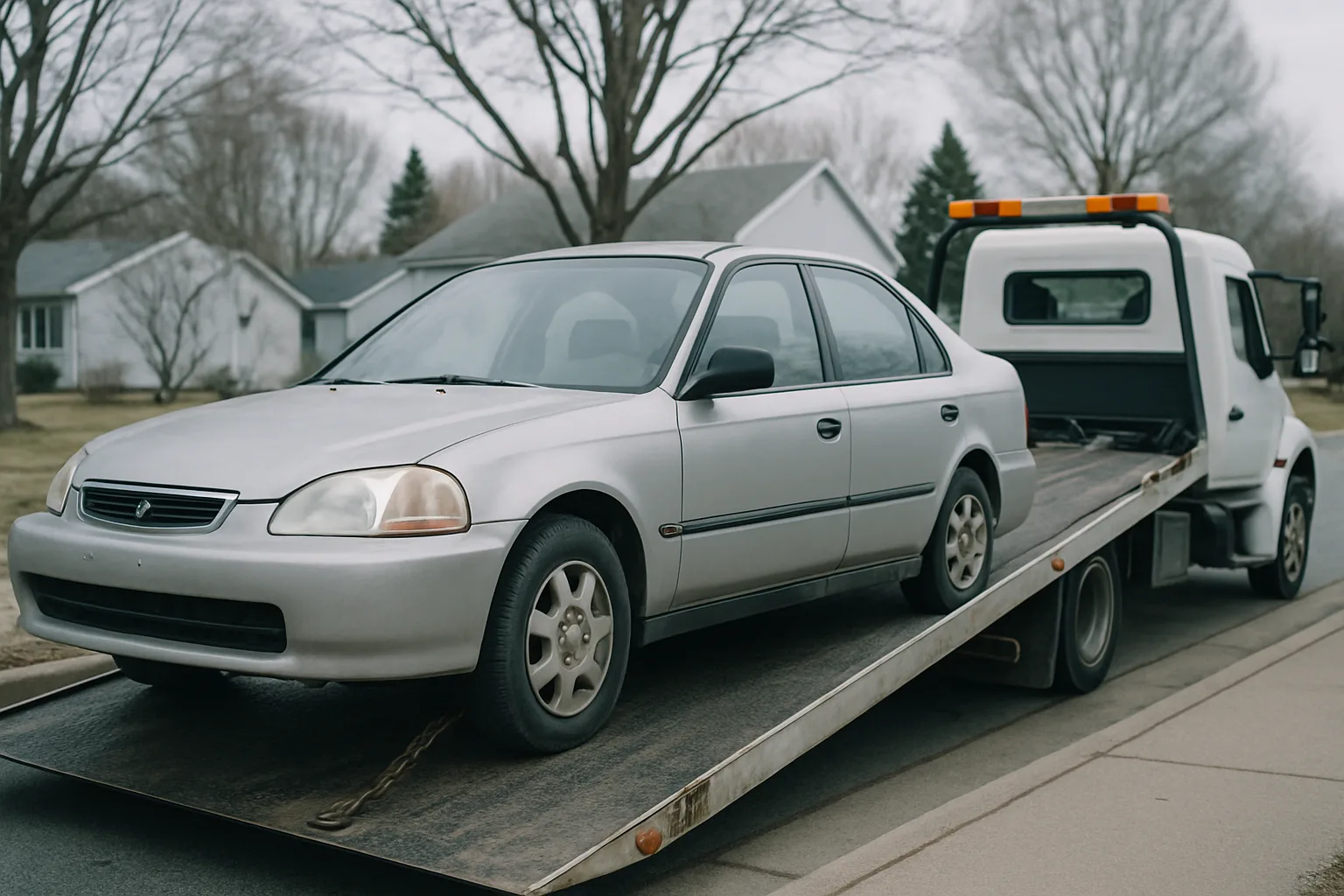
Catalytic converter theft exploded across North America over the past several years — and it hasn't slowed down. In cities like Minneapolis, car owners are waking up to missing converters, repair bills that exceed the car's value, and a hard question: is it even worth fixing? If you're sitting on a vehicle with a stolen cat, you have more options than you think. And understanding how that theft affects your car's scrap value is the first step to making a smart decision.
Why Catalytic Converter Theft Keeps Hitting Minneapolis Hard
Minneapolis has consistently ranked among U.S. cities with elevated catalytic converter theft rates. The reasons aren't complicated. Older vehicle models — particularly trucks, SUVs, and hybrids — are common on Minnesota roads, and many of them carry converters with high concentrations of platinum, palladium, and rhodium. Those three metals are worth serious money. Thieves know exactly which vehicles to target and can remove a converter in under two minutes with a battery-powered saw.
What makes this worse for everyday car owners is the aftermath. A replacement catalytic converter for a mid-2000s Toyota Prius or Honda Element can run anywhere from $1,500 to $3,500 installed — sometimes more. If your vehicle is already aging and carrying other mechanical issues, that repair cost can easily exceed what the car is worth on the private market. At that point, the decision isn't about fixing the car. It's about cutting losses.
- High-theft targets in Minneapolis: Toyota Prius, Honda CR-V, Ford F-Series trucks, Chevy Silverado, Acura MDX
- Average repair cost: $1,500–$3,500+ depending on make and model
- Time to steal a converter: Under 2 minutes for experienced thieves
- Metals inside: Platinum, palladium, rhodium — all high-value non-ferrous metals
What a Stolen Catalytic Converter Does to Your Scrap Car Value
Here's what most car owners don't realize: a catalytic converter can represent a significant chunk of a junk car's total scrap value. When buyers assess a scrap car, they look at the whole vehicle — ferrous metal (steel, iron), non-ferrous components (copper wiring, aluminum), and high-value parts like the engine, transmission, and yes, the catalytic converter. Remove the cat, and you've removed one of the most valuable individual components from the equation.
That doesn't mean your car is worthless without it. Far from it. A full-size truck or SUV still carries hundreds of pounds of steel. An older sedan might bring in a fair offer based on weight alone. But you should go in with realistic expectations. When you sell your car for cash in the USA, a reputable buyer will factor in the missing converter and adjust their offer accordingly. The key is working with buyers who are transparent about how they arrive at their numbers — not ones who just throw out a low-ball figure hoping you'll take it.
What impacts scrap car value when a converter is missing:
- Total vehicle weight (steel is still the bulk of value)
- Condition of remaining drivetrain components
- Year, make, and model — some cars have more recoverable parts
- Local scrap metal prices at the time of sale
- Whether an insurance claim was filed and what was documented
The Case for Selling Instead of Repairing — A Real Scenario
Consider a 2009 Honda CR-V owner in Minneapolis. The converter gets stolen overnight in a parking lot. She calls her mechanic and gets a quote: $2,200 for a new OEM-spec converter, plus labor. The car has 187,000 miles on it, needs new struts, and has a small oil leak the owner has been nursing for two years. A private-party sale in running condition might have brought $4,500 — maybe. Now, without the converter, it won't pass emissions, it can't legally be driven, and the repair bill eats half of whatever she'd net from selling it.
She decides to sell her junk car in Minneapolis instead. She contacts a cash-for-cars buyer, discloses the missing converter upfront (which is the right move — always be honest about what's missing), and gets a fair offer based on the vehicle's remaining value. No repair bills. No waiting for a private buyer willing to deal with a project car. Cash in hand, car gone, problem solved.
This isn't a rare situation. It plays out every week across Minnesota. And the smarter car owners — the ones who read car selling guides and understand the market — tend to walk away with more money because they approached the process informed.
How Platforms Like SMASH Are Changing the Scrap Buying Market
One of the biggest frustrations in the junk car and scrap metal world has always been opacity. You call one buyer, get one number, and have no idea if it's fair. There's no competition. No transparency. Just a take-it-or-leave-it offer from someone who has every incentive to lowball you.
That's the problem compare scrap metal bids from verified buyers through platforms like SMASH are built to solve. SMASH is a B2B scrap metal marketplace that brings vetted buyers to the table and lets competition drive the price discovery process. More buyers bidding on your material — whether that's a load of non-ferrous metal, a pile of cats, or an end-of-life vehicle — means you're more likely to see what the market actually thinks your material is worth.
For recycling yards and scrap processors in Minneapolis and across Minnesota, this matters. When a yard is receiving vehicles stripped of their converters, they need accurate market data and competitive buyer networks to price those loads correctly. SMASH creates that environment. No subscriptions. No guessing. The platform only wins when the seller wins — which is exactly how it should work.
For individual car owners, the lesson from platforms like SMASH is simple: don't accept the first number you hear. Competition reveals the market. Whether you're selling a full vehicle or dealing with missing components, getting multiple perspectives on value puts you in a much stronger position.
What to Do If Your Converter Was Stolen — A Step-by-Step Approach
If you're a Minneapolis car owner dealing with a stolen catalytic converter right now, here's a practical sequence to follow before you make any decisions about the vehicle.
- File a police report immediately. This creates a record and is required if you plan to file an insurance claim. Keep the report number.
- Contact your insurance company. Comprehensive coverage typically covers catalytic converter theft. Your deductible applies, but if the repair cost exceeds your deductible significantly, filing makes sense.
- Get a repair quote. Know exactly what it costs to fix the vehicle before you decide anything. This is your baseline for comparison.
- Get a cash offer for the vehicle as-is. You need to know both numbers — repair cost and scrap/junk value — before you can make a smart call. Use a service where you can get a free car valuation without commitment.
- Compare and decide. If the repair cost exceeds what the car is worth repaired, selling it makes financial sense. Be honest about the missing converter when you get quotes — reputable buyers factor it in rather than use it as a gotcha after the fact.
- Handle the title. Minnesota requires a title transfer for vehicle sales. If your title is lost, you can apply for a duplicate through the Minnesota DVS. No title doesn't always mean no deal — some buyers handle these situations, and options like cash for cars no title programs exist in certain markets — but having your paperwork in order simplifies everything.
Minneapolis Sellers: What to Expect From the Cash-for-Cars Process
Selling a junk car in Minneapolis doesn't have to be complicated. The metro area has a solid network of scrap yards, auto recyclers, and cash-for-cars buyers. The process typically moves fast — same-day or next-day pickup is common for straightforward transactions. And Minneapolis scrap metal services are well-equipped to handle vehicles in any condition, including those missing major components like a catalytic converter.
When you reach out for a quote, have this information ready:
- Year, make, model, and trim level
- Approximate mileage
- Overall condition — be specific about what's missing or damaged
- Whether you have the title (and if not, what paperwork you do have)
- Your location in the Minneapolis metro or surrounding Minnesota area
The more accurate your description, the more accurate your quote. Buyers who ask detailed questions up front are generally more trustworthy than ones who give you a number in 30 seconds with no information. This is also where SMASH's model of documented inventory and transparent pricing offers a useful framework — even if you're selling a single vehicle, the principle of documented, honest transactions protects both sides.
If you're ready to stop letting a damaged or stripped vehicle sit in your driveway, now is a good time to act. Scrap metal prices fluctuate with global commodity markets, and waiting doesn't always mean a better offer. Get your quote, understand your numbers, and make the call that puts money in your pocket rather than repair bills on your credit card. Sell your car for cash in the USA — get a free quote at cashforcars-usa.com and find out what your vehicle is actually worth today.
Disclaimer: Scrap metal and junk car prices fluctuate based on commodity markets, vehicle condition, and local demand. All price references in this article are general estimates. Check current rates with a buyer before making any decisions.
Frequently Asked Questions
Q: Can I sell my car for cash in Minneapolis if the catalytic converter was stolen?
Yes. A missing catalytic converter reduces your car's value, but it doesn't disqualify it from a cash sale. Reputable junk car buyers in Minneapolis will factor in the missing converter and make an offer based on the vehicle's remaining value — including steel weight, other components, and overall condition. Always disclose the theft upfront when requesting a quote.
Q: How much does a stolen catalytic converter reduce my car's scrap value?
It depends on the vehicle. For high-theft targets like a Toyota Prius or Honda CR-V, the converter itself can represent a meaningful portion of the car's scrap value because it contains platinum, palladium, and rhodium. For a large truck or SUV, the steel content and drivetrain components may still anchor the value well. The best approach is to get a quote with the theft disclosed so you see a realistic number.
Q: Do I need a title to sell my junk car in Minneapolis?
Minnesota requires a title for a proper vehicle transfer, but if you've lost yours, you can apply for a duplicate through the Minnesota Department of Vehicle Services (DVS). Some buyers also work with no-title situations — similar to how cash for cars no title programs operate in other markets — but having your title speeds up the process significantly and typically results in a cleaner transaction.
Q: How fast can I sell my junk car for cash in Minneapolis?
Same-day or next-day pickup is common in the Minneapolis metro, especially for straightforward transactions where the title is in hand and the vehicle condition is clearly described. The more information you provide upfront, the faster the process moves.
Q: What's the difference between a junk car buyer and a B2B scrap metal marketplace like SMASH?
A traditional junk car buyer gives you one offer — take it or leave it. A B2B scrap metal marketplace like SMASH brings multiple vetted buyers into competition with each other, which tends to produce better price discovery for the seller. For individual car owners, working with a cash-for-cars service connected to a competitive buyer network means you're more likely to see the actual market value of your vehicle rather than a single buyer's best deal for themselves.
Stay current on scrap metal market trends and industry insights — follow SMASH on LinkedIn for regular updates from the North American scrap industry.